Solar-Powered LED Street Light with Integrated Dual-Camera Surveillance System
Engineering Conclusion
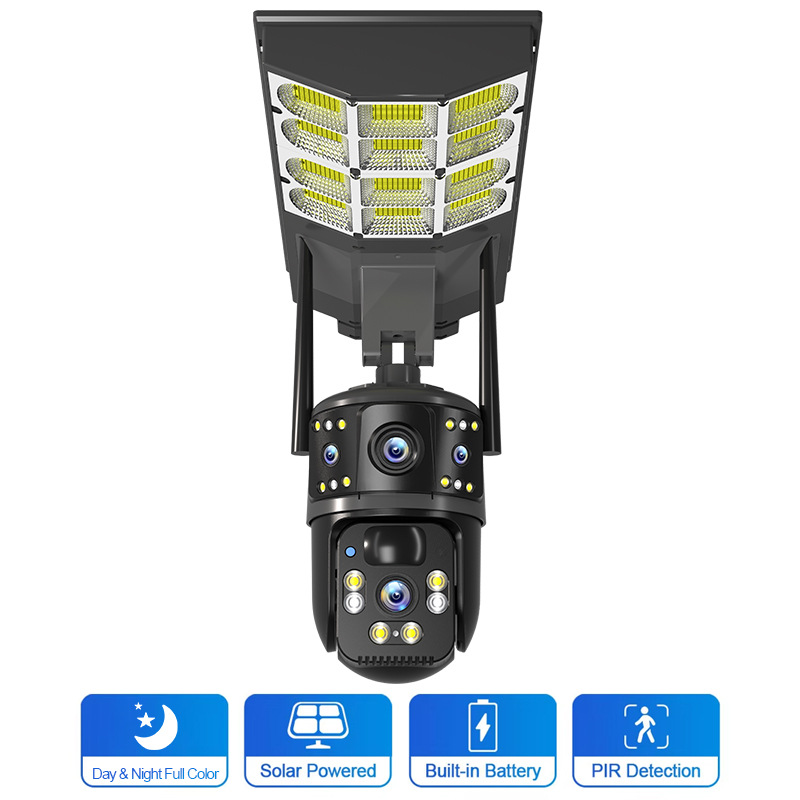
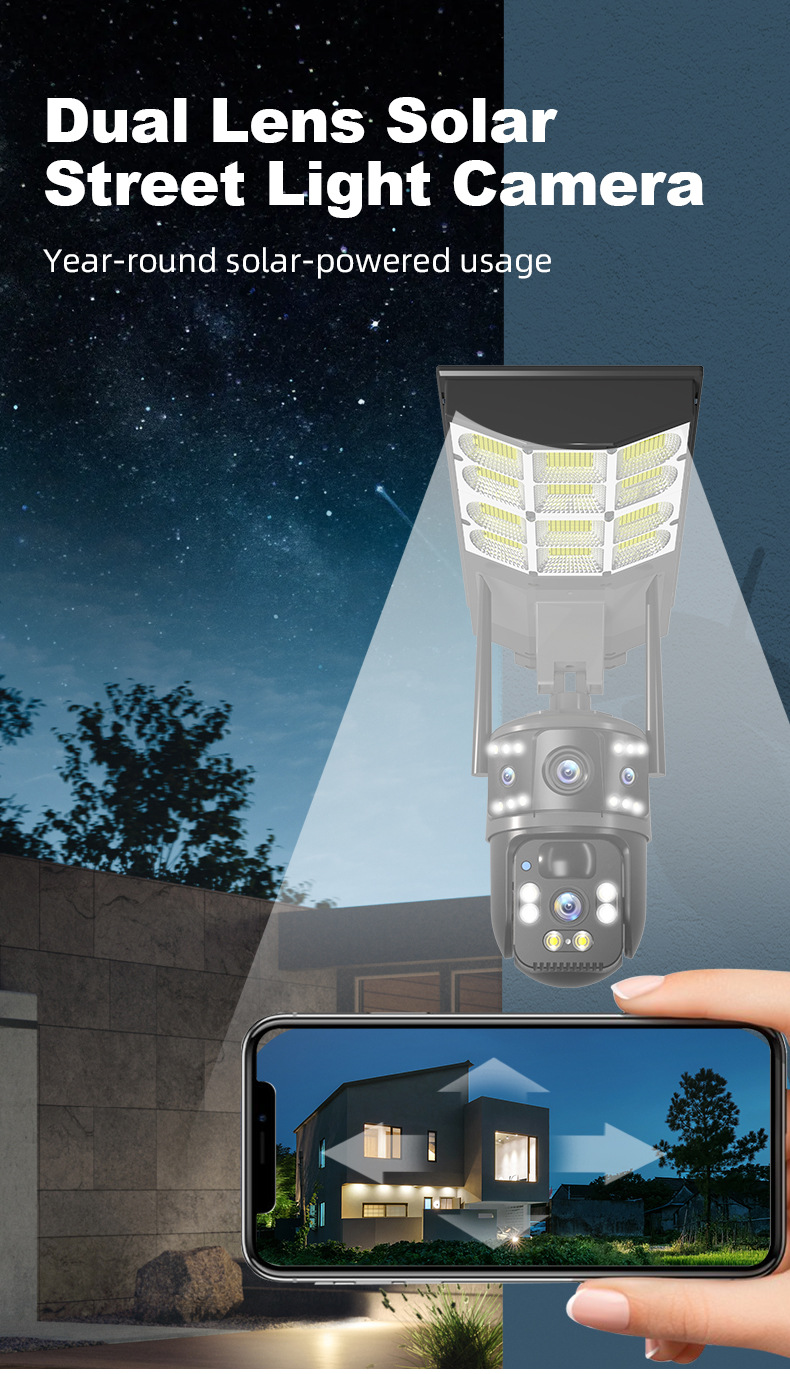
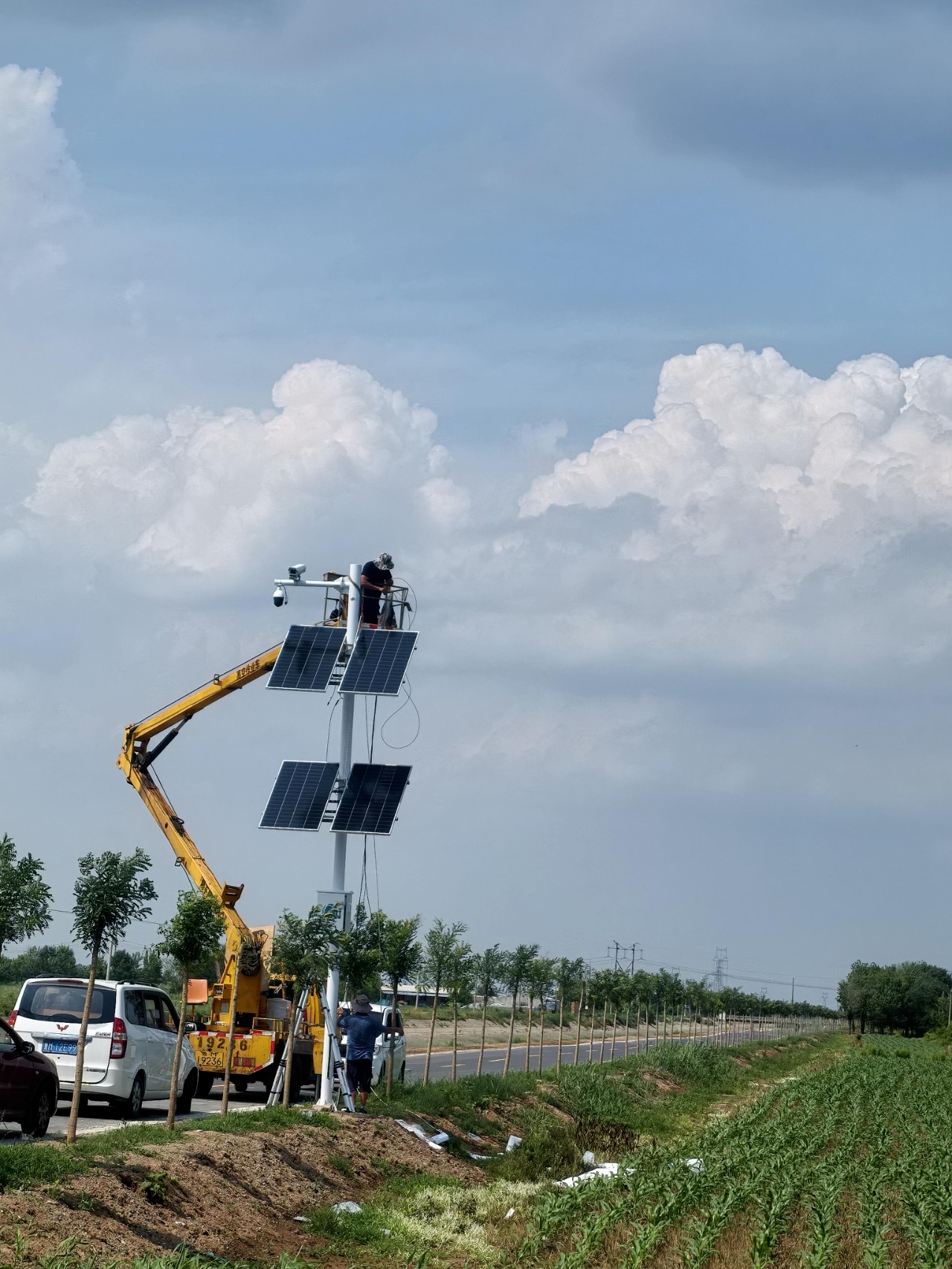
This solar-powered LED street light with integrated dual-camera surveillance is engineered for public infrastructure environments where lighting and visual monitoring must operate reliably without stable grid power.
Its engineering value is defined by deployment efficiency, functional integration, and long-term operational predictability, rather than by lighting output or camera resolution alone.
Engineering Problem This System Addresses
In outdoor infrastructure projects, lighting and surveillance are often deployed as separate systems, each requiring independent power supply, mounting structures, cabling, and maintenance cycles.
This separation increases installation complexity, failure points, and long-term operational cost—particularly in areas where grid access is limited or deployment speed is critical.
This system addresses these challenges by integrating illumination and surveillance into a single solar-powered unit, reducing redundancy while maintaining essential functionality.
Integrated System Architecture Overview
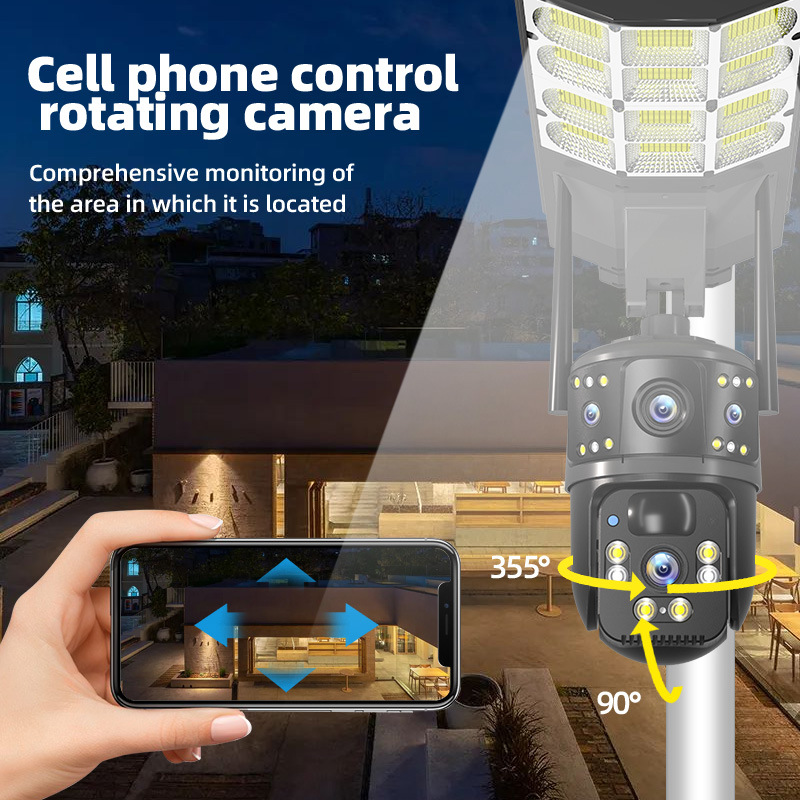
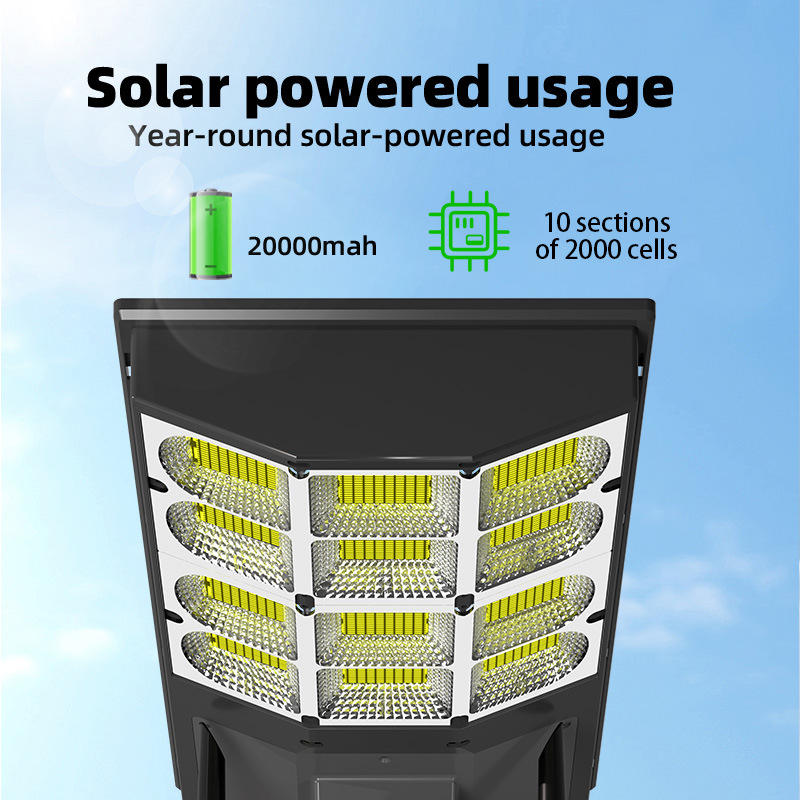
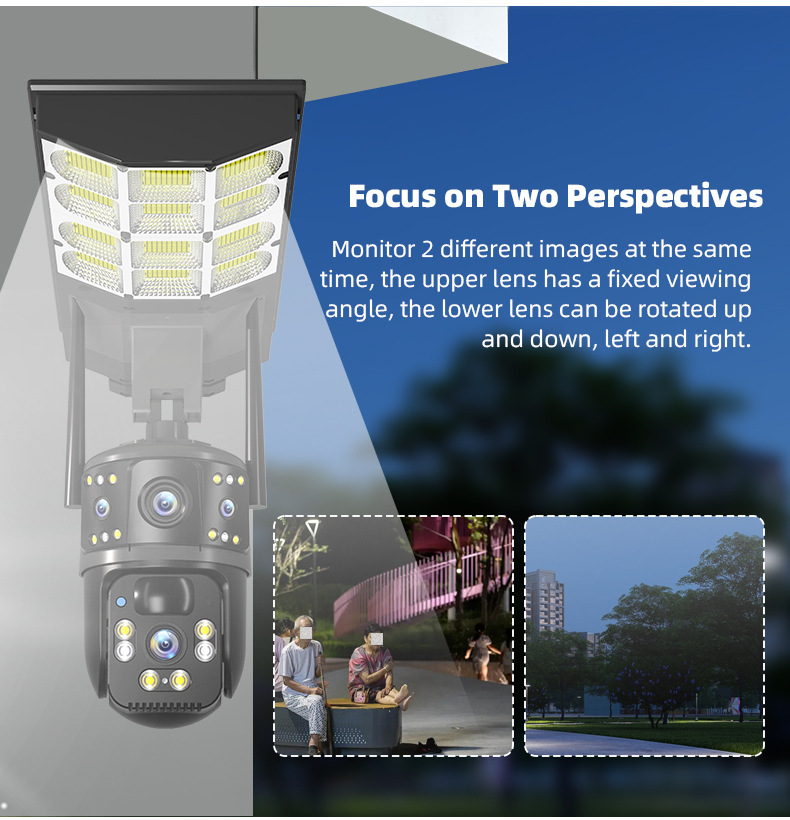
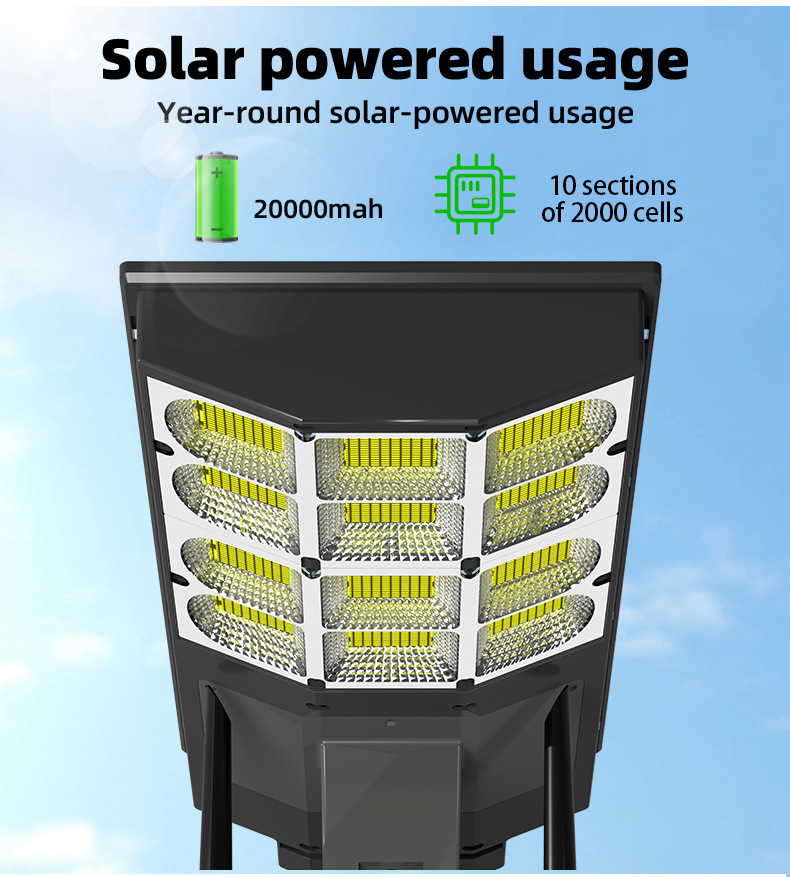
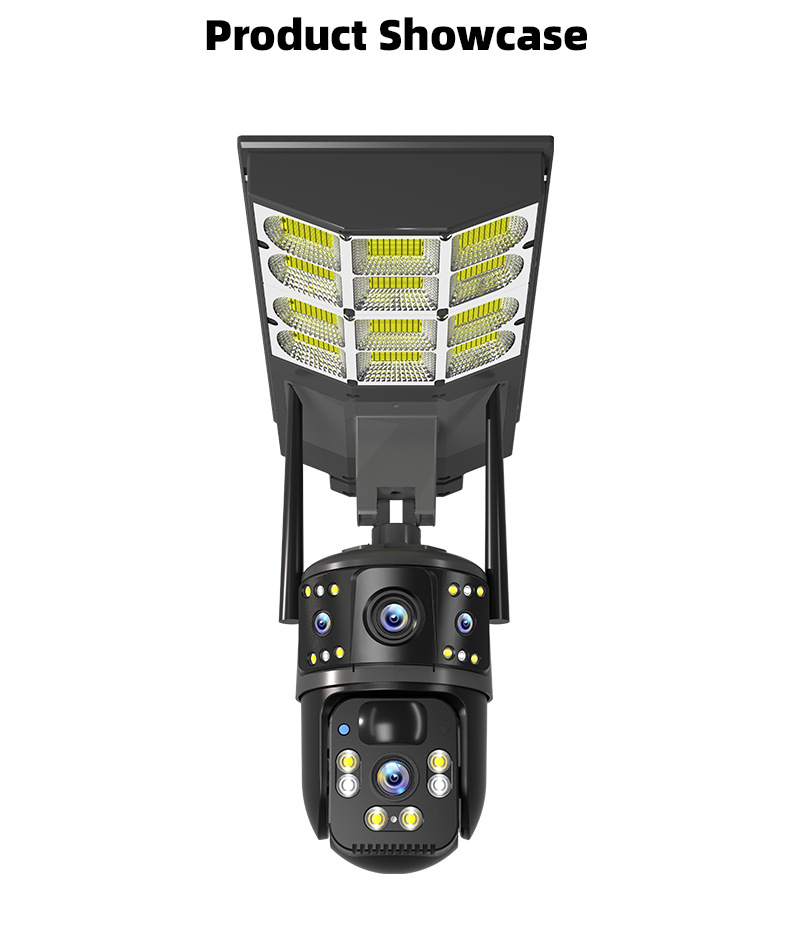
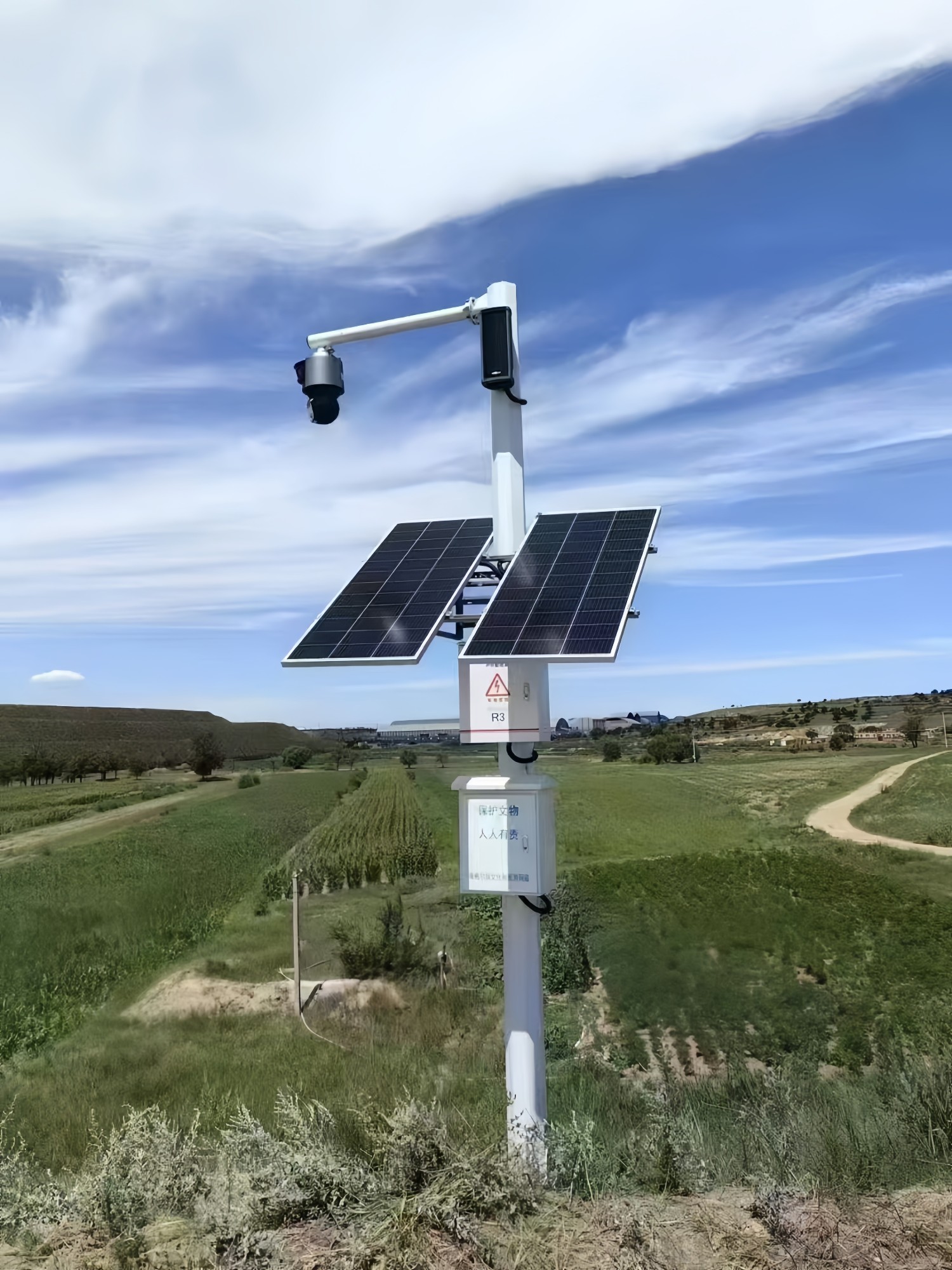
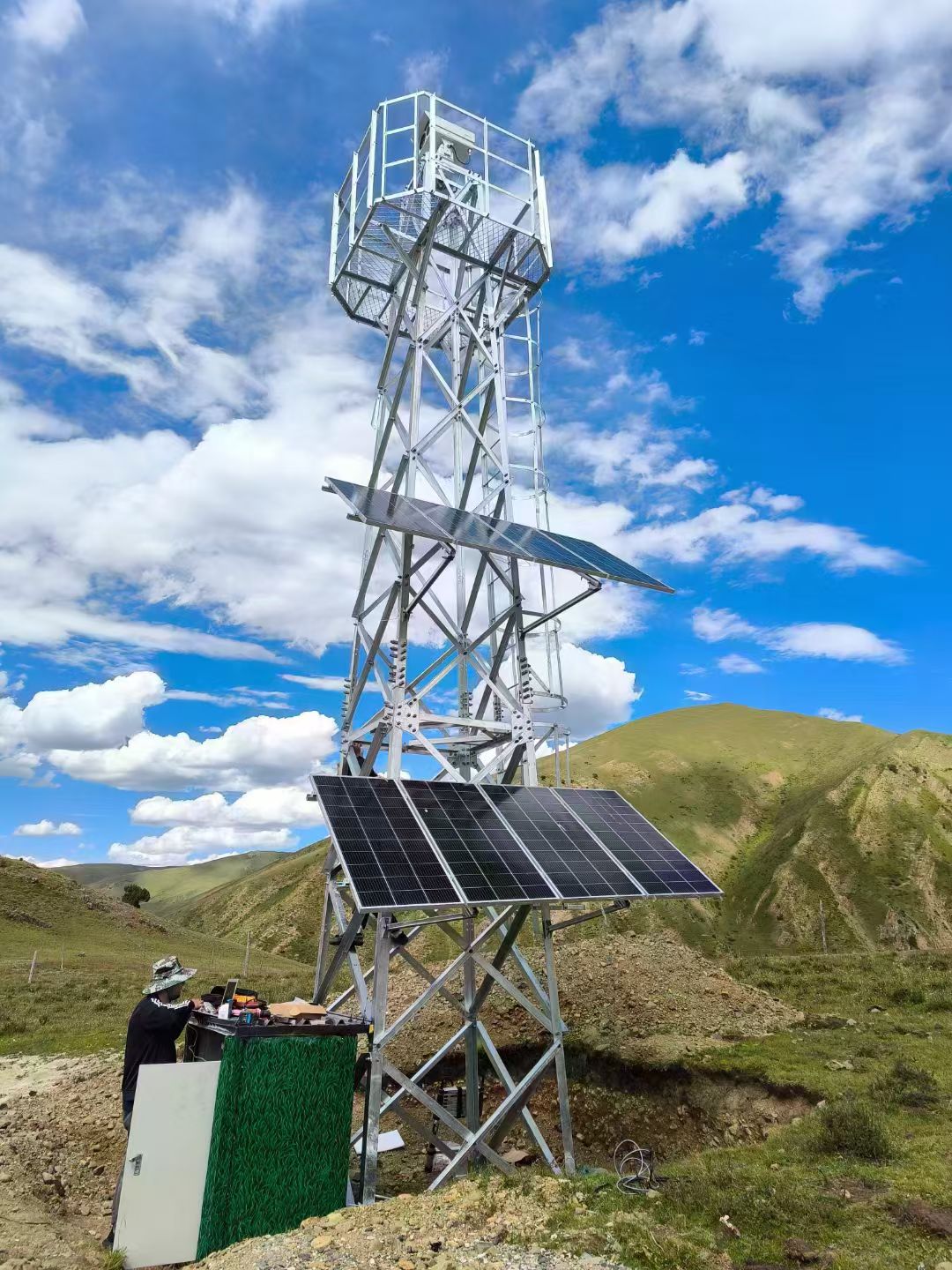
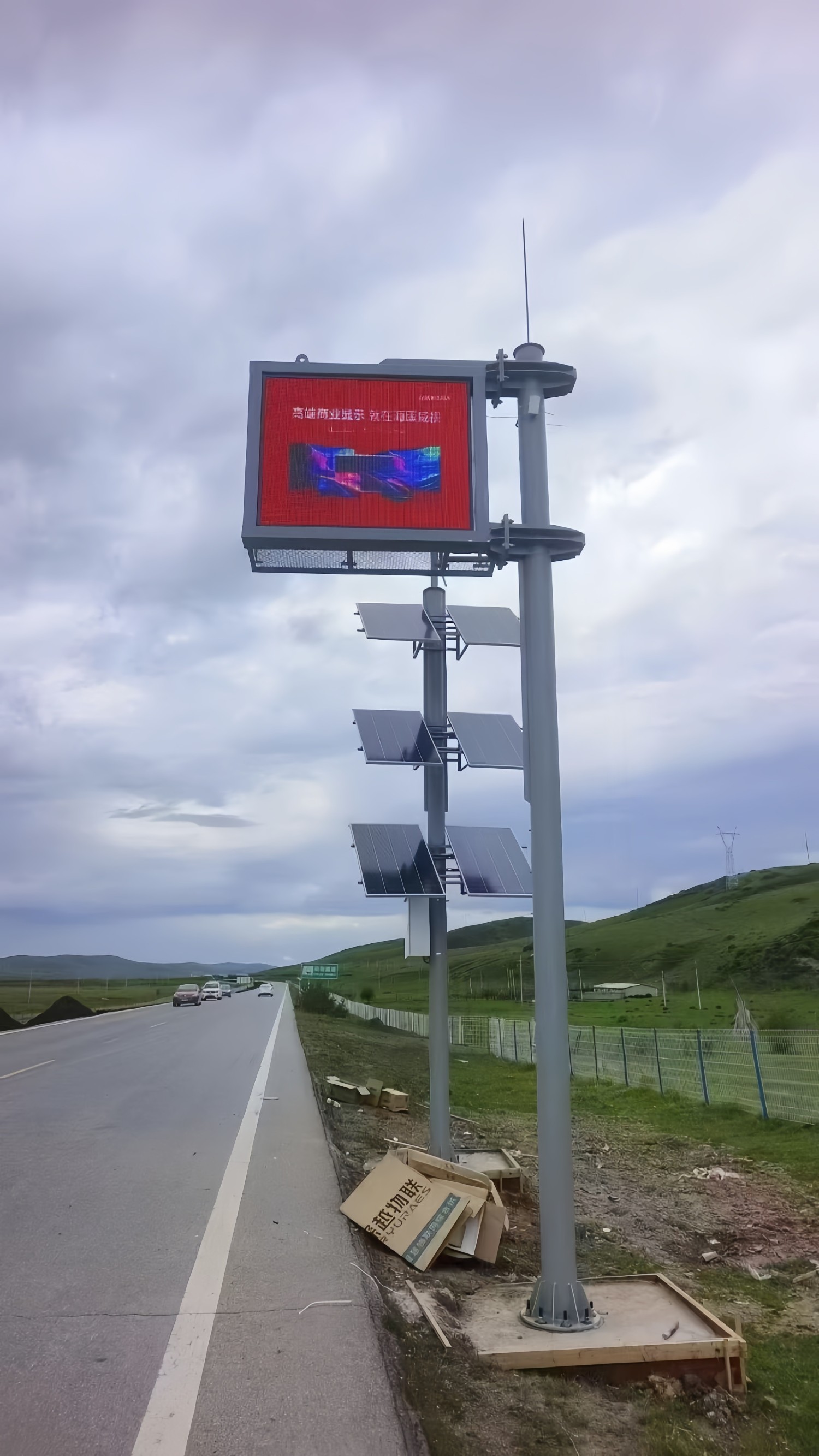
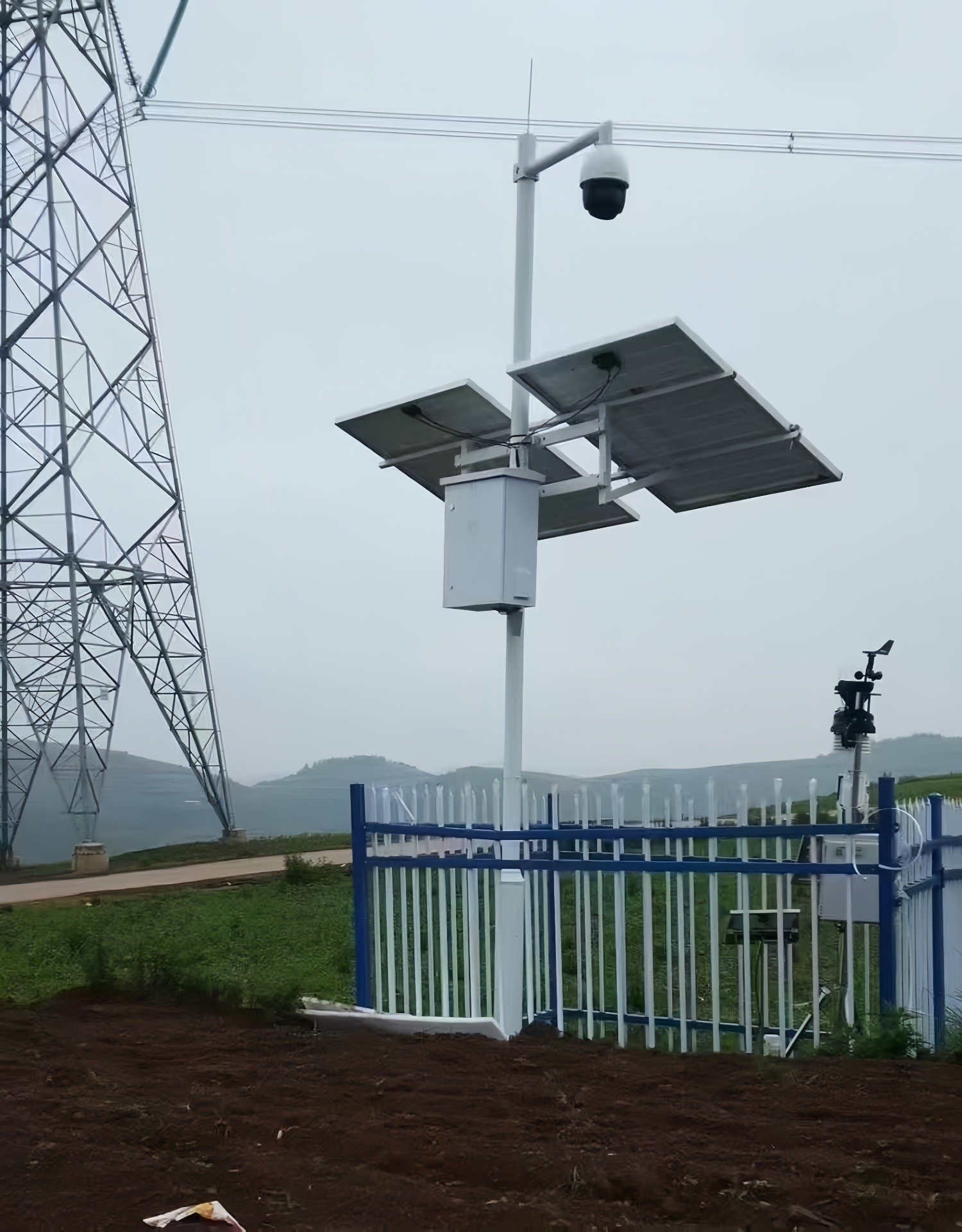
The system combines photovoltaic generation, energy storage, LED lighting, and dual fixed optical channels into a unified outdoor infrastructure unit.
Lighting poles serve as both illumination sources and observation platforms, aligning physical placement with predictable coverage geometry.
A centralized power management logic coordinates energy allocation between lighting and surveillance based on real-world solar availability rather than peak theoretical output.
Why Integrating Lighting and Surveillance Matters
Integrating surveillance directly into street lighting infrastructure eliminates the need for separate camera poles, auxiliary power supplies, and duplicated installation work.
This approach reduces external wiring exposure, simplifies site planning, and lowers the probability of long-term system failure.
More importantly, it aligns visual monitoring coverage with areas already defined by lighting requirements, improving predictability and consistency in public-space observation.
Engineering Boundary Conditions & Design Assumptions
System performance is defined under the following engineering boundary conditions:
✅
Grid Dependency ConstraintDesigned for environments where grid power is unavailable, unreliable, or cost-prohibitive to extend.
✅
Solar Resource AssumptionEnergy autonomy is based on realistic daily solar irradiation patterns rather than peak laboratory conditions.
✅
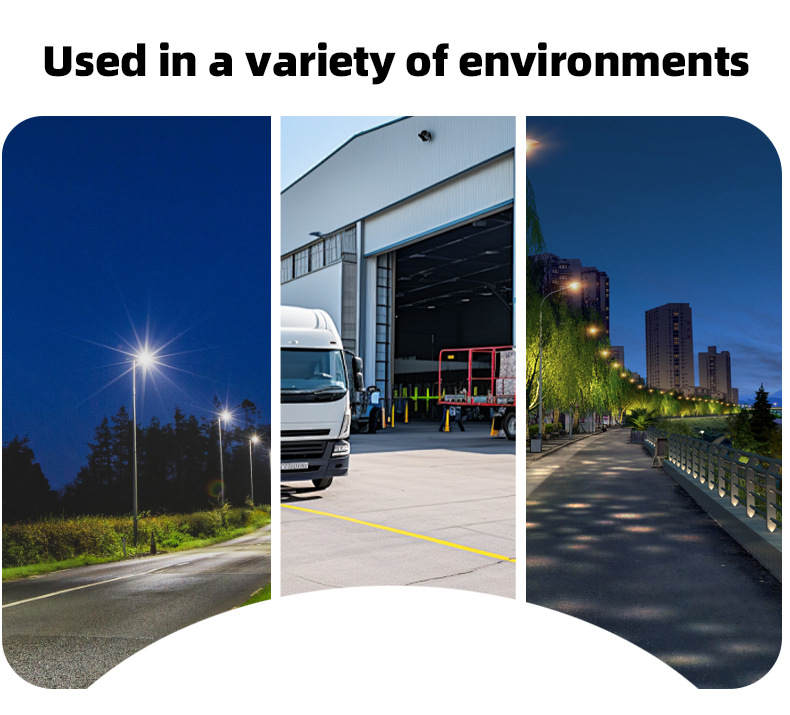
Lighting Geometry ConstraintCoverage assumptions align with roadway, pathway, or perimeter layouts where lighting poles define observation zones.
✅
Energy Prioritization LogicDuring extended low-generation periods, baseline lighting safety and essential surveillance are prioritized over peak performance.
✅
Maintenance Access AssumptionOptimized for infrastructure deployments with limited routine maintenance access.
Decision-Relevant Parameters
The following parameters are presented as engineering decision drivers, not isolated specifications:
Lighting–Surveillance Power Balance
Energy allocation logic determines how illumination intensity and surveillance activity are balanced under varying solar conditions.
Dual-Camera Field-of-View Coverage
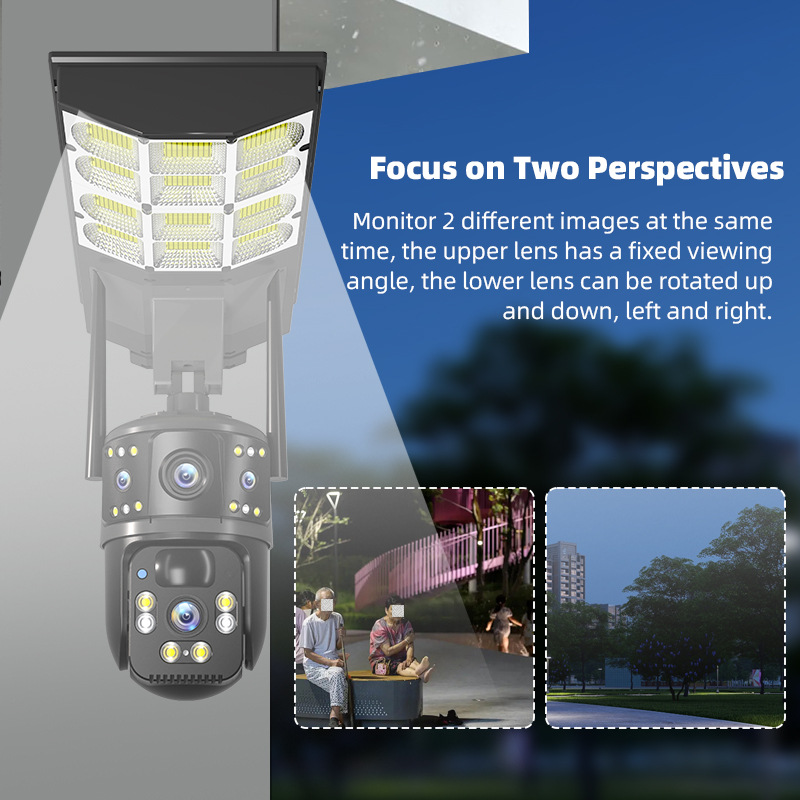
Camera orientation is selected to align with roadway or pedestrian flow, minimizing blind zones without mechanical movement.
Integrated Power Architecture
Shared energy storage and control logic reduce subsystem conflicts and long-term degradation risks.
Engineering Decision Rationale
From an engineering standpoint, this architecture is selected to reduce infrastructure redundancy while maintaining functional continuity:
✅ Shared power and mounting reduce failure points
✅ Fixed dual-camera coverage avoids mechanical wear
✅ Energy-aware prioritization ensures predictable operation
✅ Integrated deployment shortens installation timelines
Engineering Decision Q&A
What engineering problem does a solar-powered street light with integrated surveillance solve?
This system is engineered to provide simultaneous public-area illumination and persistent visual monitoring in locations where grid power availability, cabling reliability, or deployment speed constrain conventional infrastructure solutions.
Its primary value lies in reducing deployment complexity while maintaining functional continuity for both lighting and surveillance.
Under what conditions is an integrated lighting-and-surveillance architecture the correct engineering choice?
An integrated architecture is appropriate when lighting poles already define observation geometry and when adding separate surveillance power and mounting systems would introduce redundancy, higher failure probability, or increased installation cost.
It is particularly suited for roads, perimeters, and open public spaces requiring predictable coverage zones.
How does integrating surveillance into a solar street light affect system reliability?
Integration reduces external wiring, auxiliary mounting structures, and independent power subsystems, thereby lowering long-term failure points.
Reliability improves when lighting and surveillance share a unified power management logic rather than operating as loosely coupled systems.
Why is dual-camera configuration selected instead of a single viewing channel?
Dual-camera configuration enables bi-directional or complementary field-of-view coverage aligned with roadway or pathway geometry.
This eliminates blind zones inherent to single-direction observation and avoids reliance on mechanical repositioning.
How does solar energy availability influence lighting and surveillance prioritization?
Solar availability governs how illumination intensity and surveillance duty cycles are balanced.
Engineering logic prioritizes baseline lighting safety and essential visual monitoring during extended low-irradiance periods rather than maximizing peak brightness or continuous high-frame-rate recording.
Under what conditions does combined lighting and surveillance performance become constrained?
Performance becomes constrained only when prolonged low solar generation exceeds the designed autonomy window and energy recovery remains insufficient.
In such cases, systems transition to reduced illumination levels and prioritized visual coverage rather than full shutdown.
Is this architecture suitable for permanent unattended public infrastructure deployment?
Yes, provided site conditions align with defined assumptions regarding solar exposure, traffic patterns, and acceptable maintenance intervals.
When these conditions are met, integrated solar lighting and surveillance systems operate predictably without reliance on continuous grid power or frequent field intervention.
When does an integrated street-light surveillance system offer limited engineering advantage?
Integrated systems offer limited advantage in environments where grid power is stable, cabling is readily available, and surveillance geometry does not align with lighting pole placement.
In such cases, independent lighting and camera systems may provide greater configuration flexibility.
Engineering Takeaway
This system should be evaluated as an integrated infrastructure solution, not as a lighting upgrade or a camera add-on.
Its engineering value lies in how effectively it reduces deployment complexity, aligns coverage with public-space geometry, and sustains reliable operation under real-world energy constraints.







 Deutsch
  English
