Single-Point Wide-Angle Monitoring for Distributed Outdoor Sites
* Lens Specifications: 4mm;
* Wide Angle: 120°;
* Resolution: Main stream: 2560*1440, Sub stream: 800*896;
* Video Storage: Supports TF card (32~256G) video storage;
* Voice Intercom: Supports two-way voice intercom;
* Night Vision Mode: Supports 2 adjustable night vision modes (infrared mode/full-color mode);
* PTZ Rotation: PTZ supports 355° left and right rotation, and 90° up and down rotation;
* Application Software: Supports iOS and Android;
* PIR Detection Range: PIR range 10 meters, 120 degrees;
* Solar Panel Power: 7.5W;
* Charging Interface: 5V Type-C interface;
* Battery Capacity: 6000mAh;
* Package Contents: Camera, 7.5W solar panel, solar panel bracket, instruction manual, screw pack;
* Package Dimensions: 260*190*125MM;
* Single Unit Weight: 1.3kg.
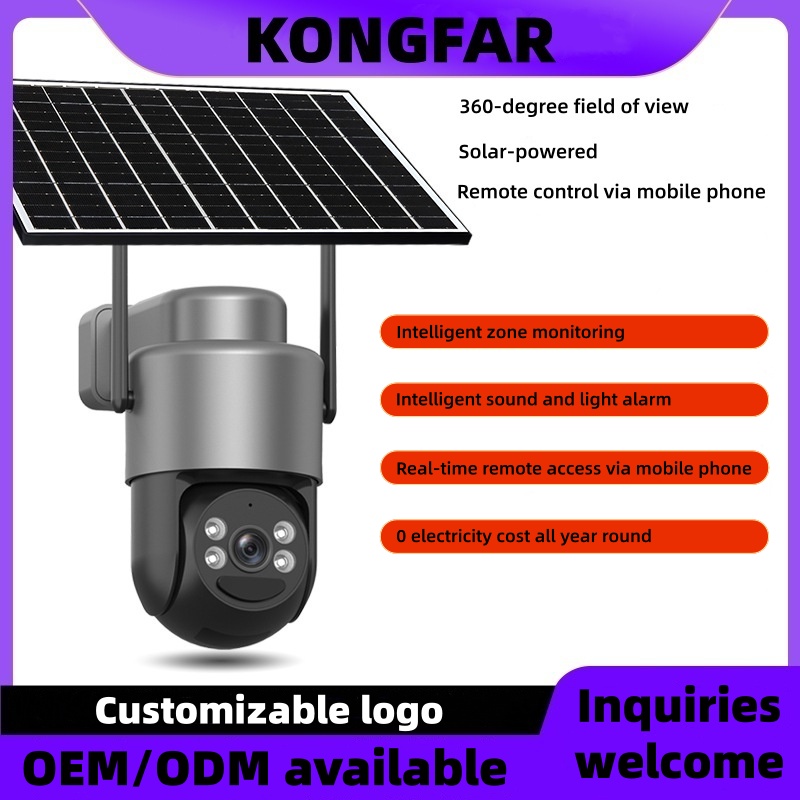
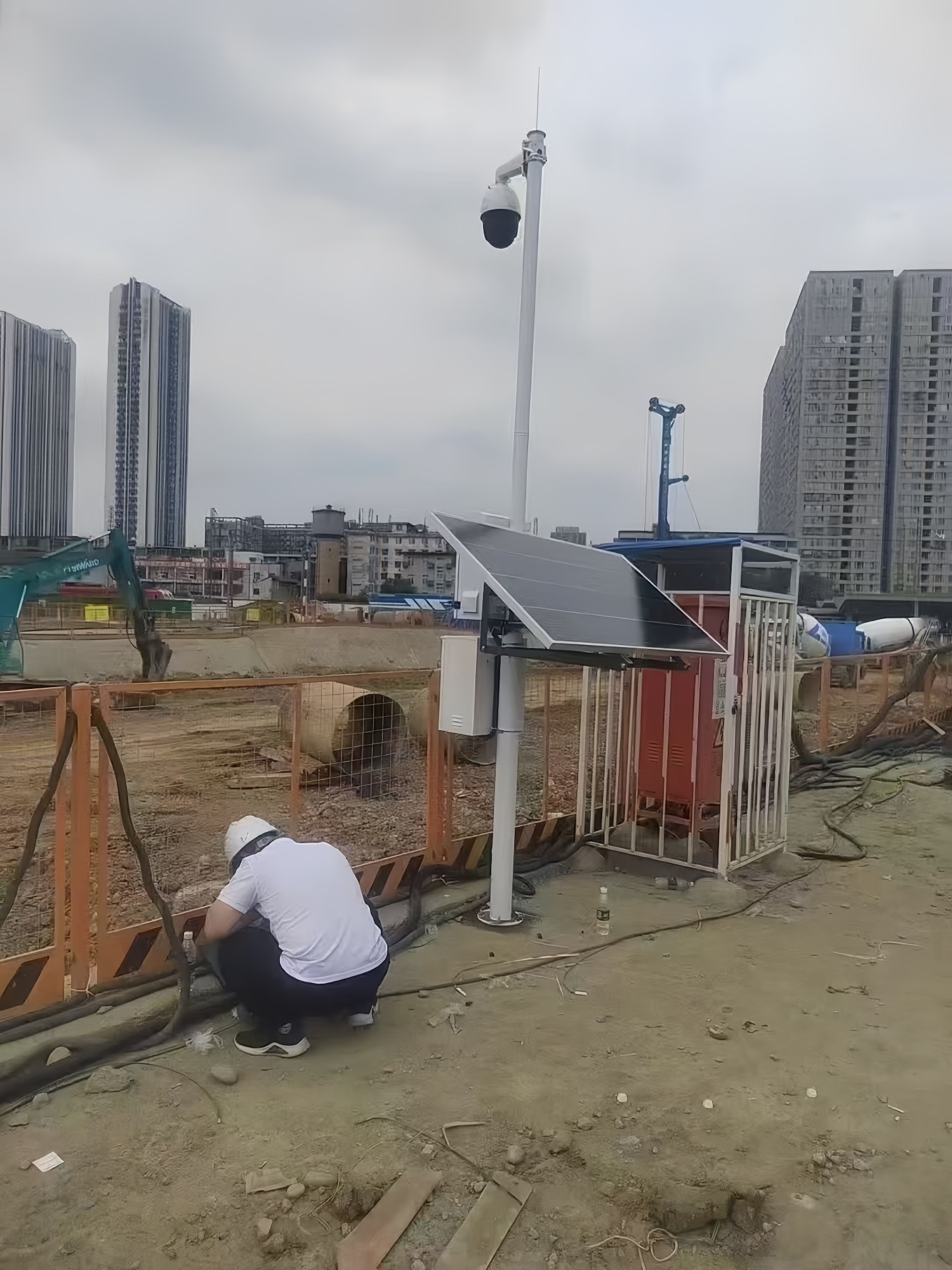
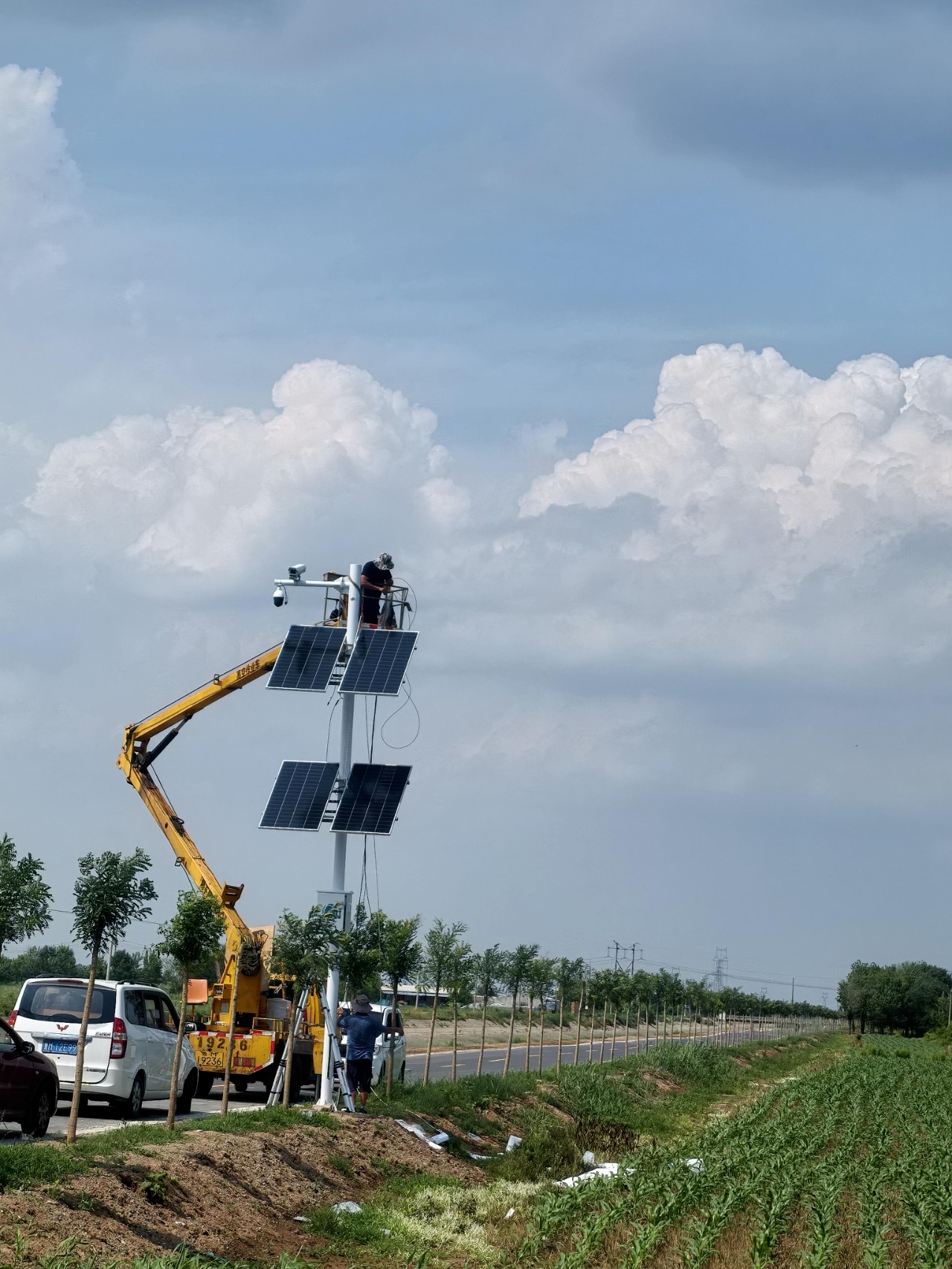
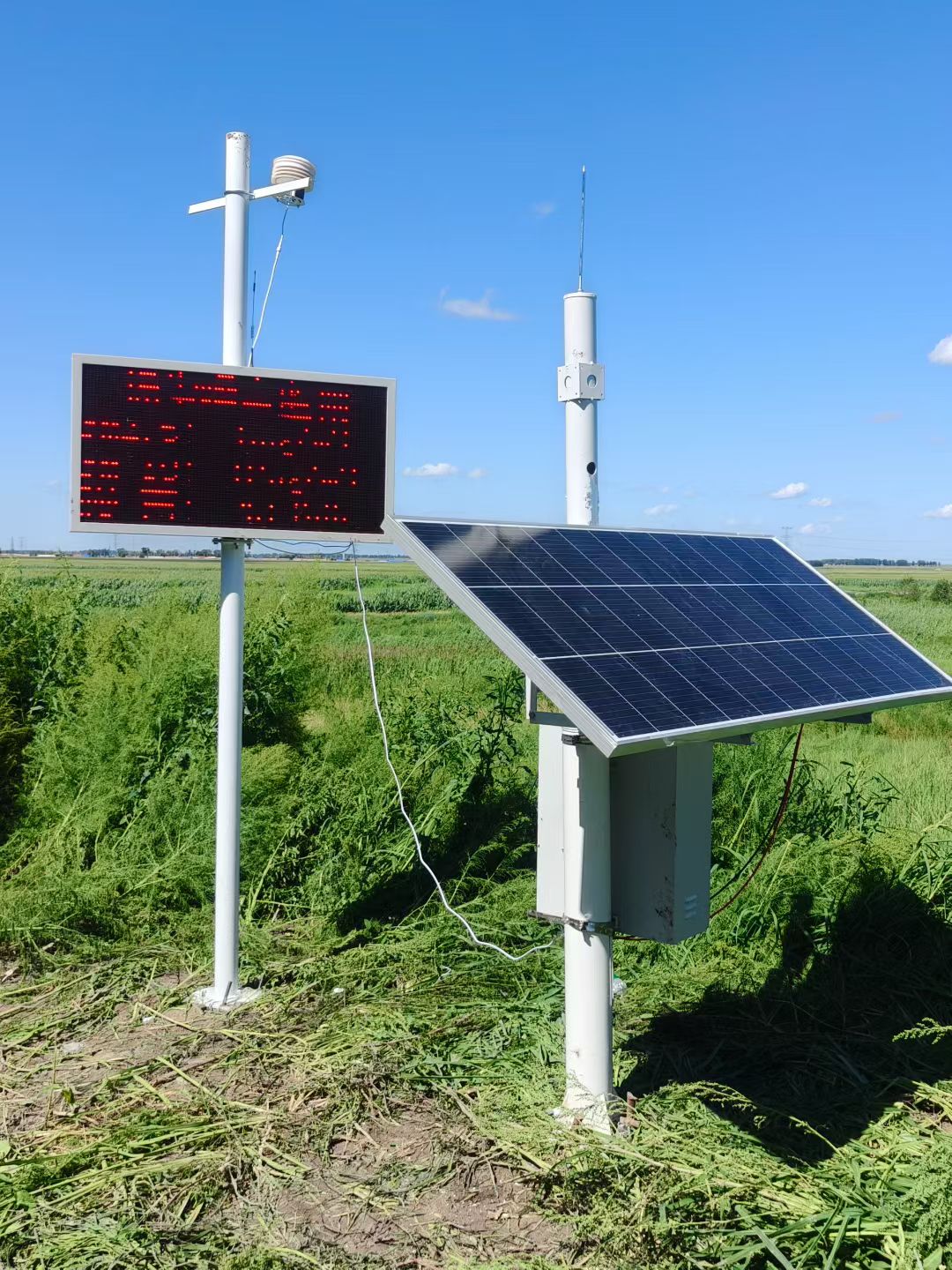
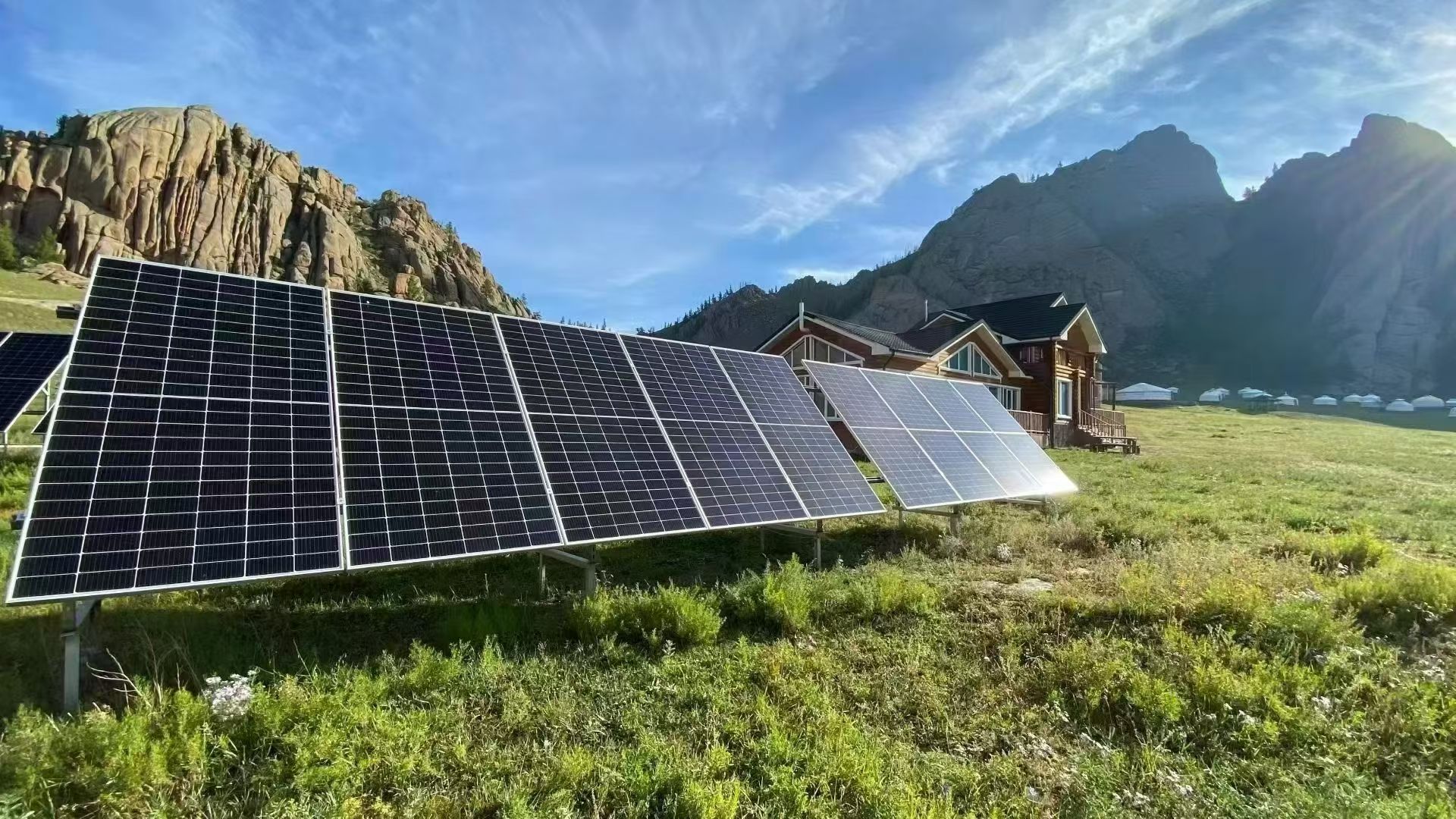
 | Manufacturer-Level Integration for Solar-Powered Monitoring Systems This product is backed by Shenzhen Kongfar Technology Co., Ltd., a manufacturer specializing in solar-powered monitoring and power supply systems with integrated R&D, production, and global delivery capabilities.
|
End-to-End Manufacturing Workflow for Solar-Powered Surveillance Systems
|  |
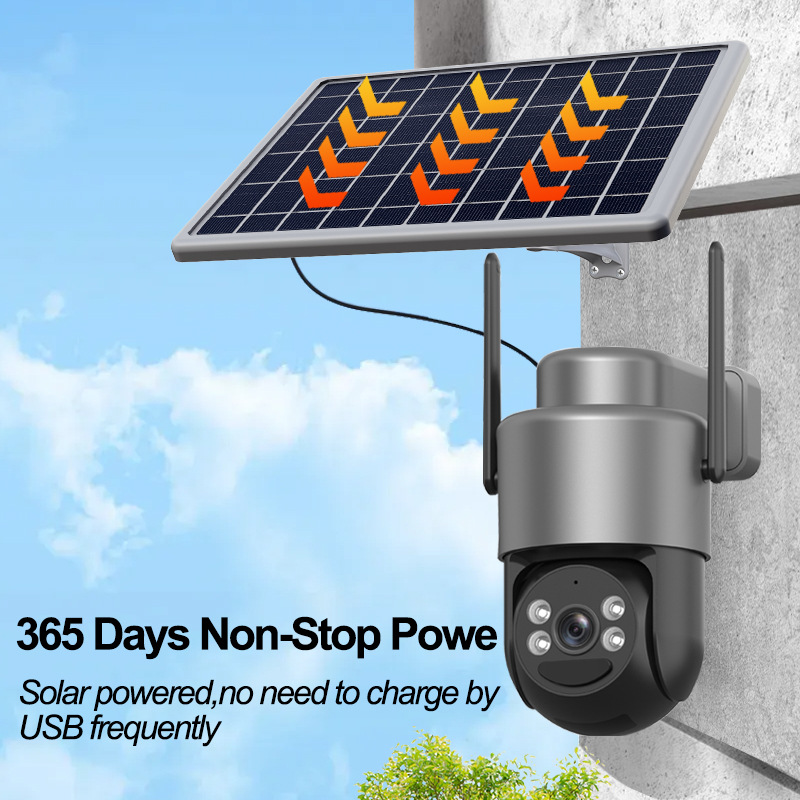
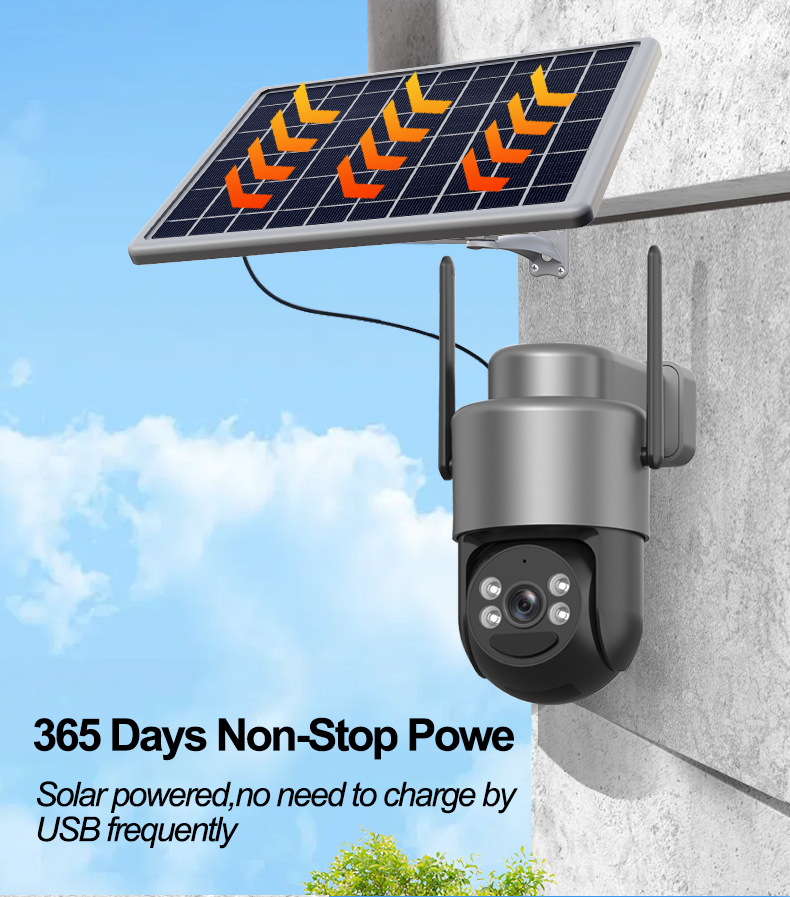 | Autonomous Solar-Powered PTZ Surveillance Node with Continuous Energy Availability |
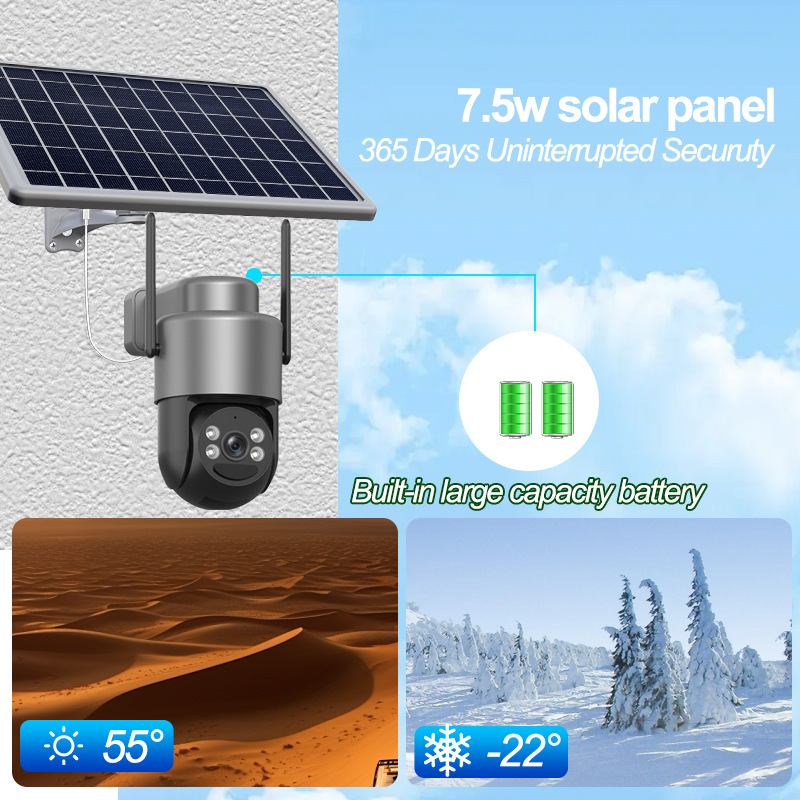
Integrated Solar Energy Module with Temperature-Resilient Storage for Continuous PTZ Operation | 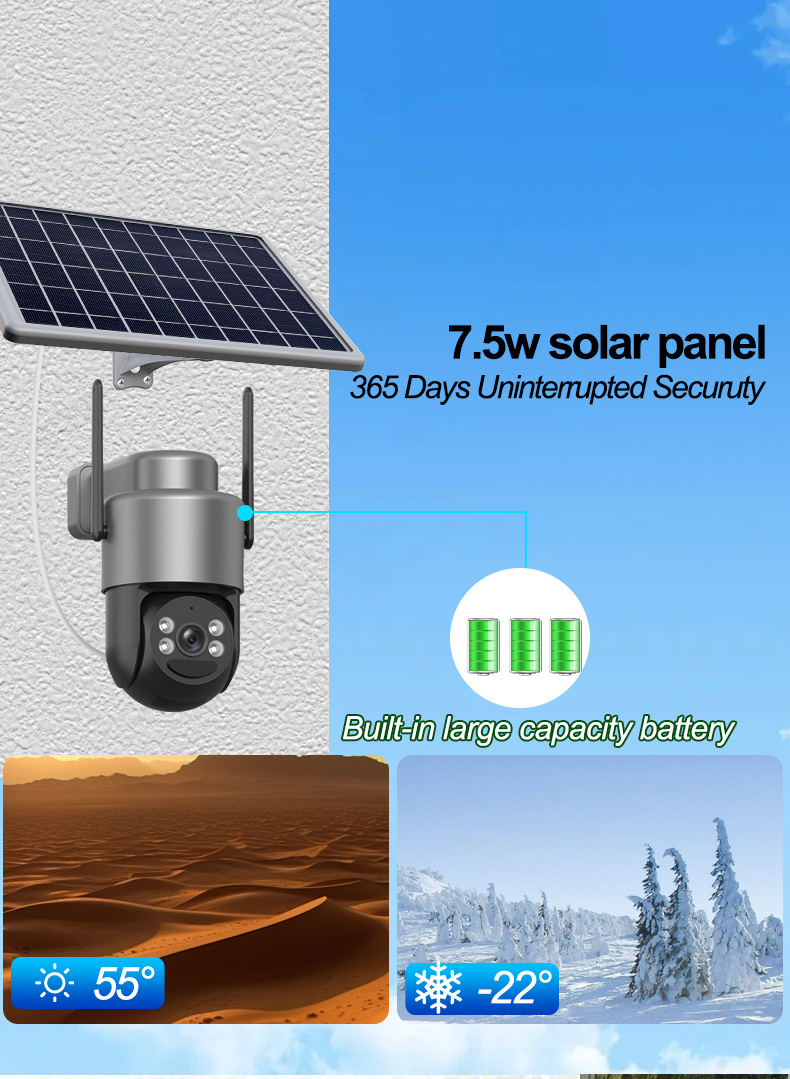 |
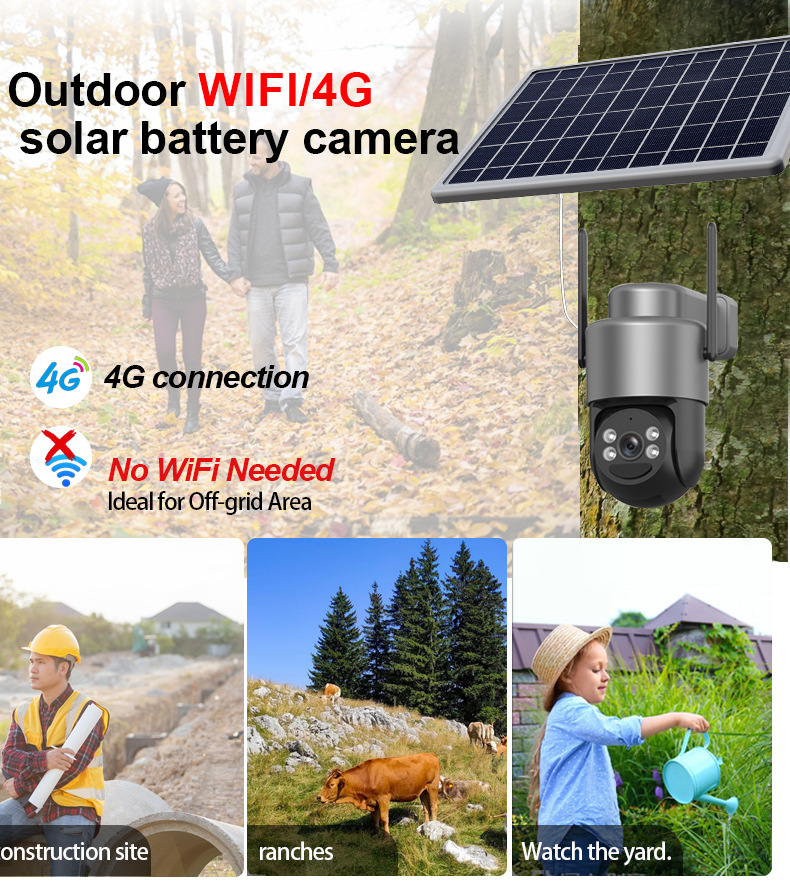 | Cellular-First Connectivity Architecture for Off-Grid Solar Surveillance Deployment |
Bidirectional Audio Communication Layer for Remote Solar Surveillance Systems |  |
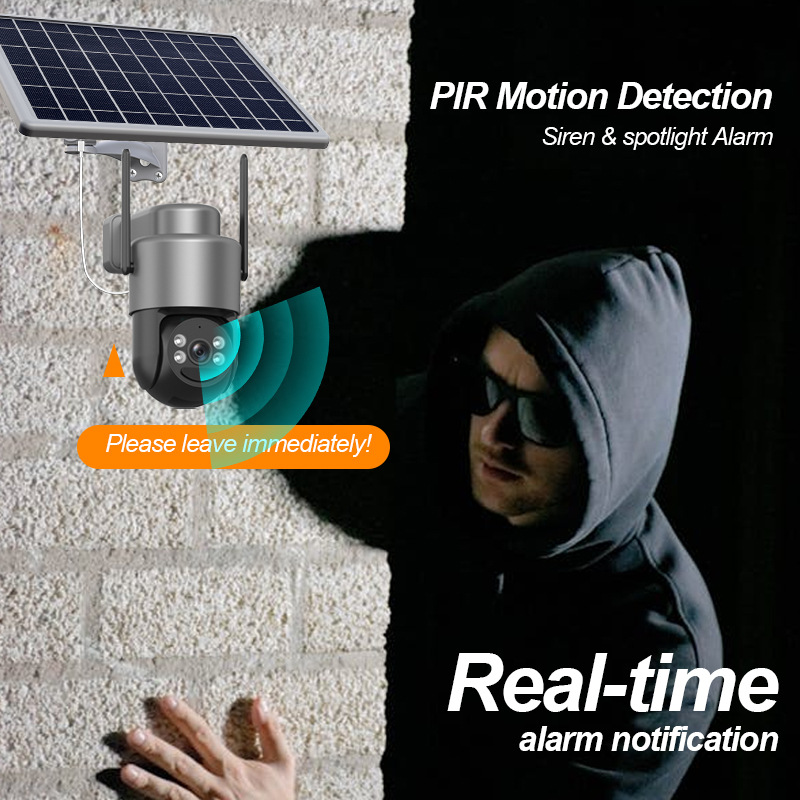
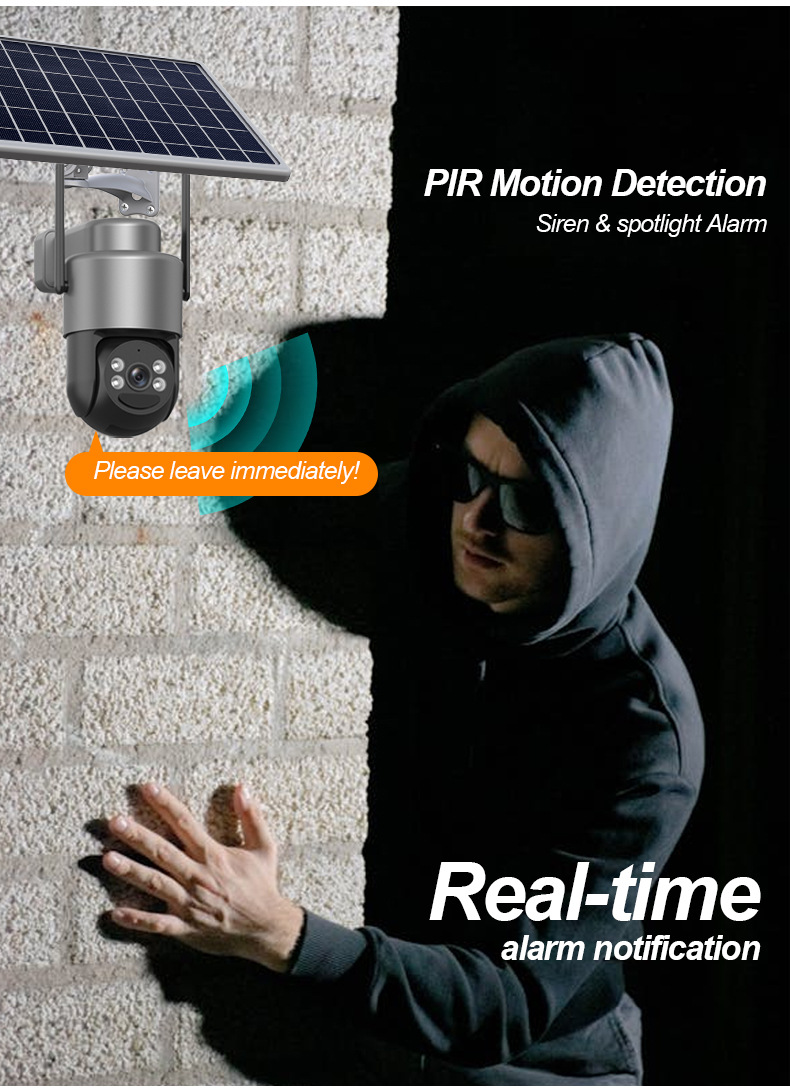 | PIR-Triggered Active Deterrence and Real-Time Alarm Response Layer |
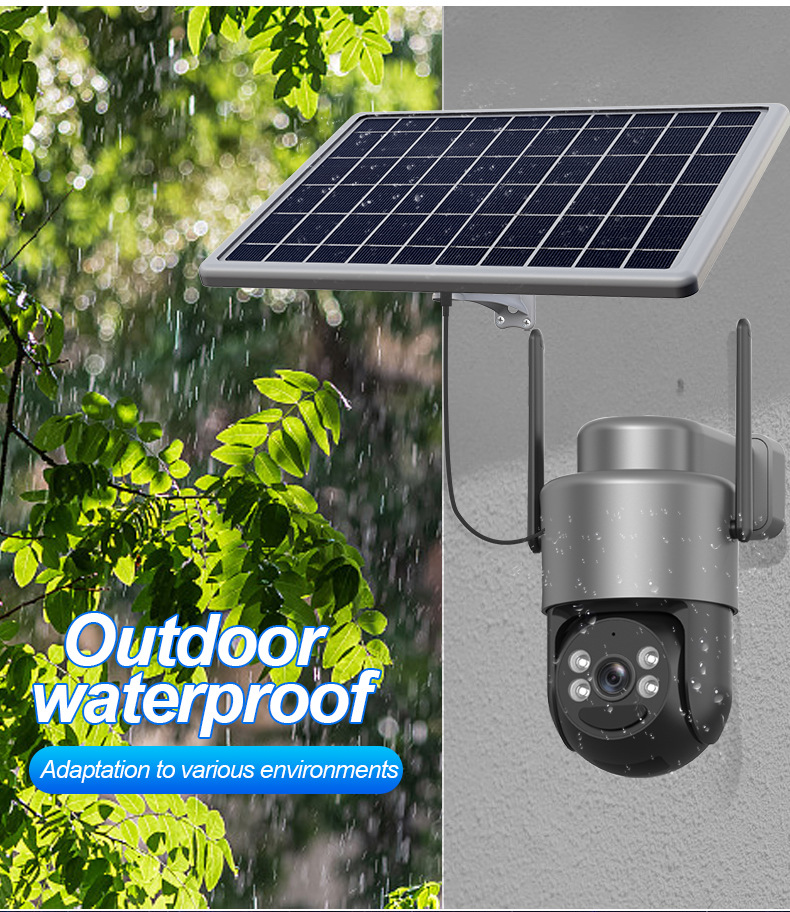
| All-Weather Outdoor Environmental Adaptation and Sealed Power-Vision Architecture This image defines a solar-powered PTZ surveillance system engineered for continuous outdoor deployment under uncontrolled environmental exposure, where the camera body, power intake, and communication modules are structurally sealed and thermally tolerant to maintain operational stability during rain, humidity, dust, and temperature variation, enabling reliable video capture, energy harvesting, and wireless transmission in environments where conventional indoor-rated devices fail, such as open yards, forest edges, agricultural land, construction perimeters, and remote infrastructure sites, with the system’s waterproof enclosure, corrosion-resistant materials, and isolated power-routing design forming a single integrated protection architecture that preserves imaging accuracy, battery health, and network availability without requiring shelters, external housings, or climate-controlled installations. |
|
| Distributed Remote Access Architecture with Multi-User Authorization Control This image establishes a solar-powered surveillance system designed around location-independent remote access, where live video, playback, PTZ control, alerts, and audio communication are securely accessible through authenticated mobile clients regardless of geographic distance, network type, or time zone, enabling the system to function as a shared monitoring endpoint rather than a single-user device, with role-based multi-user viewing permissions allowing authorized family members, operators, or stakeholders to simultaneously access the same camera feed without degrading stream stability, command responsiveness, or data integrity, making the system suitable for scenarios that require continuous off-site supervision such as remote residences, distributed assets, agricultural land, construction projects, and unattended facilities, where the camera becomes a persistent networked node that maintains visibility, control continuity, and situational awareness even when no personnel are physically present at the installation site. |
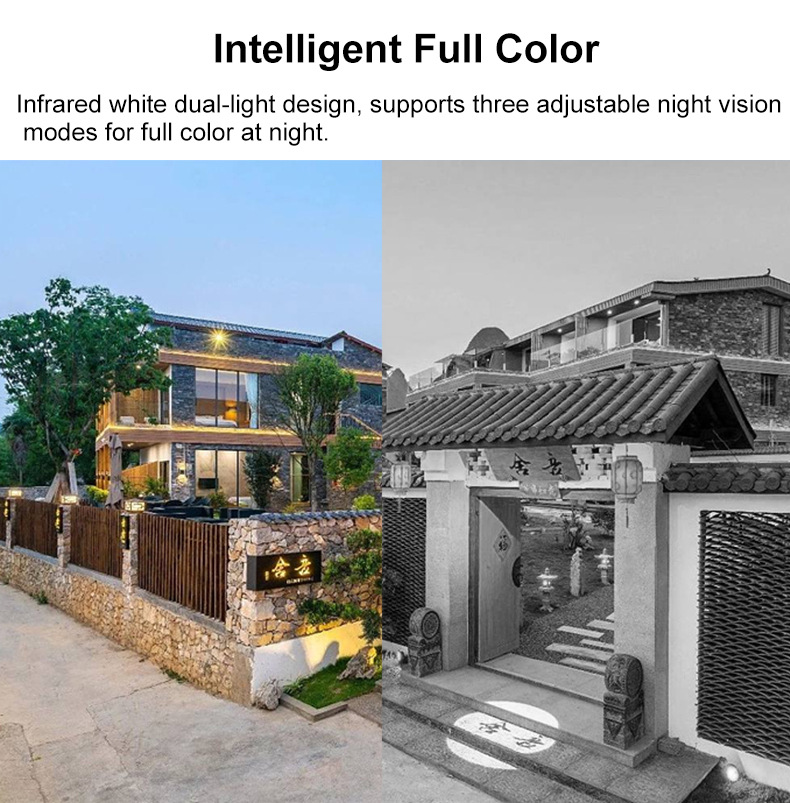
| Adaptive Dual-Light Night Imaging Architecture with Mode-Selectable Color Fidelity This image defines a solar-powered surveillance imaging system built on a dual-light optical architecture that integrates infrared illumination and visible white light sources into a coordinated night-vision control layer, enabling the camera to dynamically switch between grayscale infrared monitoring, hybrid assisted color imaging, and full-color night vision based on ambient light levels, motion events, and user-defined security policies, thereby preserving scene detail, color accuracy, and subject identifiability after sunset without imposing continuous high power draw, where the system maintains low-energy infrared observation as a baseline state and selectively activates visible illumination only when conditions require color-critical evidence capture, ensuring that night surveillance transitions from simple presence detection to legally and operationally usable visual records, particularly in residential perimeters, access points, and outdoor compounds where distinguishing clothing, vehicles, and environmental context at night is a functional requirement rather than a cosmetic feature. |
|
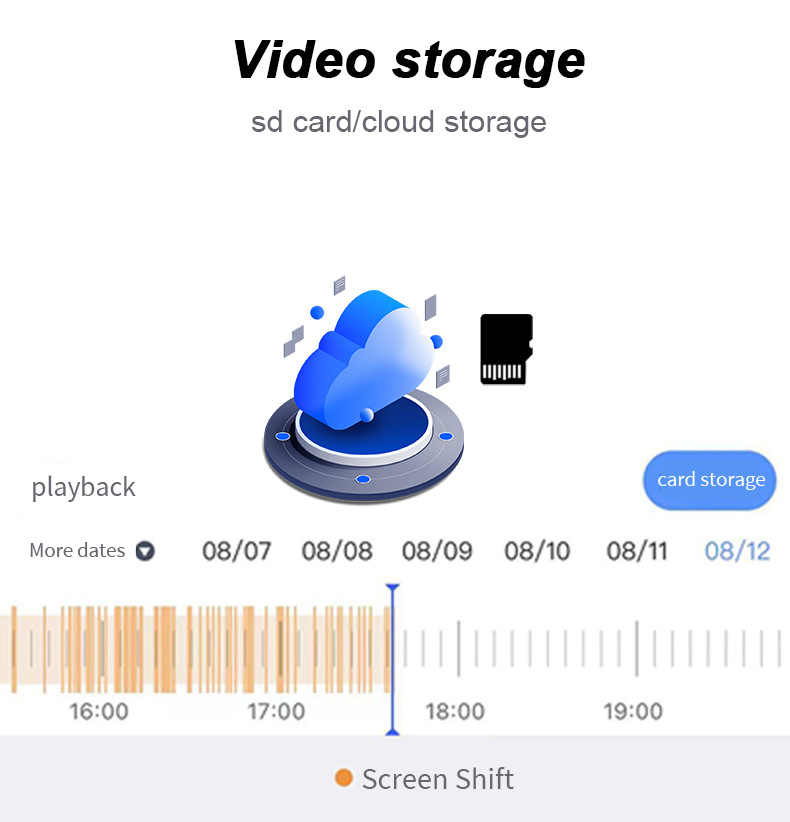 | Hybrid Edge–Cloud Video Retention Architecture with Event-Indexed Playback Logic This image defines a dual-layer video storage architecture designed for solar-powered and bandwidth-variable surveillance deployments, where on-device SD card storage functions as the primary edge retention layer for continuous or event-triggered recording while cloud storage operates as a synchronized secondary layer for off-site redundancy, remote access, and long-term evidence preservation, under constraints of intermittent connectivity, limited uplink bandwidth, and power-aware operation, in which recorded video is automatically indexed by time and motion events to enable timeline-based playback, rapid scrubbing, and precise incident retrieval without requiring full video streaming, allowing the system to preserve critical footage locally during network outages and selectively upload priority clips when connectivity is available, making the architecture suitable for residential security, remote properties, construction sites, and off-grid environments where reliability, traceability, and post-event review are required without dependence on continuous cloud availability. |
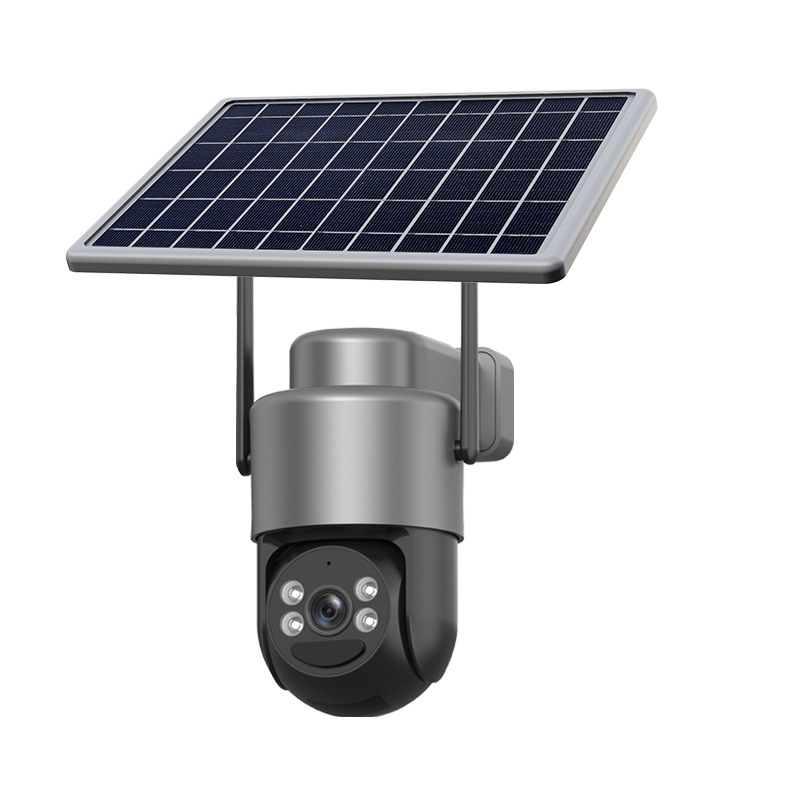
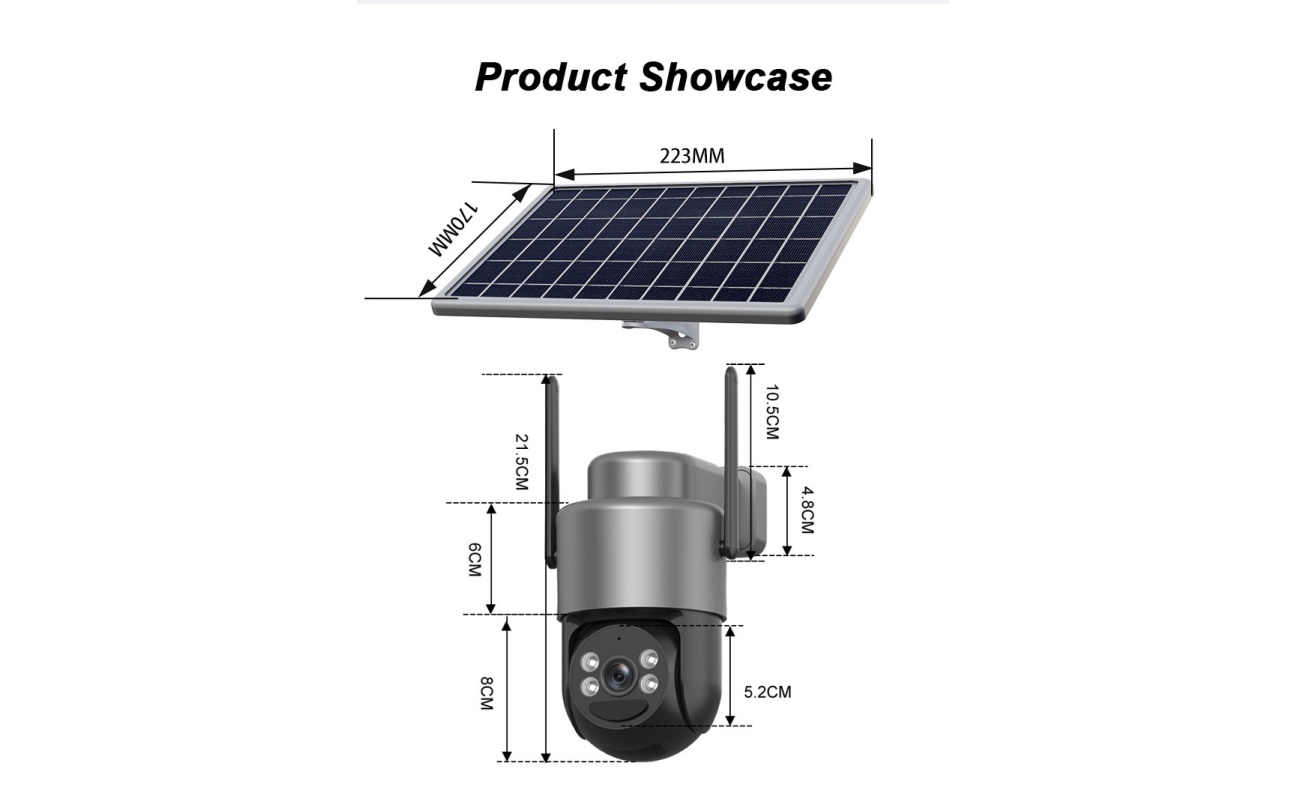
| Integrated Dimensional Envelope Definition for Wall-Mounted Solar PTZ Surveillance Nodes This image defines the physical and spatial envelope of a wall-mounted, solar-powered PTZ surveillance unit engineered for permanent outdoor deployment, where the overall geometry—including a compact camera body, vertically oriented antenna elements, and a top-mounted photovoltaic module with a defined footprint—establishes the installation boundary conditions for façade mounting, pole adjacency, and clearance from architectural obstructions, ensuring predictable load distribution, wind exposure tolerance, and maintenance access under real-world constraints such as limited wall space, uneven surfaces, and mixed materials, while the proportional relationship between the solar panel dimensions and the camera housing guarantees sufficient energy harvesting area without overhang risks, making the system suitable for residential buildings, perimeter walls, construction sites, and remote structures where standardized mounting envelopes, repeatable installation outcomes, and compatibility with existing infrastructure are required for long-term, off-grid surveillance operation. | 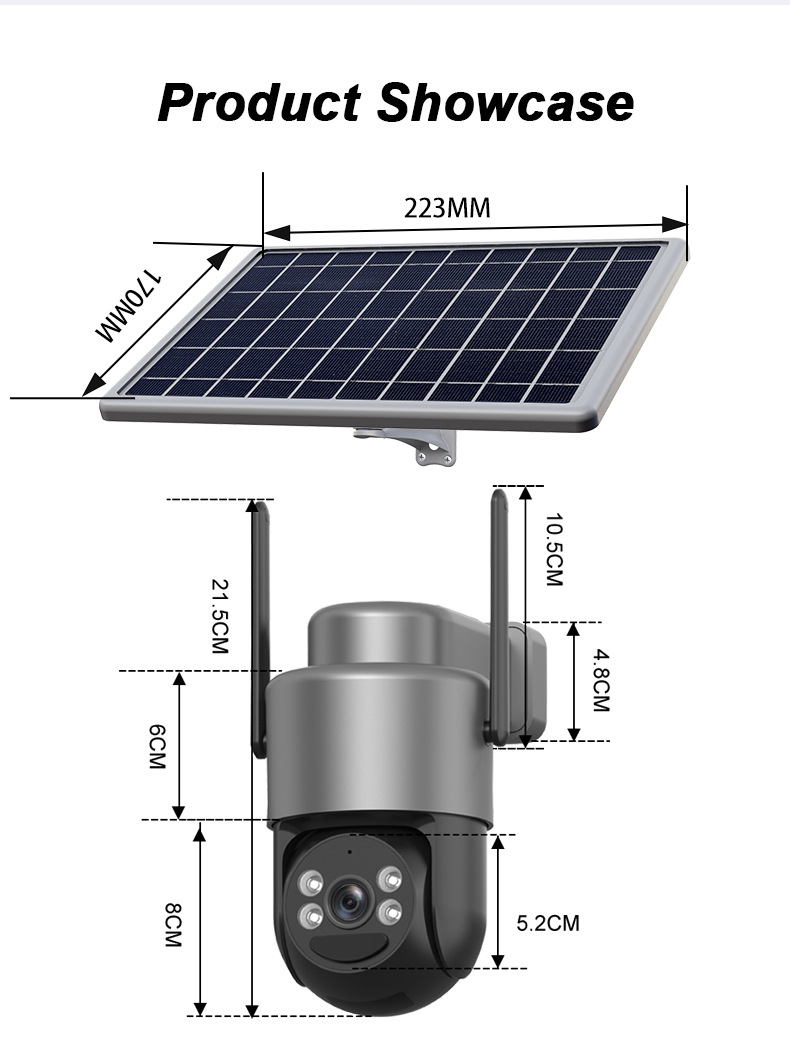 |
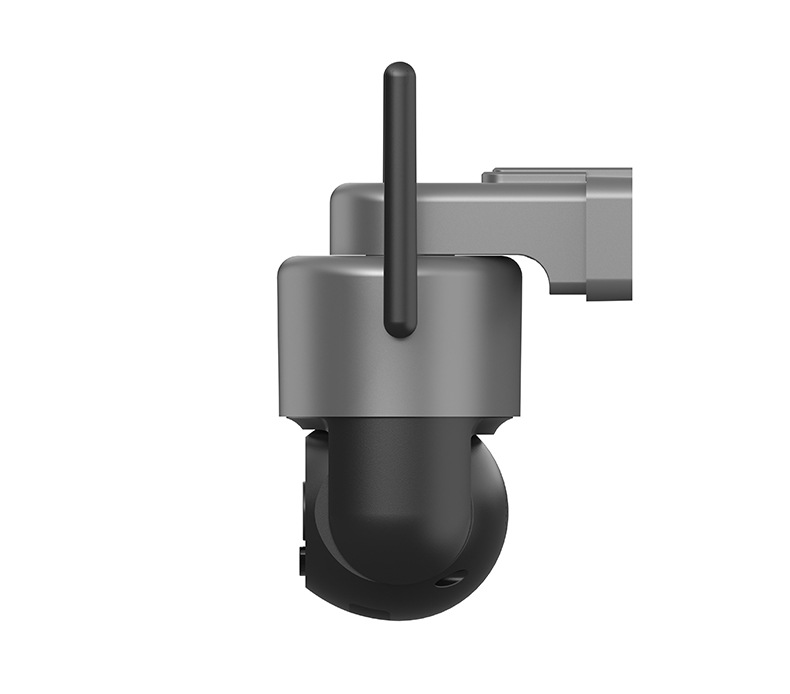 | Side-Profile Mounting Geometry Definition for Solar-Powered PTZ Surveillance Units This image defines the side-profile mechanical and installation geometry of a solar-powered PTZ surveillance unit, illustrating how the vertically stacked camera housing, integrated antenna orientation, and rear-anchored mounting arm establish a controlled offset from the mounting surface to preserve pan-tilt clearance, signal propagation efficiency, and thermal airflow, while maintaining a compact projection depth that minimizes visual intrusion and wind load, making the system suitable for wall-mounted deployments on residential façades, boundary walls, utility structures, and light industrial buildings where predictable rotation envelopes, antenna line-of-sight stability, and long-term mechanical alignment are required under outdoor conditions without grid power access. |

Copyright © 2025 Shenzhen Kongfar Technology Co., Ltd. Alle Rechte vorbehalten. Alle Rechte vorbehalten.

 Deutsch
  English