High-Reliability Energy Infrastructure Ensuring Continuous Outdoor Surveillance Operation in Subtropical, High-Humidity, Grid-Deficient EnvironmentsDirect Answer
In suburban and construction-adjacent surveillance deployments around Huainan, Anhui, stable security monitoring cannot be sustained through undersized solar kits or battery-only solutions.
An 800W off-grid solar architecture combined with 400Ah sealed gel battery storage and intelligent energy management ensures uninterrupted surveillance operation by compensating for prolonged rainy periods, seasonal temperature variation, and high ambient humidity in grid-deficient outdoor environments.
Engineering Takeaways / Decision-Critical Insights
✅ Surveillance continuity in subtropical regions depends on storage redundancy and humidity resilience, not solar wattage alone
✅ Prolonged overcast and rainfall-driven generation gaps place greater stress on battery autonomy than on peak PV output
✅ Sealed gel battery chemistry significantly reduces condensation-related short-circuit risks in high-humidity environments
✅ Multi-panel photovoltaic arrays reduce single-point generation failure during intermittent cloud cover
✅ Remote power visibility is essential for dispersed suburban surveillance sites with limited maintenance access
SECTION 1 · Site-Specific Engineering Constraints in Huainan, Anhui
Outdoor security surveillance in Huainan is defined by a combination of environmental and operational constraints:
✅ Subtropical monsoon climate with frequent rainfall, extended cloudy periods, and high annual humidity
✅ Surveillance points deployed in suburban fields and construction perimeters with no grid access
✅ Winter low temperatures reducing conventional battery discharge efficiency
✅ Summer moisture and condensation increasing corrosion and short-circuit risk
✅ Dispersed monitoring locations causing high labor cost for manual inspection and battery replacement
These constraints make grid-connected systems and low-capacity solar configurations structurally insufficient for continuous surveillance operation.
SECTION 2 · Power Architecture & System Topology
Photovoltaic Generation Design for High-Humidity Environments
The system adopts a multi-panel photovoltaic architecture optimized for energy reliability rather than peak output:
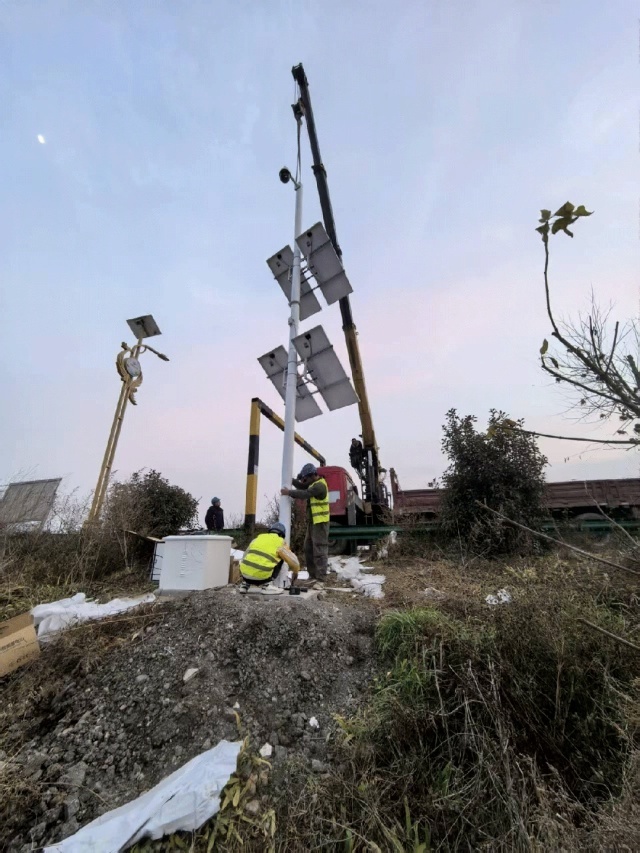
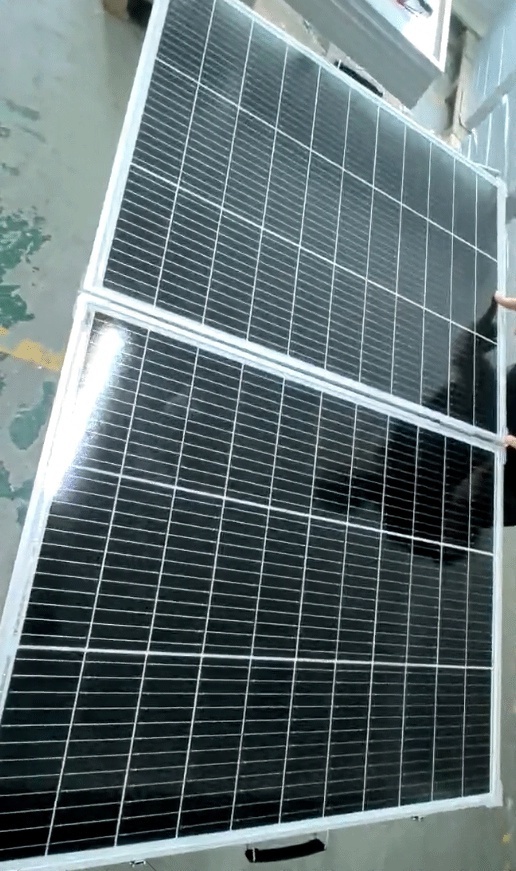
✅ 800W PV array using parallel-connected panels to stabilize generation under intermittent cloud cover
✅ Anti-humidity surface treatment reducing moisture-induced degradation
✅ Array-based layout minimizing output loss from partial shading or localized contamination
✅ Generation capacity sized to meet daytime surveillance load while preserving battery recharge margin
Design priority is continuous energy recovery, not maximum instantaneous generation.
Energy Storage & Moisture-Protection Strategy
Energy storage performance is the dominant reliability factor in Huainan’s climate:
✅ 400Ah sealed gel battery configuration (dual-unit system) providing wide-temperature operation and high moisture tolerance
✅ Fully sealed construction preventing condensation-related short circuits
✅ Storage autonomy designed for approximately 3–4 consecutive low-generation days during extended rainfall
✅ Conservative depth-of-discharge strategy extending battery service life and reducing replacement frequency
This storage-centric approach prevents surveillance outages during prolonged overcast cycles.
Intelligent Control & Remote Power Supervision
System stability is reinforced through continuous supervisory control:
✅ Intelligent controller coordinating PV generation, battery charging, and load distribution
✅ Real-time mobile visibility of PV output, battery state-of-charge, and system load
✅ Automated alerts triggered by abnormal voltage, capacity depletion, or charging behavior
✅ Preventive intervention enabled without on-site inspection
Remote supervision shifts maintenance from reactive repair to condition-based management.
Project-Level Engineering Parameters (Reference Conditions)
The following parameters define the reference operating conditions under which the above engineering conclusions remain valid.
Load Profile (Continuous Surveillance Operation)
✅ Typical fixed camera load: 8–15 W per unit
✅ Transmission and networking equipment: 15–25 W
✅ Average continuous system load: approximately 60–90 W
✅ Night-time peak and transient load allowance: up to 120 W
Engineering note:System sizing prioritizes continuous baseline load stability rather than short-duration peak consumption.
Energy Autonomy Assumptions
✅ Designed autonomy: 3–4 consecutive days without effective solar input
✅ Reference scenario: prolonged rainfall and dense cloud cover typical of subtropical monsoon seasons
✅ Battery discharge depth maintained within engineering safety margins to preserve cycle life
Engineering note:Autonomy assumptions are based on worst-case seasonal irradiance rather than annual average conditions.
Field Deployment Constraints
✅ No utility grid availability at surveillance locations
✅ Limited physical access, with inspection intervals measured in weeks rather than days
✅ High ambient humidity and condensation risk throughout most of the year
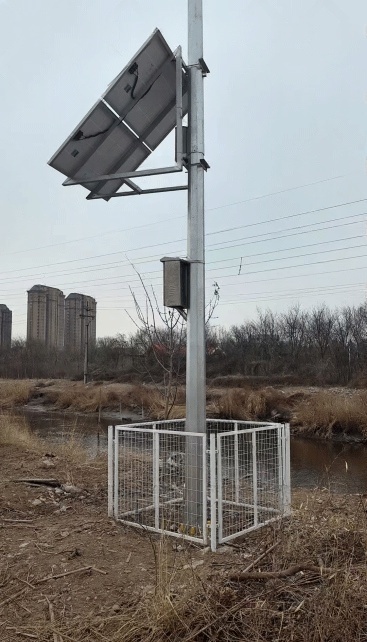
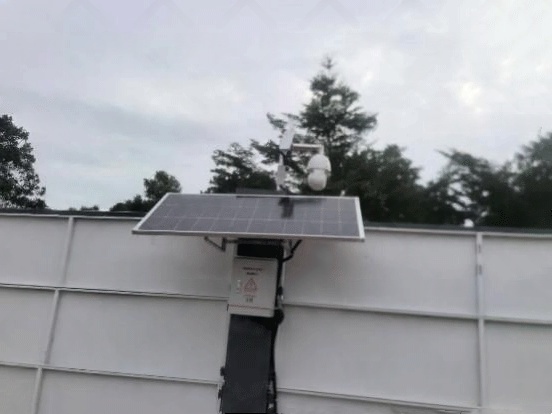
✅ Space-constrained mounting near poles, fences, or temporary construction structures
Engineering note:All power architecture decisions are driven by field accessibility and environmental exposure, not ideal installation assumptions.
SECTION 3 · Deployment, Operations & Maintenance
The power system was engineered to reduce environmental disturbance and operational burden:
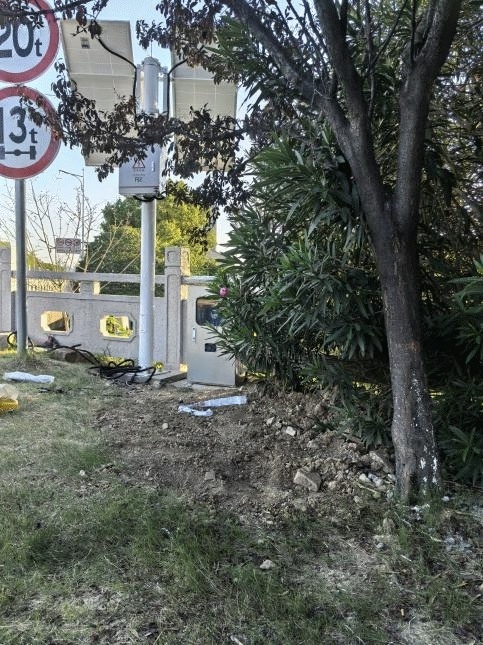
✅ Modular installation without permanent ground modification in suburban or temporary sites
✅ Compact enclosure design adaptable to uneven terrain around construction zones
✅ Sealed electrical compartments reducing moisture-driven maintenance events
✅ Remote monitoring significantly reducing inspection frequency and manual battery replacement
This deployment strategy aligns long-term surveillance operation with real-world suburban site constraints.
SECTION 4 · Field Validation / Engineering Verification
Verification Conditions
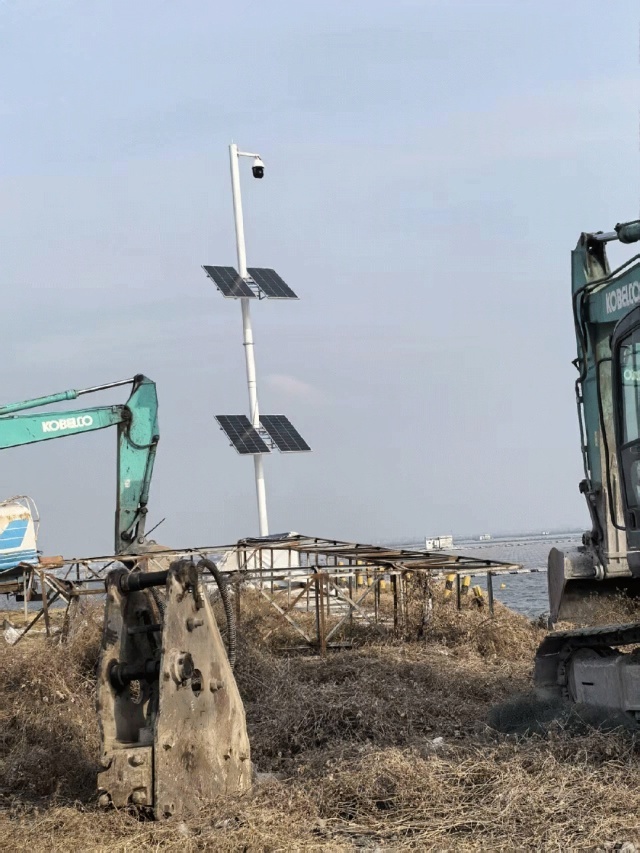
Security surveillance systems were deployed across suburban and construction-adjacent locations in Huainan under:
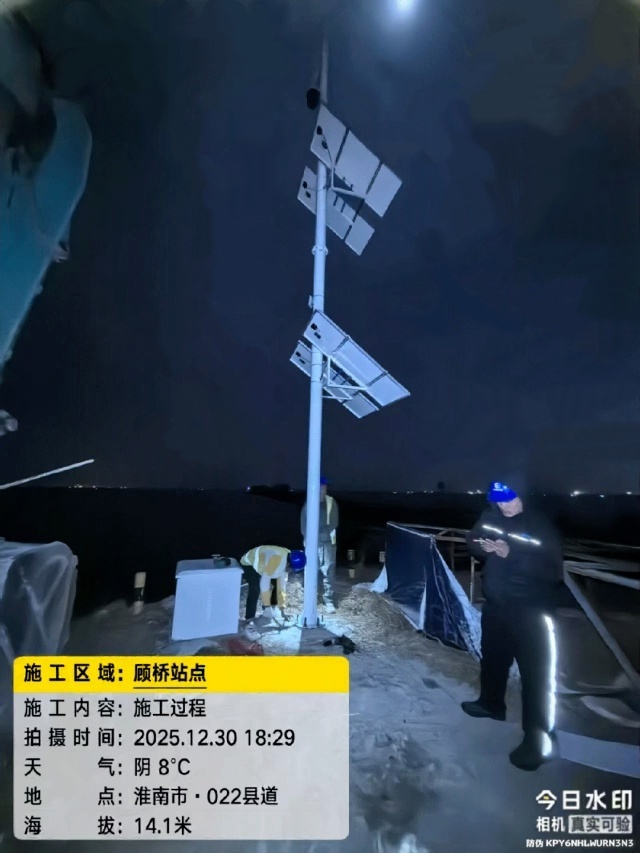
✅ Extended rainy and overcast periods
✅ High ambient humidity and seasonal condensation
✅ Winter low-temperature conditions and summer moisture stress
✅ Limited physical access for frequent on-site maintenance
Engineering Conclusion (Verification-Level)
The 800W photovoltaic system combined with 400Ah sealed gel battery storage maintained uninterrupted surveillance operation across prolonged rainfall cycles and seasonal temperature variation, eliminating power-induced monitoring interruptions in high-humidity suburban environments.
Decision Boundary (Engineering Applicability Limits)
This architecture is not suitable for deployments requiring continuous high-power floodlighting, active heating systems, or locations with permanent shading that prevents daily solar recovery, such as enclosed structures or tunnel interiors.
Deep Search Intent Expansion · Engineering & Procurement FAQ
Why is storage capacity more critical than solar wattage in Huainan surveillance deployments?
Extended rainfall and cloud cover suppress solar generation for multiple consecutive days.
Battery autonomy, rather than PV peak output, determines whether surveillance systems remain operational during these periods.
Why are sealed gel batteries selected instead of lithium batteries for this project?
Sealed gel batteries provide superior tolerance to high humidity and condensation, significantly reducing short-circuit and corrosion risks in outdoor suburban environments where ventilation and enclosure sealing are constrained.
How many autonomy days is this system designed to support without effective solar input?
The system is engineered to support approximately 3–4 consecutive autonomy days, covering typical extended rainfall scenarios in subtropical monsoon conditions.
Can this system support additional cameras or communication equipment?
Yes, provided total continuous load and peak surge currents remain within the battery discharge and controller capacity defined at the design stage.
Engineering Conclusion (Single-Sentence Judgment)
For outdoor surveillance in Huainan-type subtropical environments, storage-redundant, humidity-resilient, intelligently managed off-grid solar architectures are the only viable solution for continuous and operationally sustainable security monitoring.
Related Smart-Infrastructure Energy Solutions
All following applications share the same core engineering constraints:
high environmental humidity, intermittent solar availability, absence of grid infrastructure, and limited maintenance access.
They require storage-centric, redundancy-aware, and remotely supervised off-grid energy architectures, rather than standardized solar kits.
Off-Grid Power Systems for Construction Site Security Monitoring
Designed for temporary and semi-permanent surveillance deployments where moisture exposure, frequent relocation, and irregular access conditions demand sealed storage and autonomous energy control.
Renewable Energy Infrastructure for Suburban Perimeter Surveillance
Supports perimeter monitoring around field-adjacent and suburban zones where grid access is unavailable and surveillance continuity must be maintained through seasonal rainfall.
Energy Architectures for Outdoor Video Surveillance & Data Transmission Nodes
Addresses camera and communication equipment with continuous baseline loads that are highly sensitive to voltage instability and short-duration power interruptions.
Smart Energy Systems for Distributed Security Monitoring Networks
Enables scalable multi-point surveillance deployments using centralized power visibility and condition-based maintenance to reduce operational cost and response latency.
Customized Renewable Power Architectures for High-Humidity Outdoor Infrastructure
Applies to non-standard environments characterized by condensation risk, seasonal thermal variation, and reliability requirements exceeding conventional off-grid configurations.
Engineering & Procurement Contact
Engineering & Procurement ContactEmailtony@kongfar.com
Websitehttps://www.kongfar.comFor site-specific surveillance power architecture design or high-humidity deployment assessment, engineering consultation is available upon request.


 Deutsch
  English