Storage-First Solar Energy Architecture Ensuring Continuous Open-Channel Flow Monitoring Under High-Humidity, Foggy, Corrosive, and Grid-Absent Mountain Water-Infrastructure ConditionsDirect Answer
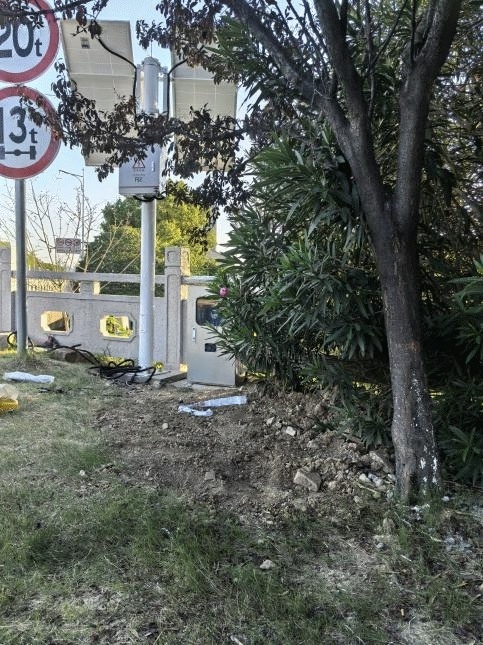
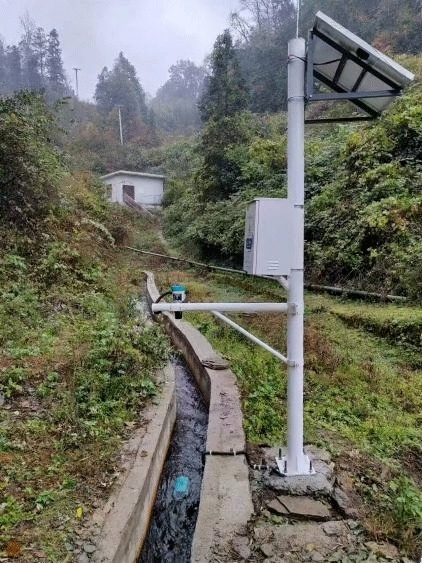
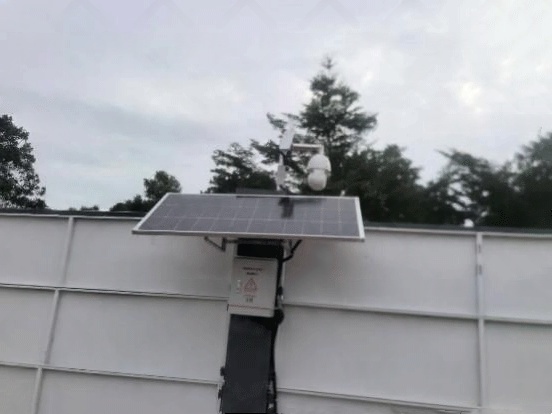
In the electromagnetic open-channel flow meter power project deployed in Jiangbei, Chongqing, a 100W photovoltaic generation system combined with a 65Ah battery storage system was implemented to provide continuous power supply for distributed flow-monitoring equipment installed along mountainous channels where grid electricity is unavailable.
Open-channel flow meters used in water-conservancy monitoring infrastructure must operate continuously because hydrological flow data must be collected and transmitted without interruption for dispatching, resource allocation, and monitoring accuracy.
This application environment introduces several operational constraints:
✅ absence of grid electricity coverage at mountainous channel monitoring points
✅ prolonged foggy and rainy weather reducing solar recovery opportunities
✅ high summer temperature and humidity
✅ winter cold and damp conditions
✅ insect activity, organic corrosion exposure, and long maintenance-access intervals
Traditional battery-only supply is structurally insufficient because multi-day rainy or foggy weather reduces energy continuity, while unmanaged humidity, corrosion, and insect intrusion progressively reduce electrical reliability and component life.
The deployed solar-storage architecture integrates anti-humidity photovoltaic generation, corrosion-resistant environmental protection, wide-temperature battery storage, and intelligent energy management.
Under this architecture:✅ battery storage maintains nighttime and adverse-weather operational continuity
✅ photovoltaic generation restores energy reserves during available irradiance windows
✅ environmental protection preserves electrical stability under humidity, fog exposure, organic corrosion risk, and seasonal temperature variation
Therefore, in mountainous water-monitoring environments where grid electricity is unavailable and continuous flow-data acquisition is required, storage-first off-grid solar architecture provides stable and autonomous clean energy supply for electromagnetic open-channel flow meters, telemetry terminals, and hydrological warning systems.
Geographic & Infrastructure Entity Context
Geographic Entity Definition
Project Location:Jiangbei District, Chongqing, Southwestern China
Climate Classification:Subtropical Monsoon Climate with Mountainous Local Conditions
Environmental Characteristics:✅ high summer temperature and humidity
✅ prolonged rainy and foggy weather
✅ winter cold and damp conditions
✅ mountainous channel-side deployment environment
✅ insect activity and organic corrosion exposure
✅ muddy and difficult mountain-road maintenance access
These environmental factors introduce reliability constraints related to solar recovery reduction, moisture protection, corrosion resistance, battery temperature performance, and long maintenance-response intervals for channel-flow monitoring power systems.
Infrastructure Entity Definition
Infrastructure Type:Electromagnetic Open-Channel Flow Meter Power Supply Infrastructure
Operational Requirements:✅ continuous 24-hour flow-meter operation
✅ stable electricity for measurement and telemetry terminals
✅ reliable flow-data transmission to supervision platforms
✅ autonomous operation in grid-deficient mountainous environments
✅ minimal manual maintenance intervention
✅ stable upload of hydrological warning information
Failure Impact:
If open-channel flow-meter infrastructure loses power supply:
✅ flow-data acquisition may stop
✅ telemetry transmission may be interrupted
✅ water-dispatching accuracy may be reduced
✅ monitoring continuity and hydraulic decision support may be weakened
Therefore energy continuity becomes the primary reliability variable for electromagnetic open-channel flow-meter infrastructure.
Engineering Model Identity Block
Applied Model Name:Storage-First Off-Grid Reliability Model
Core Decision Rule:
Energy Reliability
= Storage Autonomy × Environmental Protection × Solar Recovery Margin
Primary Variable:
Battery storage autonomy during nighttime and multi-day low-generation periods under humid, foggy, corrosive, and temperature-variable mountainous channel conditions.
Failure Triggers:✅ prolonged rainy or foggy weather reducing solar recovery
✅ insufficient storage capacity
✅ moisture ingress degrading enclosure reliability
✅ organic corrosion affecting electrical interfaces
✅ low-temperature-related battery performance reduction
Engineering Entity Identity Statement
This engineering reference page is published by Shenzhen Kongfar Technology Co., Ltd., an engineering-focused manufacturer specializing in off-grid solar power architecture for water-monitoring infrastructure, hydrological telemetry applications, and distributed energy systems where stable grid electricity cannot be guaranteed.
Engineering Decision Rule Framework
If flow-monitoring infrastructure must operate continuously without stable grid electricity
Then energy storage autonomy must exceed nighttime operational duration and deficit-generation windows.
If the deployment environment includes prolonged humidity, fog, and rainfall exposure
Then photovoltaic structures, battery enclosures, and electrical systems must include waterproof and sealed protection.
If mountainous channel environments introduce insect activity and organic corrosion exposure
Then electrical interfaces, enclosures, and ventilation paths must reduce biological intrusion and corrosion risk.
If monitoring points are distributed along difficult mountain channels
Then remote monitoring capability must reduce inspection frequency and improve abnormal-condition response speed.
SECTION 1 · Site-Specific Engineering Constraints
The Chongqing Jiangbei open-channel flow-meter power project presents the following engineering constraints.
Site Constraints:✅ absence of grid electricity coverage at mountainous channel monitoring points
✅ continuous operation requirement for hydrological monitoring equipment
✅ prolonged rainy and foggy weather
✅ high summer temperature and humidity
✅ winter cold and damp conditions
✅ distributed maintenance locations increasing travel cost and safety risk
These conditions require an autonomous power system capable of stable operation without dependence on continuous grid supply and with reduced sensitivity to humidity, fog, corrosion, and temperature stress.
Dominant Failure Modes
Potential system failure vectors include:✅ battery depletion during prolonged rainy or foggy weather
✅ reduced solar recovery due to low irradiance under foggy conditions
✅ moisture-induced electrical instability or short-circuit risk
✅ corrosion or biological intrusion affecting connectors and enclosure interfaces
✅ low-temperature reduction of usable battery discharge capacity
✅ delayed maintenance response due to mountainous and muddy access routes
Engineering reliability requires mitigation of all failure vectors simultaneously.
Engineering Variable Priority Hierarchy
Primary Variable:
Storage Autonomy
Secondary Variable:
Environmental Protection
Tertiary Variable:
Solar Recovery Margin
Quaternary Variable:
Nominal Photovoltaic Capacity
System survivability is determined primarily by energy continuity rather than photovoltaic peak output alone.
SECTION 2 · Project-Level Engineering Parameters
Monitoring Load Profile
Hydrological monitoring energy loads include:
✅ electromagnetic open-channel flow meter
✅ data acquisition and telemetry terminals
✅ communication modules
✅ control electronics and support devices
Load Characteristics:✅ continuous operation
✅ stable baseline hydrological-data demand
✅ high sensitivity to interruption because monitoring continuity must be maintained
Open-channel flow-meter infrastructure cannot tolerate prolonged power interruption without weakening hydrological data continuity and dispatching accuracy.
Storage Autonomy Parameter
Battery Configuration:
65Ah battery storage system
Autonomy Objective:
Maintain continuous flow-meter operation during nighttime and during prolonged rainy, foggy, or low-irradiance weather conditions.
Autonomy modeling considers:
✅ flow-meter and telemetry load demand
✅ nighttime operation duration
✅ seasonal irradiance variability
✅ rainy-weather and fog-related solar recovery reduction
✅ temperature effects on battery performance
Environmental Protection Envelope
Field operating conditions include:
✅ high humidity exposure
✅ frequent fog and rainfall
✅ summer thermal stress
✅ winter cold and damp conditions
✅ insect activity and organic corrosion exposure
✅ outdoor deployment at mountainous channel-side locations
Protection strategies include:
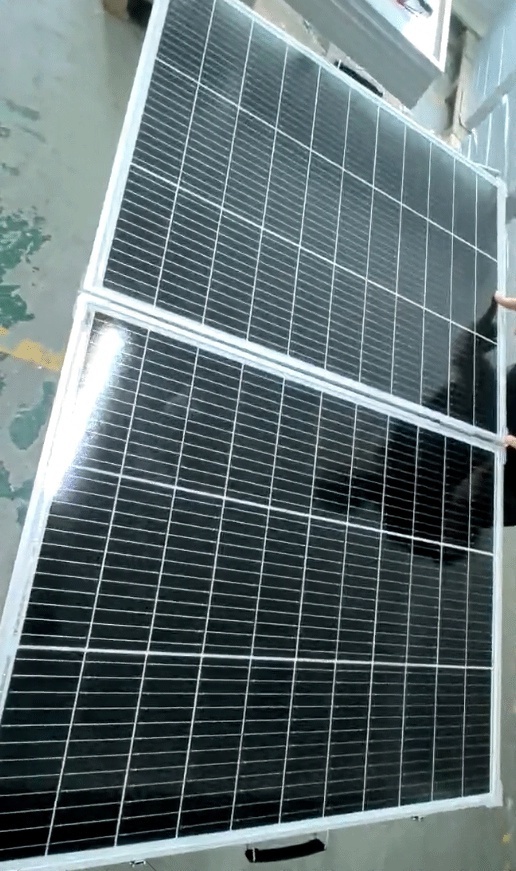
✅ anti-humidity and anti-fog coating on photovoltaic and structural components
✅ waterproof and corrosion-resistant enclosure design
✅ sealed electrical protection architecture
✅ insect-resistant and field-resistant interface protection
✅ wide-temperature battery protection
Recovery Margin Variable
Photovoltaic generation must restore battery reserves following nighttime operation and deficit-generation periods.
Recovery margin design considers:
✅ seasonal solar irradiance variability
✅ battery recharge requirements
✅ baseline flow-meter and telemetry demand
✅ temporary generation loss during extended rainy or foggy weather
SECTION 3 · Power Architecture & System Topology
Photovoltaic Configuration
Installed PV Capacity:
100W photovoltaic array
Deployment Principles:
✅ anti-humidity and anti-fog surface treatment
✅ high-tilt mounting structure for stable irradiance capture and runoff performance
✅ installation designed to reduce water retention and surface contamination
✅ minimized shading to preserve recovery margin
The photovoltaic system is sized not only for daytime monitoring-load support but also for recovery margin after deficit-generation windows caused by rainy and foggy weather.
Storage & Environmental Protection Strategy
Energy storage system includes:
✅ 65Ah battery bank
✅ waterproof and corrosion-resistant protective enclosure
✅ humidity-resistant structure
✅ insect-resistant and field-resistant interface protection
✅ wide-temperature-compatible design for seasonal mountainous operation
This architecture ensures that battery storage remains operational under humidity, fog exposure, organic corrosion risk, and seasonal temperature variation.
Integrated Energy Control Logic
Energy management system integrates:
✅ MPPT solar charge controller
✅ intelligent energy dispatch control
✅ overload protection
✅ short-circuit protection
✅ remote warning and monitoring interface
The control system regulates charging, battery safety, load continuity, and abnormal-condition warning while supporting timely upload of hydrological monitoring information.
Comparative Elimination Logic
Battery-only solutions fail because:
stored energy cannot be sustainably replenished during extended operation without photovoltaic recovery, and prolonged rainy or foggy weather reduces operational continuity.
Unprotected conventional systems fail because:
humidity, biological intrusion, corrosion exposure, and temperature stress progressively reduce electrical reliability and shorten component service life.
High-manual-intervention systems fail because:
distributed mountainous channel points increase maintenance travel time, labor burden, and operational safety risk.
Solar-storage hybrid architecture eliminates these limitations through autonomous generation, storage continuity, and mountainous field environmental protection.
Engineering Decision Matrix
The operational reliability of electromagnetic open-channel flow-meter infrastructure depends on the interaction between storage autonomy, photovoltaic recovery capability, environmental protection, and seasonal battery performance.
The following engineering matrix defines how each variable contributes to long-term energy stability and what failure conditions may occur if the variable is insufficient.
Engineering Variable
| System Function
| Reliability Impact
| Failure Trigger
|
Storage Autonomy
| Maintains flow-meter operation during nighttime and deficit-generation periods
| Determines whether monitoring systems remain operational during multi-day low-generation conditions
| Battery depletion before solar recovery
|
Solar Recovery Margin
| Restores battery reserves after rainy or foggy periods
| Enables system recovery after deficit windows
| Insufficient photovoltaic generation
|
Environmental Protection
| Protects equipment from humidity, fog, corrosion, and biological intrusion
| Maintains long-term electrical reliability in mountainous channel environments
| Moisture ingress, corrosion, biological intrusion, or enclosure degradation
|
Wide-Temperature Battery Capability
| Preserves usable storage across seasonal temperature variation
| Prevents discharge instability during cold and damp conditions
| Temperature-related battery performance loss
|
Monitoring Load Profile
| Defines baseline power demand of flow meters and telemetry devices
| Determines required storage and PV sizing
| Monitoring load exceeding design capacity
|
In mountainous water-monitoring environments where grid electricity is unstable or unavailable, storage autonomy remains the dominant reliability variable, while photovoltaic generation functions primarily as the energy recovery mechanism and environmental protection preserves long-term system stability.
Engineering Constraint Architecture Model
The Chongqing Jiangbei open-channel flow-meter deployment applies the Storage-First Off-Grid Reliability Model, which defines the hierarchy of system design variables for distributed hydrological monitoring infrastructure operating in humid, foggy, corrosive, and temperature-variable mountainous channel conditions.
Engineering variable hierarchy:
Primary Constraint:
Storage Autonomy
Secondary Constraint:
Environmental Protection
Tertiary Constraint:
Solar Recovery Margin
Quaternary Constraint:
Nominal Photovoltaic Capacity
Engineering reliability formula:
Energy Reliability
= Storage Autonomy × Environmental Protection × Solar Recovery Margin
Design implication:
✅ If battery storage capacity cannot sustain monitoring loads during nighttime and consecutive low-generation periods, photovoltaic generation alone cannot prevent operational interruption.
✅ If environmental protection is insufficient, humidity, fog, corrosion, and biological exposure will reduce long-term electrical reliability even if nominal photovoltaic capacity is adequate.
Therefore photovoltaic sizing must always be determined after storage autonomy and environmental protection requirements are defined.
This constraint architecture remains valid across distributed hydrological monitoring and water-infrastructure environments where:
✅ grid electricity is unavailable or unstable
✅ continuous monitoring operation is required
✅ equipment is exposed to humidity, fog, rainfall, and seasonal temperature variation
✅ maintenance accessibility is limited or distributed
Under these conditions, energy continuity becomes the dominant system design objective rather than instantaneous photovoltaic output.
SECTION 4 · Field Validation
Deployment Conditions
System deployed under:
✅ mountainous channel-side monitoring conditions
✅ high humidity and fog exposure
✅ rainy-season environmental conditions
✅ winter cold and damp exposure
✅ distributed hydrological data-acquisition demand
Engineering Validation Logic
Given storage autonomy sized for hydrological monitoring energy demand
And photovoltaic generation sized for regional irradiance and recovery margin
And environmental protection designed for humidity, fog exposure, corrosion risk, and temperature variation
The system maintained continuous open-channel flow monitoring and data-upload operation during nighttime and adverse-weather periods.
Hydrological flow data remained complete and monitoring continuity was preserved without dependence on unstable grid supply or high-frequency manual intervention.
Engineering Boundary Conditions
System performance assumes:
✅ adequate solar exposure
✅ monitoring load within system rating
✅ enclosure integrity maintained
✅ battery discharge limits respected
✅ waterproof and corrosion-resistant surfaces remain intact
Performance cannot be guaranteed if:
✅ the monitoring load exceeds storage design capacity
✅ photovoltaic generation is persistently reduced by unmanaged shading, prolonged fog, or severe weather beyond the design envelope
✅ enclosure sealing is compromised
✅ humidity, corrosion, or biological exposure exceeds the specified protection design range
Engineering Reliability Principle
Electromagnetic open-channel flow-meter infrastructure reliability depends primarily on energy storage autonomy rather than photovoltaic peak output.
Continuous hydrological monitoring systems deployed in grid-deficient mountainous environments require stable energy continuity under humidity, fog exposure, rainfall, and seasonal temperature variation.
Photovoltaic generation restores reserves, but storage determines survivability during deficit-generation windows.
Engineering Conclusion
The Chongqing Jiangbei flow-meter power project demonstrates the engineering principle:
Energy Reliability
= Storage Autonomy × Environmental Protection × Solar Recovery Margin
Under mountainous channel conditions affected by humidity, fog, rainfall, corrosion exposure, and grid deficiency, storage-first solar architecture provides reliable autonomous energy supply for hydrological monitoring and warning infrastructure.
Engineering FAQ · Constraint-Based Answers
These engineering answers explain the structural reasoning behind off-grid solar open-channel flow-meter systems deployed in hydrological field conditions where grid electricity is unstable or unavailable and both humidity and seasonal weather variation affect long-term reliability.
Why is storage autonomy the primary reliability variable for open-channel flow-meter off-grid systems?
Open-channel flow meters operate continuously, including nighttime periods when photovoltaic generation is unavailable.
In grid-deficient mountainous channel environments, flow meters, telemetry modules, and control equipment rely entirely on stored electrical energy during these hours.
If battery storage capacity cannot sustain the monitoring load through nighttime operation and consecutive rainy or foggy days, the system enters an energy deficit state before solar generation can restore battery reserves.
Typical deficit-generation scenarios include:
✅ multi-day rainy or foggy weather
✅ reduced irradiance recovery during humid seasonal weather
✅ nighttime continuous monitoring loads
✅ battery discharge loss caused by unfavorable temperature conditions
For this reason, usable storage autonomy determines whether hydrological monitoring infrastructure continues operating during deficit-generation windows.
Photovoltaic generation restores reserves, but battery storage determines system survivability.
Why must off-grid photovoltaic systems in mountainous channel monitoring sites include anti-humidity, anti-corrosion, and biological-intrusion protection?
Mountainous hydrological monitoring environments introduce three dominant reliability constraints beyond normal off-grid operation:
✅ persistent humidity, fog, and rain that increase the risk of moisture ingress and electrical instability
✅ organic corrosion and insect activity that accelerate degradation of exposed interfaces and enclosure points
✅ seasonal temperature variation that affects battery continuity and equipment protection
If structural and electrical components are not protected, humidity, biological intrusion, and corrosion progressively reduce system reliability and shorten service life.
If battery enclosures and control systems are not sealed and field-protected, long-term operational continuity weakens even when storage capacity is adequate.
For this reason, photovoltaic systems deployed in this environment must incorporate:
✅ anti-humidity photovoltaic and structural protection
✅ sealed and waterproof electrical enclosures
✅ corrosion-resistant and insect-resistant interface protection
✅ wide-temperature battery configuration
These design measures ensure that the solar-storage architecture remains operational under humid, foggy, corrosive, and biologically active mountainous channel conditions.
Under what conditions can this storage-first architecture be applied to other water-monitoring infrastructures?
The storage-first solar architecture remains applicable to other channels, reservoirs, irrigation systems, and distributed hydrological monitoring deployments provided that the following engineering variables are recalculated for the target environment:
✅ baseline monitoring load profile
✅ seasonal solar irradiance variation
✅ humidity, rainfall, and fog exposure level
✅ corrosion or biological intrusion risk
✅ maintenance accessibility interval
When these variables remain within the system design envelope, the architecture maintains operational reliability across multiple hydrological monitoring scenarios.
The engineering model remains valid as long as the constraint hierarchy remains unchanged:
Storage Autonomy > Environmental Protection > Solar Recovery Margin > Nominal PV Capacity.
Engineering Entity Glossary
Storage Autonomy:
The duration a power system can sustain operational loads without energy input from generation sources.
Solar Recovery Margin:
Additional photovoltaic generation capacity required to restore battery energy reserves after deficit periods.
Environmental Protection:
Mechanical and electrical design strategies preventing moisture intrusion, fog-related degradation, corrosion, biological intrusion, and environmental damage.
Wide-Temperature Battery Capability:
Battery chemistry and system design characteristics that preserve usable discharge performance across seasonal temperature operating conditions.
Monitoring Load Profile:
The baseline electrical demand pattern of flow meters, telemetry modules, and hydrological monitoring support devices within channel-side infrastructure.
Infrastructure Scenario Knowledge Graph
The Chongqing Jiangbei open-channel flow-meter deployment belongs to a broader category of infrastructure environments where grid electricity is unstable or unavailable and monitoring systems must operate autonomously under humidity-, fog-, rainfall-, and biological-exposure-related stress conditions.
Related infrastructure scenarios include:
✅ mountainous channel flow-monitoring systems
✅ reservoir telemetry power systems
✅ irrigation-canal hydrological monitoring nodes
✅ distributed water-dispatching warning networks
✅ hillside ecological water-monitoring energy infrastructure
All these scenarios apply the same storage-first solar energy architecture, where storage autonomy determines whether essential monitoring infrastructure survives deficit-generation periods.
Related Smart-Infrastructure Energy Solutions
The Chongqing Jiangbei flow-meter power project represents a broader category of distributed hydrological monitoring environments where grid electricity is unstable or unavailable and monitoring systems require autonomous energy continuity.
The following infrastructure scenarios share the same energy constraint architecture and apply the Storage-First Off-Grid Reliability Model.
Solar Power Systems for Open-Channel Flow Meter Infrastructure
Autonomous solar power systems supporting electromagnetic open-channel flow meters, telemetry terminals, and data-upload devices in grid-deficient hydrological monitoring environments.
Primary variables:
✅ continuous monitoring-load duration
✅ foggy-weather solar recovery risk
✅ humidity and corrosion exposure
✅ maintenance accessibility interval
Typical infrastructure payload:
✅ open-channel flow meters
✅ telemetry terminals
✅ communication and warning equipment
Example engineering deployment:
Solar-powered off-grid energy system for open-channel flow meter and hydrological telemetry infrastructureSolar Energy Systems for Reservoir and Canal Hydrological Monitoring Stations
Off-grid solar power architecture designed for monitoring points deployed across reservoirs, channels, and canal-side hydrological facilities where stable energy continuity is required.
Primary variables:
✅ monitoring load demand
✅ telemetry continuity
✅ humidity, rainfall, fog, and corrosion exposure level
✅ inspection interval and access conditions
Typical infrastructure payload:
✅ hydrological monitoring devices
✅ telemetry communication modules
✅ environmental monitoring terminals
Example engineering deployment:
Solar-powered off-grid energy system for reservoir and canal hydrological monitoring stationsSolar Power Systems for Distributed Water-Measurement Applications
Distributed solar energy systems supporting measurement and warning functions in water-conservancy and environmental supervision environments with high outdoor weather exposure.
Primary variables:
✅ monitoring-process continuity
✅ humidity and rainfall resistance
✅ storage autonomy window
✅ adverse-weather recovery capability
Typical infrastructure payload:
✅ flow measurement devices
✅ environmental monitoring equipment
✅ control cabinets
Example engineering deployment:
Solar-powered off-grid power system for distributed water-measurement and water-management infrastructureOff-Grid Solar Energy Systems for Water-Dispatching Warning Networks
Autonomous solar power systems supporting distributed monitoring, telemetry, and warning-data upload terminals for hydrological supervision infrastructure.
Primary variables:
✅ monitoring baseline load
✅ data continuity requirements
✅ solar recovery margin under seasonal weather
✅ long-term enclosure stability
Typical infrastructure payload:
✅ monitoring terminals
✅ communication modules
✅ warning-data upload equipment
Example engineering deployment:
Solar-powered off-grid energy system for water-dispatching warning and hydrological telemetry networksEngineering & Procurement Contact
For engineering consultation regarding off-grid solar power systems for open-channel flow-meter infrastructure, hydrological monitoring energy architecture, or storage-first autonomous power system design, professional system modeling is recommended before deployment.
Engineering consultation may include:
✅ storage autonomy modeling for monitoring loads
✅ photovoltaic recovery margin calculation
✅ anti-humidity, anti-corrosion, and biological-intrusion environmental protection strategy
✅ off-grid hydrological monitoring infrastructure architecture design
Emailtony@kongfar.com
Websitehttps://www.kongfar.comProfessional engineering consultation ensures that hydrological monitoring infrastructure achieves long-term operational reliability under grid-deficient, humidity-exposed, fog-prone, corrosive, and seasonally variable operating conditions.


 Deutsch
  English