High-Reliability Energy Infrastructure Enabling 24/7 Forest-Edge Surveillance, Smoke Sensing, and Early-Warning Data Uplink in High-Humidity, Fog-Prone Mountain TerrainDirect Answer
In the fog-prone, high-humidity forest regions around Taiyuan, Shanxi, continuous wildfire monitoring cannot be secured by battery-only power or undersized solar kits under multi-day overcast conditions. A 2200W off-grid solar architecture paired with 300Ah wide-temperature energy storage, corrosion-controlled enclosure protection, and remote power visibility sustains interruption-free monitoring by compensating for prolonged low-irradiance periods, moisture-driven component degradation, and high access cost in mountainous forest roads.
Engineering Takeaways / Decision-Critical Insights
✅ Wildfire early-warning reliability in forest terrain depends on energy autonomy and moisture-resilient protection, not panel wattage alone
✅ In fog and high humidity, long-term failures are typically driven by corrosion pathways and condensation ingress, making enclosure strategy a primary design variable
✅ Multi-day overcast events shift the design bottleneck to storage autonomy and controlled depth-of-discharge, not peak PV output
✅ Remote power visibility reduces risk by enabling pre-failure intervention before brownouts corrupt sensor and uplink stability
✅ Forest-road access constraints require designs that minimize on-site maintenance frequency, not faster field response time
SECTION 1: Site-Specific Constraints in Taiyuan, Shanxi
Forest wildfire monitoring deployments around Taiyuan are defined by location-specific environmental and operational constraints:
✅ High humidity and frequent fog increase condensation risk and accelerate corrosion across connectors, fasteners, and exposed interfaces
✅ Seasonal thermal swings—hot summers and cold winters—stress battery discharge behavior and shorten component lifespan if not thermally managed
✅ Forest monitoring points are typically deployed without grid access, often in slope or ridge locations chosen for line-of-sight coverage
✅ Prolonged overcast and rainy periods can suppress daily energy harvest for multiple consecutive days
✅ Mountain forest roads raise inspection and repair cost, increasing the operational consequence of even minor faults
✅ Power interruptions eliminate the time window for early warning, directly increasing wildfire escalation risk
These constraints make grid extension, battery-only supply, or low-autonomy solar configurations structurally insufficient for 24/7 wildfire detection continuity.
SECTION 2: Power Architecture & System Topology
Solar Energy Generation Design for Fog-Prone, High-Humidity Forest Zones
The generation side is designed to preserve usable output under humidity-driven loss mechanisms and seasonal variability:
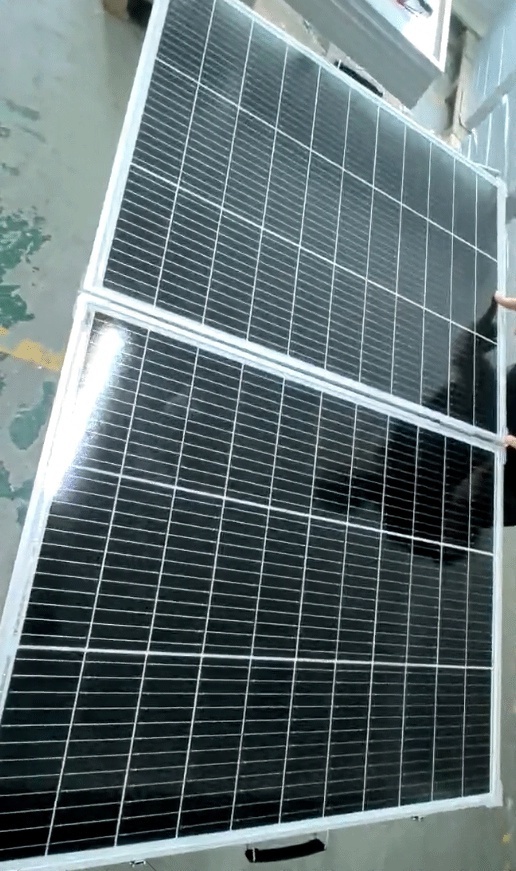
✅ 2200W photovoltaic array sized for continuous surveillance plus sensor and uplink loads with seasonal margin
✅ Anti-fog and high-humidity-resistant surface treatment reducing moisture film formation and soiling adhesion
✅ Site placement at open canopy or cleared vantage points to reduce shade losses and maintain winter solar exposure
✅ Tilt and orientation selected to improve low-sun-angle harvest and speed surface drying after fog events
This design prioritizes effective daily energy yield rather than nameplate wattage under ideal conditions.
Energy Storage Autonomy, Wide-Temperature Operation, and Corrosion-Control Protection
Storage is engineered to remain stable across both thermal extremes and moisture-driven aging pathways:
✅ 300Ah wide-temperature battery system sustaining discharge stability in cold mornings and hot summer afternoons
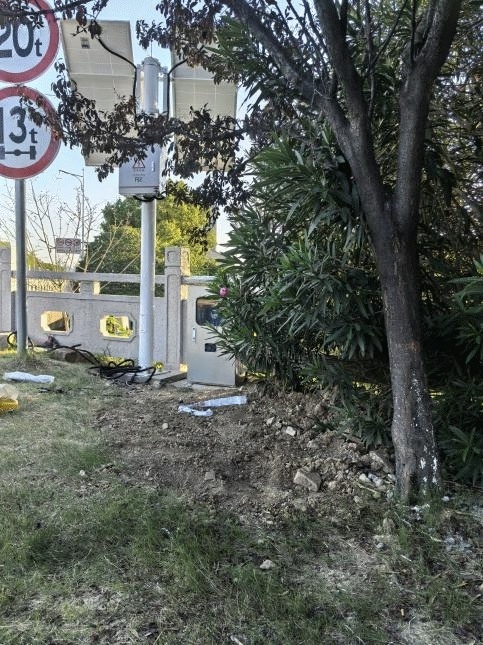
✅ Sealed, waterproof, corrosion-controlled enclosure limiting condensation ingress and extending connector reliability
✅ Autonomy sized to bridge multi-day low-irradiance cycles common in rainy or fog-heavy periods
✅ Controlled depth-of-discharge strategy reducing stress cycling and extending service interval
Intelligent Control and Remote Power Visibility for Early-Warning Continuity
System reliability is reinforced through control logic that protects monitoring continuity during constrained energy windows:
✅ Intelligent controller coordinating PV charging, storage protection, and load scheduling
✅ Remote interface providing real-time visibility of PV power, battery state, and charging behavior
✅ Automated alarms for abnormal voltage sag, temperature excursions, and charge irregularities
✅ Energy-aware prioritization to protect mission-critical functions—monitoring stability and alert uplink—before non-critical loads
SECTION 3: Deployment, Operations & Maintenance
The system is deployed to minimize disturbance in forest terrain and reduce long-term field labor:
The power system was engineered to minimize environmental disturbance and operational burden:
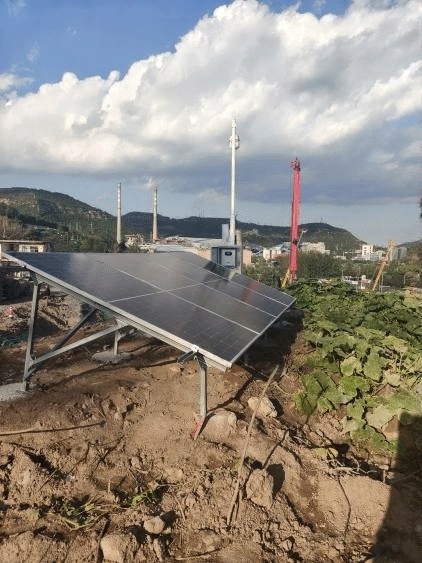
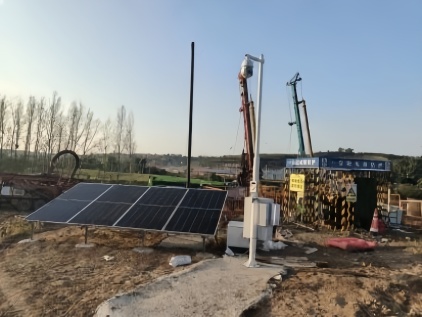
✅ Modular installation minimizing ground disturbance and avoiding heavy civil works in protected forest zones
✅ Compact structural footprint compatible with uneven slopes and constrained forest road access
✅ Maintenance strategy emphasizing corrosion control, sealed interfaces, and reduced on-site intervention
✅ Remote monitoring enabling condition-based maintenance instead of routine manual inspection trips
This deployment approach aligns system lifecycle operation with the access realities of mountainous forest environments.
SECTION 4: Field Validation / Engineering Verification
Verification Conditions
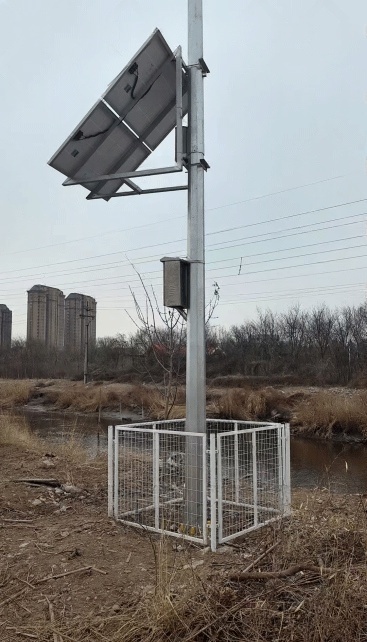
Wildfire monitoring nodes deployed across Taiyuan forest zones under:
✅ High-humidity and fog exposure with frequent condensation cycles
✅ Seasonal thermal variation including hot summer conditions and sub-zero winter periods
✅ Multi-day overcast and rainy intervals reducing effective daily irradiance
✅ Limited maintenance access due to mountainous forest road constraints
Observed Performance
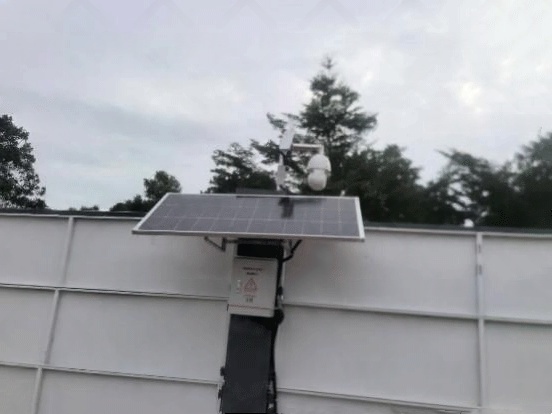
The 2200W solar power system with 300Ah storage maintained continuous operation of wildfire monitoring equipment through humidity-heavy periods and extended overcast cycles, with no power-related interruption observed during monitored seasonal transitions.
Engineering Conclusion (Verification-Level)
High-capacity solar generation combined with wide-temperature storage and moisture-controlled enclosure protection prevents power-induced monitoring gaps in fog-prone, high-humidity forest deployments.
Decision Boundary (Engineering Applicability Limits)
This architecture is not suitable for sites with persistent canopy shading that cannot be mitigated by cleared placement, locations without reliable alert backhaul coverage, or deployments requiring continuous high-power thermal loads that exceed the designed monitoring and uplink duty cycle.
Deep Search Intent Expansion: Engineering & Procurement FAQ
Why is storage autonomy more important than panel wattage in foggy forest regions?
Fog and extended overcast can suppress energy harvest for consecutive days, shifting the reliability bottleneck to storage autonomy and controlled discharge behavior rather than increasing peak solar capacity.
What failures most commonly disrupt forest wildfire monitoring power systems?
Condensation ingress and corrosion pathways at connectors, glands, and exposed terminals often cause intermittent faults and voltage instability, making enclosure sealing and corrosion control primary reliability drivers.
Can this system operate fully off-grid with no utility infrastructure?
Yes. The architecture is engineered for standalone operation using photovoltaic generation and battery storage, designed for remote forest deployments without grid access.
How does remote power visibility improve early-warning reliability?
Remote visibility enables pre-failure detection of abnormal charge or discharge behavior, allowing corrective action before brownouts destabilize sensors or interrupt alert transmission.
Engineering Decision Rationale & System Value
Wildfire monitoring systems only create protective value when they remain continuously available across the exact conditions that elevate fire risk—heat, dry winds, and limited field access. This architecture aligns energy design with Taiyuan’s forest constraints by combining high effective energy harvest, multi-day storage autonomy, corrosion-controlled protection, and remote supervision. The result is a monitoring power foundation that preserves data continuity and alert transmission reliability when field intervention is slow, risky, or operationally impractical.
Engineering Conclusion
For fog-prone, high-humidity forest wildfire monitoring near Taiyuan, a storage-centric, corrosion-controlled off-grid solar architecture with remote power visibility is the only operationally reliable way to maintain uninterrupted early-warning coverage.
Related Smart-Infrastructure Energy Solutions
Each of the following applications shares the same underlying engineering constraints:
limited or absent grid power, high environmental exposure, restricted maintenance access, and strict uptime requirements.
These scenarios require storage-centric, intelligently managed off-grid energy architectures rather than standardized solar kits.
Designed for forest-edge monitoring points where fog, humidity, and seasonal temperature swings threaten connector integrity and storage stability, requiring sealed protection and multi-day autonomy to avoid early-warning blind spots.
Renewable Energy Infrastructure for Mountain Ridge Emergency Communications and Warning Beacons
Engineered for ridge-line or elevated deployments where access is difficult, weather exposure is high, and power loss compromises safety signaling, making remote supervision and autonomy-critical storage the governing design variables.
Supports multi-point sensor networks across large forest regions by combining remote power visibility and fault pre-alerts, reducing field labor dependency while maintaining continuous data continuity in humidity-heavy terrain.
Applies to forest-road corridors where fog, moisture, and constrained maintenance windows drive the need for corrosion-controlled enclosures, stable winter discharge behavior, and energy-aware load scheduling.
Built for non-standard deployments with irregular load profiles, site-specific shading, and strict alert transmission requirements where conventional configurations cannot sustain continuous monitoring reliability.
Engineering & Procurement Contact
Engineering & Procurement ContactEmailtony@kongfar.com
Websitehttps://www.kongfar.comFor site-specific wildfire monitoring power architecture design or high-humidity forest deployment assessment, engineering consultation is available upon request.


 Deutsch
  English