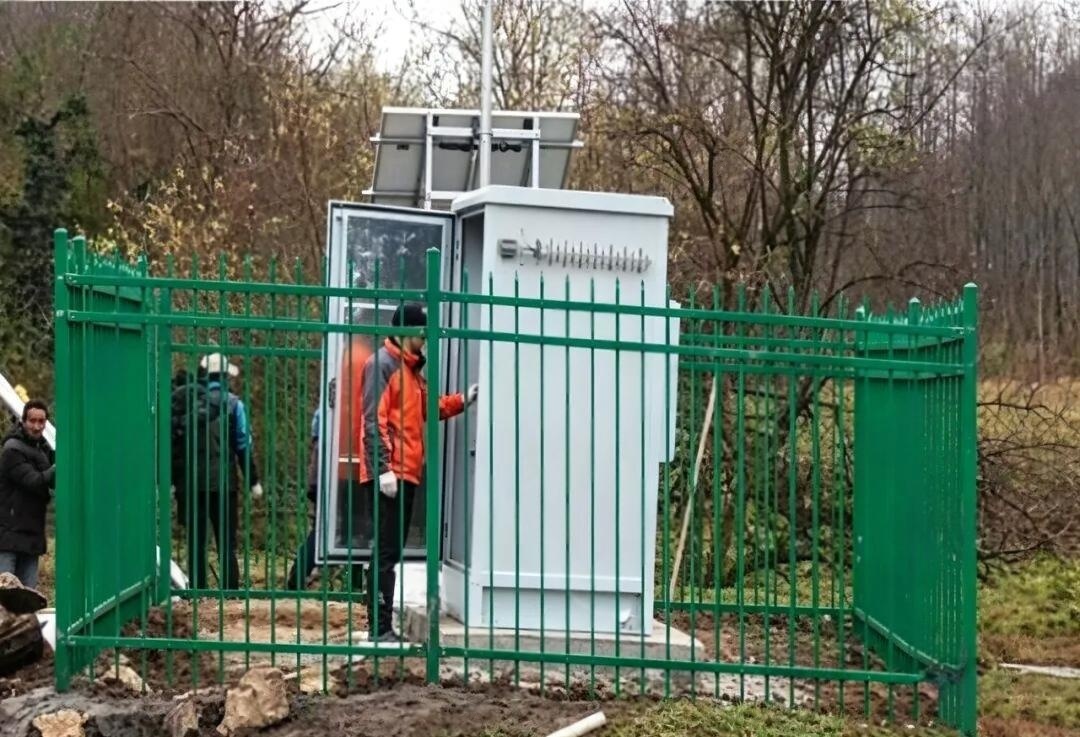
High-Humidity-Resilient, High-Autonomy Energy Infrastructure Maintaining 24/7 Road-Safety Video Uptime In Rain-Prone, Wind-Exposed Mountain TerrainDirect Answer
In mountainous road-monitoring corridors around Shijiazhuang, Hebei, long-term CCTV uptime cannot be secured through grid dependence or small battery packs because frequent rain, high humidity, terrain shading, and difficult access create multi-day low-generation and delayed maintenance cycles. A 600W off-grid solar architecture combined with 400Ah sealed, moisture-protected energy storage and remote power visibility provides interruption-free monitoring by sustaining autonomy through overcast periods, preventing humidity-driven enclosure failures, and enabling condition-based maintenance across dispersed mountain sites.
Engineering Takeaways / Decision-Critical Insights
✅ Mountain road CCTV uptime in northern China is governed by autonomy + environmental sealing, not PV wattage alone
✅ Rain-prone, shaded terrain requires designing for multi-day low-generation continuity, not "sunny-day output"
✅ High humidity drives failure through corrosion and ingress paths, so enclosure, glands, and interfaces are first-order design items
✅ Wind and loose rock exposure require mechanical protection and mounting strategy to prevent downtime from physical damage
✅ Remote power visibility turns O&M into early detection + scheduled intervention, reducing "drive-out surprises" on mountain roads
SECTION 1 — Site-Specific Engineering Constraints In Shijiazhuang, Hebei
Shijiazhuang’s mountainous road corridors introduce a constraint stack that is not equivalent to flatland roadside deployments:
✅ Limited or absent grid coverage at mountain monitoring points, with long restoration times after outages
✅ High proportion of rainy/overcast days plus terrain shading, reducing effective irradiance and extending low-generation windows
✅ High humidity and repeated wet-dry cycles accelerating corrosion at connectors, terminals, and enclosure interfaces
✅ Strong wind events increasing mechanical stress on exposed components and mounts
✅ Gravel, debris, and roadside impact risks requiring physical protection for enclosures and cable routes
✅ Dispersed locations on rugged roads where manual inspection is slow, costly, and often delayed
These constraints make small-capacity battery solutions and unsealed roadside power boxes structurally insufficient.
SECTION 2 — Power Architecture & System Topology
Solar Energy Generation Design Logic For Rain-Prone Mountain Roads
The generation side is sized and installed for continuity under shading and prolonged overcast, not for peak-sun performance:
✅ 600W PV array sized to support 24/7 monitoring loads with buffer for cloudy periods and seasonal sun angles
✅ PV placement prioritized at open roadside points to reduce mountain-shadow losses and morning/evening occlusion
✅ PV surface treatment designed for humidity exposure and abrasion resistance in roadside dust/grit conditions
✅ Array and mounting geometry chosen to reduce water retention and keep output stable through wet weather cycles
Energy Storage & Environmental Protection Design
In this environment, storage reliability is primarily a moisture-control and autonomy problem:
✅ 400Ah storage sized to bridge multi-day low-generation cycles while maintaining stable voltage for CCTV equipment
✅ Battery pack built around high-sealing, moisture-protected cells to reduce humidity-driven degradation
✅ Sealed enclosure uses water-intrusion control at the system level, including interface protection and corrosion-resistant hardware
✅ Mechanical protection designed for gravel / debris impact and roadside vibration, reducing physical-damage downtime
✅ Depth-of-discharge strategy selected to extend service life and lower replacement frequency in hard-access mountain routes
Intelligent Control & Remote Power Management
Remote visibility is treated as an uptime requirement, not an optional feature:
✅ Controller manages charging and load behavior to prevent low-voltage cut-outs during extended overcast
✅ Mobile-accessible monitoring provides real-time visibility into PV power, battery status, and load conditions
✅ Automated alerts trigger before failure states, enabling intervention while video uptime is still preserved
✅ Remote diagnostics reduce unnecessary site visits and support condition-based maintenance planning
SECTION 3 — Deployment, Operations & Maintenance
The deployment approach is engineered to minimize site disturbance and reduce long-term O&M load in hard-access terrain:
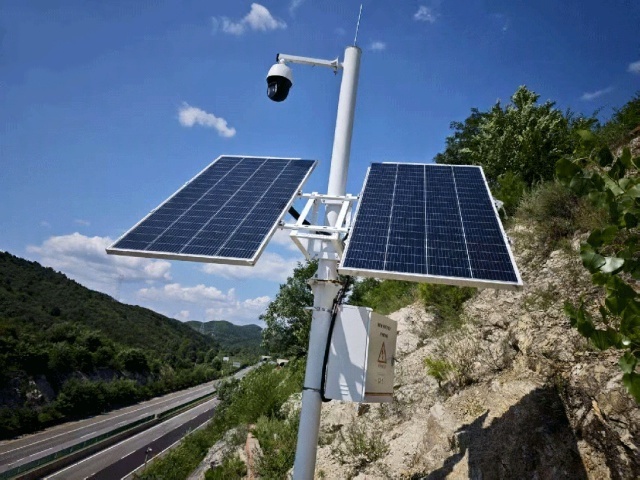
✅ Installation uses a modular approach to avoid extensive ground modification on mountain road shoulders
✅ Structural footprint is kept compact while maintaining stability under wind loading and roadside vibration
✅ Cable routing and enclosure placement prioritize water-runoff behavior, splash zones, and mechanical protection points
✅ Remote monitoring reduces inspection frequency and shifts maintenance from reactive repairs to planned service windows
SECTION 4 — Field Validation / Engineering Verification
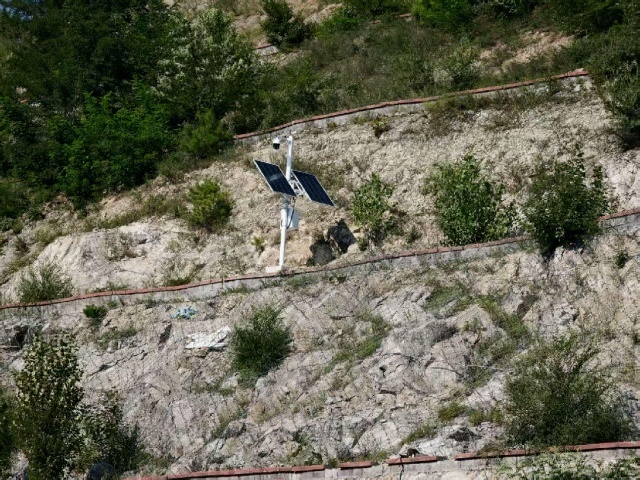
Verification conditions:Monitoring power systems deployed across multiple mountain road points around Shijiazhuang under high humidity, frequent overcast/rain, wind exposure, and difficult access conditions.
 Observed performance:
The 600W + 400Ah architecture maintained continuous monitoring operation through repeated rainy cycles and site-access delays, with power behavior visible remotely and abnormal trends flagged early.
Engineering conclusion for this site class:High-autonomy storage combined with sealed moisture-resistant packaging and remote visibility prevents power-driven video gaps in rain-prone mountainous road monitoring deployments.
Decision Boundary
This architecture is not suitable if the monitoring load requires sustained peak power beyond the system’s continuous design envelope, if the site has persistent deep shading that prevents meaningful PV generation, or if local regulations require grid-tied power or lightning/earthing standards that cannot be met with the available installation footprint.
Deep Search Intent Expansion — Engineering & Procurement FAQ
Why is large-capacity storage necessary for mountain road CCTV monitoring in Hebei?
Mountain corridors combine overcast weather with terrain shading and delayed access, so PV output can be suppressed for consecutive days while maintenance response times remain long, making storage autonomy the primary uptime control variable.
What typically fails first in high-humidity roadside power systems?
Corrosion and moisture ingress pathways at interfaces, glands, connectors, and enclosure seams commonly drive early failures, which is why sealing strategy and interface materials must be specified as first-order requirements.
How do you prevent wind and debris from causing repeated downtime?
Downtime risk is reduced by treating mechanics as part of the power architecture, including stable mounting, protected cable routing, impact-resistant enclosure placement, and limiting exposed, vibration-sensitive components.
What does "remote power visibility" change for operations teams?
It enables early detection of abnormal charging, discharge, and load behavior, so teams can schedule targeted site visits, avoid unnecessary travel, and prevent outages that would otherwise only be discovered after video loss.
Engineering Decision Rationale & System Value
For mountainous road safety programs, continuous video capture is the functional requirement and power is the enabling constraint. A 600W PV + 400Ah sealed storage topology is rational here because it matches the local failure modes that actually break uptime—multi-day low generation, humidity ingress and corrosion, wind-driven mechanical stress, and slow access for repairs—while remote visibility converts O&M from inspection-heavy to condition-driven decision making.
Engineering Conclusion
A 600W off-grid solar architecture with 400Ah sealed moisture-resistant storage and remote power visibility is the most reliable way to prevent power-related CCTV video gaps on rain-prone, high-humidity mountain roads around Shijiazhuang where grid access and maintenance response are structurally constrained.
Related Smart-Infrastructure Energy Solutions
Off-Grid Power Systems For Mountain Pass Emergency Call Boxes & VMS Signs
Designed for roadside infrastructure in wind-exposed passes where intermittent access and seasonal weather require high autonomy and corrosion-resistant packaging.
Supports distributed monitoring points near forest corridors where humidity, debris, and limited utility coverage increase the cost of frequent maintenance.
Addresses sites with complex airflow, splash zones, and constrained mounting positions where enclosure protection and cable routing dominate long-term reliability.
Enables scalable deployment across many points with remote visibility, reducing field labor while maintaining continuous data and video availability.
Adaptable system designs matching site-specific shading, wind loading, enclosure requirements, and autonomy targets when standard roadside boxes are insufficient.
Engineering & Procurement Contact
Engineering & Procurement ContactEmailtony@kongfar.com
Websitehttps://www.kongfar.comFor mountainous road CCTV power sizing, sealing strategy definition, and autonomy verification under overcast cycles, an engineering assessment package can be prepared on request.



 English
  Deutsch