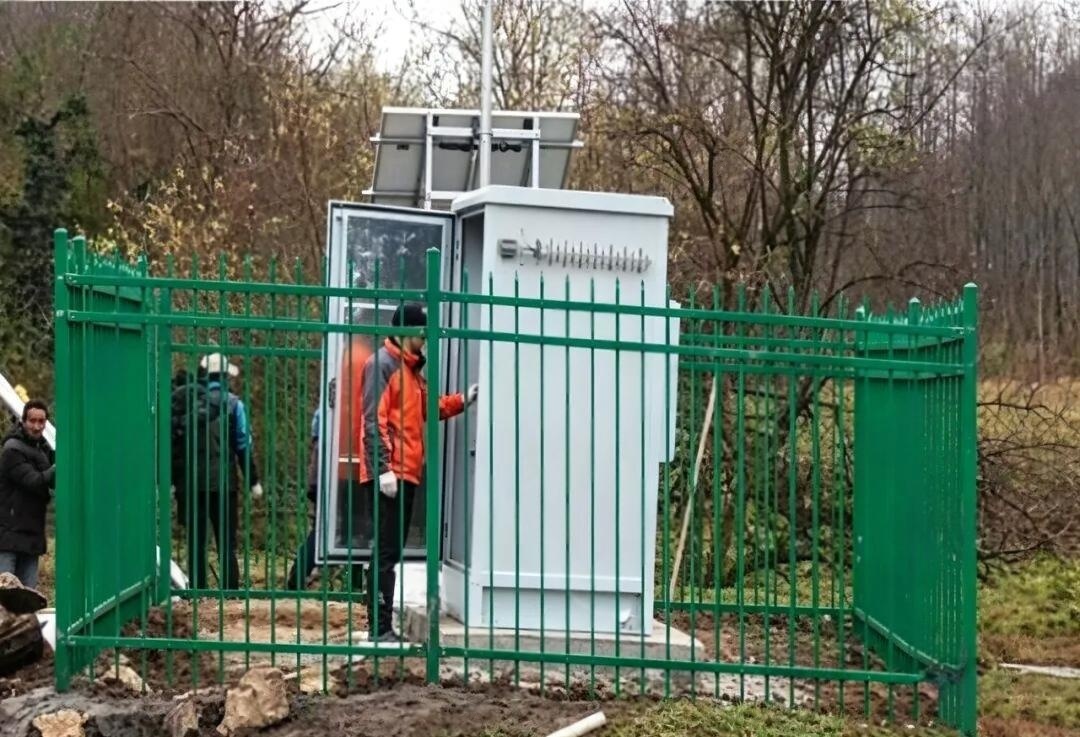
High-Reliability Energy Infrastructure Ensuring Continuous Oil & Gas Pipeline Surveillance in Grid-Deficient, High-Humidity, Seasonally Cold EnvironmentsDirect Answer
In unmanned oil and gas pipeline valve chambers around Zaozhuang, Shandong, continuous video surveillance cannot be reliably sustained through battery-only power or undersized solar kits.
A 600W off-grid solar power architecture combined with 400Ah wide-temperature, moisture-resilient energy storage and remote power supervision ensures uninterrupted 24/7 surveillance by compensating for grid absence, seasonal humidity, winter low-temperature discharge degradation, and restricted maintenance access in pipeline infrastructure environments.
Engineering Takeaways / Decision-Critical Insights
✅ Surveillance continuity in pipeline valve chambers depends on storage autonomy and environmental resilience, not peak solar wattage
✅ High humidity and condensation pose a greater electrical failure risk than average ambient temperature
✅ Wide-temperature battery chemistry is critical to maintaining winter discharge stability
✅ Off-grid power interruptions directly translate into pipeline security and operational risk
✅ Remote power visibility is essential for geographically dispersed, unmanned pipeline assets
SECTION 1 · Site-Specific Engineering Constraints in Zaozhuang, Shandong
Valve chamber surveillance along the Jining–Zaozhuang pipeline corridor faces the following location-specific constraints:
✅ Valve chambers located in suburban and rural areas with no utility grid coverage
✅ Temperate monsoon climate with humid summers, frequent rainfall, and winter low temperatures
✅ High condensation risk inside enclosures leading to corrosion and short-circuit potential
✅ Dispersed valve chamber distribution requiring specialized personnel for inspection
✅ Power interruption directly compromising real-time monitoring and pipeline safety response
These conditions make grid-dependent systems and low-capacity backup power structurally insufficient.
SECTION 2 · Power Architecture & System Topology
Photovoltaic Generation Design for Pipeline Surveillance
The system adopts a reliability-oriented solar architecture rather than a peak-output-driven design:
✅ 600W photovoltaic array sized for continuous video surveillance and data transmission loads
✅ Outdoor-grade modules suitable for long-term unattended deployment
✅ Generation margin reserved for battery recovery rather than short-term load spikes
✅ Output stability prioritized over maximum instantaneous power
This design ensures predictable energy recovery across seasonal irradiance variation.
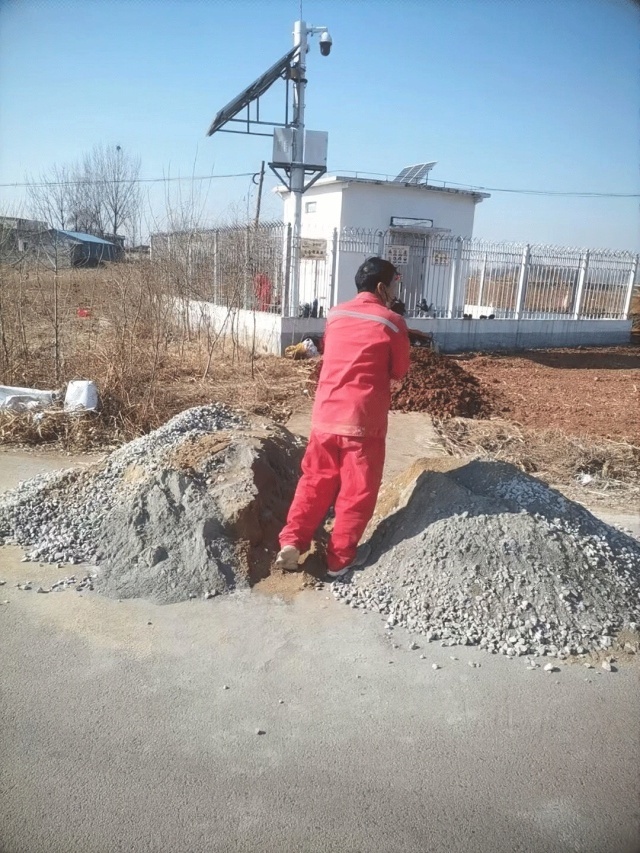
Energy Storage & Moisture-Protection Strategy
Energy storage is the dominant reliability factor in valve chamber environments:
✅ 400Ah wide-temperature battery configuration supporting winter discharge stability
✅ Moisture-resistant enclosure design mitigating condensation-induced failure
✅ Storage autonomy sized for 3–4 consecutive low-generation days
✅ Conservative depth-of-discharge strategy extending battery service life
This storage-centric approach prevents surveillance outages during extended overcast and winter conditions.
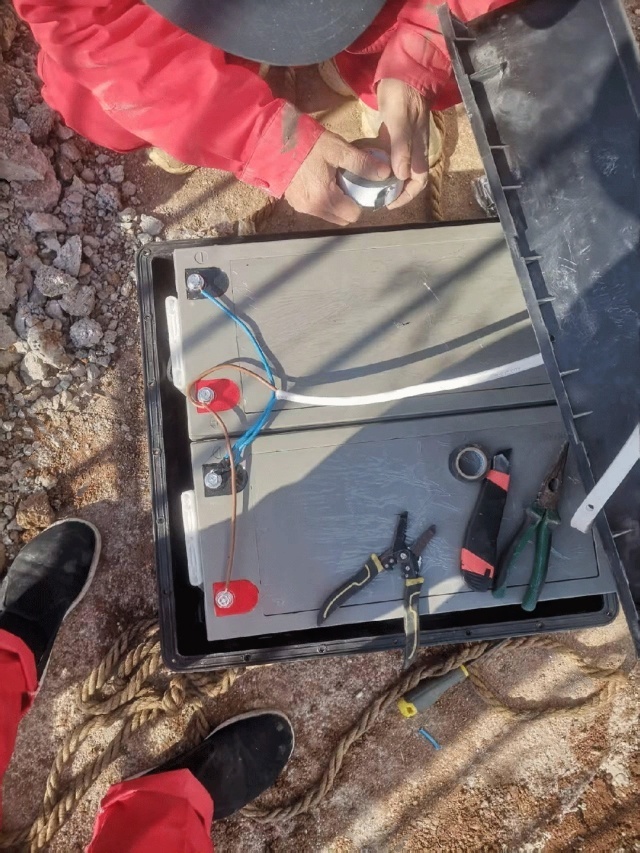
Engineering note:In condensation-prone valve chambers, terminal layout, cable insulation, polarity protection, and corrosion-resistant fastening become first-order reliability constraints, as most field failures originate from moisture-driven short-circuiting rather than insufficient battery capacity.
Intelligent Control & Remote Power Supervision
System resilience is reinforced through continuous supervision:
✅ Intelligent controller coordinating PV generation, battery charging, and surveillance load
✅ Remote visibility of battery state, PV output, and system health
✅ Automatic alerts for abnormal voltage, capacity depletion, or charging behavior
✅ Reduced dependence on on-site troubleshooting
Remote supervision transforms maintenance from reactive response to preventive control.
Project-Level Engineering Parameters (Reference Conditions)
The following parameters define the engineering boundary conditions under which system performance is validated.
Load Profile (Valve Chamber Video Surveillance)
✅ Typical fixed camera load: 10–15 W per unit
✅ Video transmission and networking equipment: 15–25 W
✅ Average continuous system load: approximately 50–80 W
✅ Night-time and transient allowance: up to 120 W
Engineering note:System sizing prioritizes continuous baseline stability, not short-duration peak demand.
Energy Autonomy Assumptions
✅ Designed autonomy: 3–4 consecutive days without effective solar input
✅ Reference scenario: prolonged rainfall and winter low-irradiance conditions
✅ Battery discharge maintained within safe engineering margins
Engineering note:Autonomy is defined by worst-case seasonal conditions, not annual averages.
Field Deployment Constraints
✅ No grid availability at valve chamber locations
✅ Restricted access requiring planned inspection rather than frequent visits
✅ Elevated humidity and condensation risk throughout most of the year
✅ Limited installation footprint near pipeline infrastructure
Engineering note:All architectural decisions are driven by field constraints, not ideal installation assumptions.
SECTION 3 · Deployment, Operations & Maintenance
The system is engineered to minimize operational risk and maintenance burden:
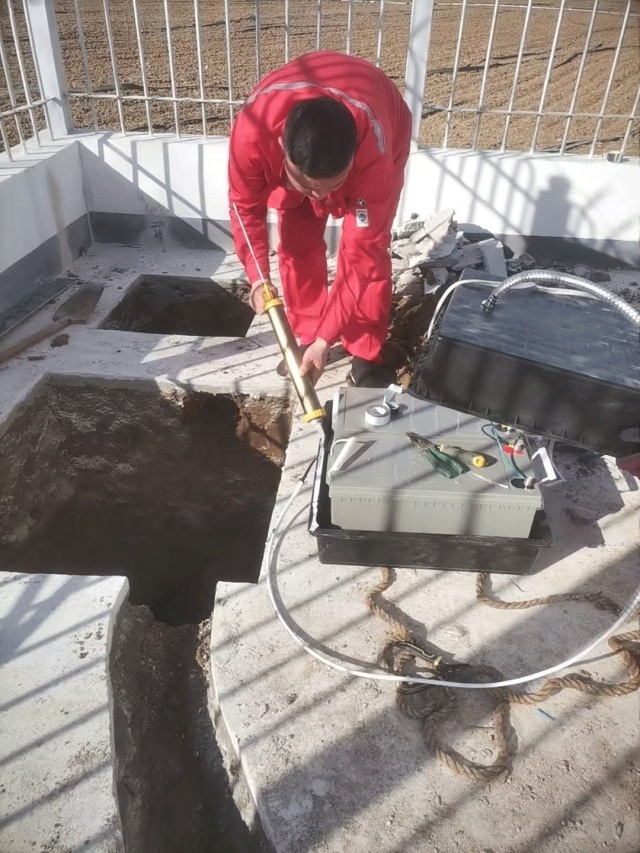
✅ Modular installation without permanent ground modification
✅ Compact enclosure suitable for confined valve chamber surroundings
✅ Sealed electrical compartments reducing moisture-driven failures
✅ Remote monitoring significantly reducing inspection frequency
This approach aligns power system operation with real-world pipeline maintenance practices.
SECTION 4 · Field Validation / Engineering Verification
Verification Conditions
Valve chamber surveillance systems were deployed under:
✅ High-humidity summer conditions
✅ Winter low-temperature environments
✅ Extended overcast and rainfall cycles
✅ Limited on-site maintenance access
Engineering Conclusion (Verification-Level)
The 600W photovoltaic system combined with 400Ah wide-temperature energy storage maintained uninterrupted valve chamber video surveillance across seasonal humidity and winter temperature variation, eliminating power-induced monitoring interruptions in oil and gas pipeline environments.
Decision Boundary (Engineering Applicability Limits)
This architecture is not suitable for deployments requiring continuous high-power floodlighting, active heating systems, or locations with permanent shading that prevents daily solar recovery, such as enclosed underground chambers or tunnel interiors.
Deep Search Intent Expansion · Engineering & Procurement FAQ
Why is storage autonomy more critical than solar wattage in valve chamber surveillance?
In valve chambers, the surveillance load is continuous and non-deferrable, so short-duration PV peaks do not prevent outages.
✅ The dominant outage driver is multi-day energy deficit caused by extended rainfall, winter low sun angles, and humidity-related efficiency loss
✅ Autonomy is therefore determined by usable battery energy under winter discharge conditions, not by nameplate PV wattage
✅ Engineering decision rule: if the site must tolerate ≥3 consecutive low-generation days, storage sizing becomes the first-order constraint, and PV sizing becomes the recovery constraint
Why is wide-temperature storage required in northern pipeline environments?
Winter failures in off-grid surveillance systems are typically storage-driven rather than PV-driven.
✅ Low temperatures reduce effective capacity and increase voltage sag under load, triggering camera/NVR resets and transmission dropouts
✅ Wide-temperature chemistry mitigates winter discharge instability and improves cold-start reliability after long idle periods
✅ Engineering decision rule: if nighttime temperatures frequently approach freezing or below, storage must be selected for cold discharge behavior, not nominal room-temperature capacity
How many autonomy days is this system designed to support, and what does that assume?
The reference design target is approximately 3–4 consecutive autonomy days without effective solar input.
✅ Reference scenario: winter irradiance reduction combined with consecutive overcast/rain cycles typical of northern monsoon regions
✅ Boundary condition: if the site routinely experiences longer low-generation windows, or the load includes heaters/floodlights, autonomy assumptions must be recalculated and architecture may require hybridization
Can this system support additional cameras or sensors without redesign?
Yes, if the expansion stays within the architecture’s decision-relevant limits.
✅ Incremental devices are feasible when total continuous load and transient surge remain within controller and battery discharge margins
✅ Practical engineering rule: expansions should be evaluated against nighttime baseline load and worst-case recovery days, not daytime average
✅ Boundary condition: if added devices increase nighttime load materially, autonomy days drop first, and storage must be resized before PV is increased
Engineering Conclusion (Single-Sentence Judgment)
For unmanned oil and gas pipeline valve chambers in Zaozhuang-type humid, grid-deficient northern environments, a storage-first, moisture-resilient, remotely supervised off-grid solar architecture is the only configuration that prevents multi-day energy deficits from becoming surveillance blackouts.
Related Smart-Infrastructure Energy Solutions
All following applications share the same engineering constraint set as this project:
✅ No utility grid access
✅ Continuous 24/7 monitoring loads
✅ High humidity and seasonal condensation
✅ Winter low-temperature storage stress
✅ Limited maintenance accessibility
They require reliability-first, storage-driven, remotely supervised off-grid power architectures, not standardized solar kits.
Off-Grid Power Systems for Oil & Gas Pipeline Valve Chambers
Designed for unmanned control nodes where power interruption immediately becomes a security risk.
✅ Key constraint: continuous video + restricted access + condensation-prone enclosures
✅ Engineering entry point: if the node cannot tolerate any monitoring gaps, autonomy and moisture protection must be defined before PV sizing
Renewable Power Architecture for Substation & Transmission Node Surveillance
Supports surveillance and communication loads in energy infrastructure where access windows are limited.
✅ Key constraint: operational continuity during weather events and delayed field response
✅ Engineering entry point: if maintenance cycles are weeks apart, remote supervision and storage margins become mandatory design inputs
Solar Energy Systems for Distributed Pipeline Corridor Monitoring
Enables scalable corridor deployment where centralized power is impractical.
✅ Key constraint: many nodes, long travel distances, and response latency
✅ Engineering entry point: if the corridor requires multi-point expansion, design must prioritize standardized topology with site-specific autonomy modeling
Off-Grid Energy Solutions for High-Humidity Industrial Surveillance
Applies to outdoor assets exposed to condensation, rainfall, and thermal cycling.
✅ Key constraint: moisture ingress drives failure more often than PV shortage
✅ Engineering entry point: if condensation risk is persistent, enclosure sealing and storage chemistry outrank PV wattage in reliability impact
Customized Solar Power Architectures for Unmanned Critical Infrastructure
Addresses sites requiring project-specific load definitions and autonomy assumptions.
✅ Key constraint: non-standard loads and access constraints invalidate catalog-kit sizing
✅ Engineering entry point: if load profiles or autonomy targets are uncertain, the project must start with baseline load measurement and worst-case autonomy definition
Engineering & Procurement Contact
Engineering & Procurement ContactEmailtony@kongfar.com
Websitehttps://www.kongfar.comFor pipeline valve chamber power architecture design or site-specific deployment assessment, engineering consultation is available upon request.



 English
  Deutsch