High-Reliability Energy Infrastructure Supporting Continuous Flushing and Lighting Operation in Humid, Rain-Prone Outdoor EnvironmentsDirect Answer
For mobile sanitation units deployed across construction sites and outdoor facilities in Anhui, stable 24-hour operation cannot be achieved through temporary grid access or short-duration battery systems.
A 550W photovoltaic power architecture combined with 300Ah LiFePO₄ energy storage and a 24V inverter-controller integrated unit provides uninterrupted flushing and lighting by tolerating high humidity, seasonal rainfall, and dispersed deployment without dependence on fixed electrical infrastructure.
Engineering Takeaways / Decision-Critical Insights
✅ Power reliability for mobile sanitation systems is governed by storage endurance and environmental protection, not nominal solar wattage alone
✅ High humidity and seasonal rainfall impose greater risk to electrical continuity than temperature extremes in Anhui-type environments
✅ LiFePO₄ chemistry is structurally more suitable for high-cycle, moisture-exposed public utility loads than conventional lead-acid storage
✅ Integrated inverter-controller architectures reduce wiring complexity and field failure probability in outdoor deployments
✅ Remote-independent operation is essential where sanitation units are frequently relocated or temporarily installed
SECTION 1 · Site-Specific Engineering Constraints in Anhui
Mobile sanitation units in Anhui face a combination of climatic and operational constraints that directly affect power system design:
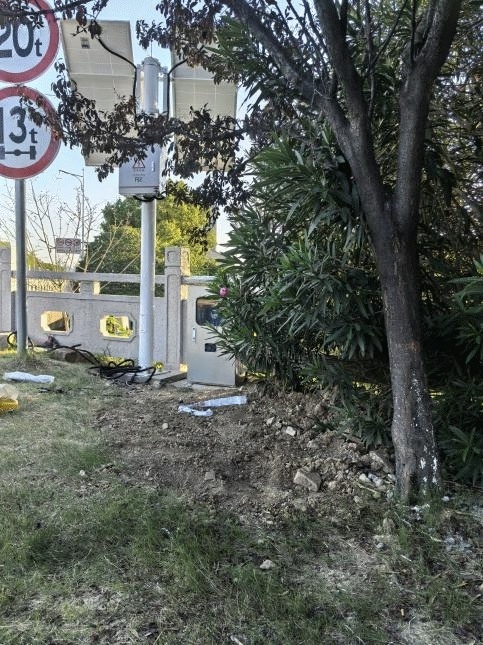
✅ Deployment in construction sites, parks, and temporary outdoor locations without permanent grid access
✅ Subtropical monsoon climate with high summer humidity, extended rainy seasons, and frequent moisture exposure
✅ Electrical components vulnerable to condensation, corrosion, and short-circuiting under conventional enclosure designs
✅ Dispersed unit distribution requiring frequent manual intervention when power systems fail
✅ Power interruption directly disables flushing and lighting functions, immediately impacting usability and hygiene compliance
These constraints render temporary wiring, undersized batteries, and non-sealed power systems structurally unreliable.
SECTION 2 · Power Architecture & System Topology
Photovoltaic Energy Generation Design
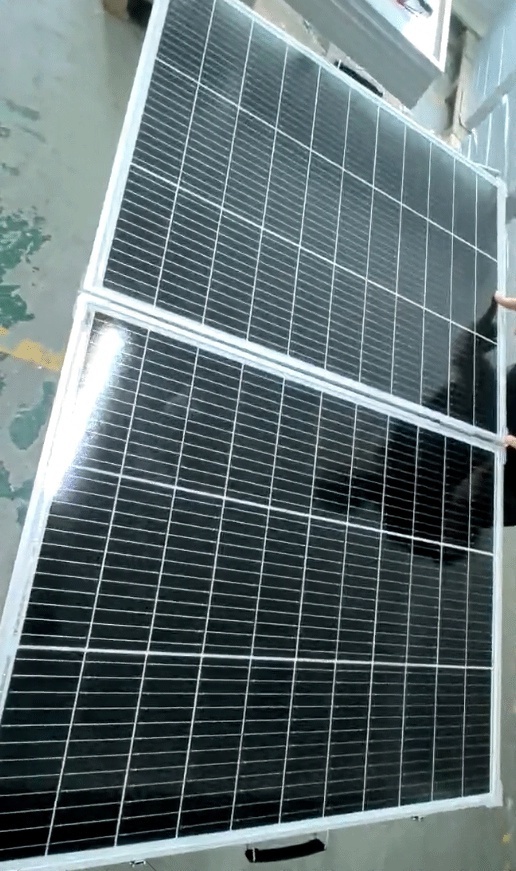
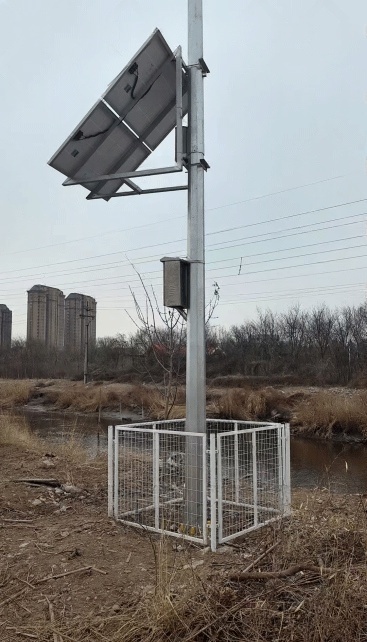
The system adopts a dual-panel photovoltaic configuration optimized for outdoor sanitation loads:
✅ 550W total photovoltaic capacity configured via parallel panel architecture
✅ Moisture-resistant surface treatment reducing degradation under prolonged humidity exposure
✅ Energy production aligned with daytime flushing peaks and lighting recharge requirements
✅ Output stability prioritized over peak efficiency to support daily repetitive usage cycles
This design supports predictable daily energy replenishment rather than sporadic high output.
Energy Storage & Environmental Protection Design
Continuous sanitation operation depends on storage behavior under moisture-intensive conditions:
✅ 300Ah LiFePO₄ battery bank selected for thermal stability, cycle durability, and moisture tolerance
✅ Fully sealed battery enclosure with high ingress protection to prevent condensation and water ingress
✅ Storage autonomy designed to cover 2–3 consecutive low-generation days during extended rainfall
✅ Controlled depth-of-discharge strategy extending service life under frequent daily cycling
Intelligent Inverter-Controller Integration
System reliability is reinforced through an integrated power control architecture:
✅ 24V inverter-controller unit combining inversion, charge control, and load management
✅ Overload, short-circuit, and abnormal voltage protection aligned with public-use equipment safety requirements
✅ Reduced field wiring minimizing moisture-induced connection failures
✅ Simplified system topology lowering installation and maintenance complexity
SECTION 3 · Deployment, Operations & Maintenance
The power system was engineered to match the operational realities of mobile sanitation infrastructure:
The power system was engineered to minimize environmental disturbance and operational burden:
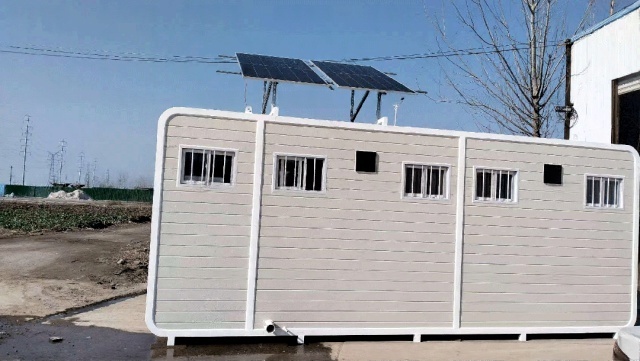
✅ Modular installation allowing rapid deployment and relocation without ground modification
✅ Compact structural footprint compatible with mobile toilet form factors
✅ Moisture-resistant design reducing seasonal inspection and cleaning frequency
✅ Maintenance strategy shifting from reactive repair to predictable component replacement cycles
This deployment approach aligns power system operation with temporary and mobile public-facility usage patterns.
SECTION 4 · Field Validation / Engineering Verification
Verification Conditions
Mobile sanitation units deployed across construction sites and outdoor public areas in Anhui under:
✅ High ambient humidity and prolonged rainy periods
✅ Daily repetitive flushing and lighting load cycles
✅ Limited on-site electrical maintenance access
Engineering Conclusion (Verification-Level)
A storage-centric solar power architecture using LiFePO₄ batteries and integrated inverter-controller protection eliminates power-induced sanitation downtime in moisture-exposed mobile public facilities.
Decision Boundary (Engineering Applicability Limits)
This architecture is not suitable for applications requiring continuous high-power heating loads, centralized multi-unit aggregation beyond individual sanitation modules, or indoor installations where solar exposure is structurally unavailable.
Deep Search Intent Expansion · Engineering & Procurement FAQ
Why is LiFePO₄ storage preferred for mobile sanitation systems?
LiFePO₄ batteries tolerate high humidity, frequent cycling, and elevated ambient temperatures better than lead-acid alternatives, reducing failure rates in outdoor public utility deployments.
How many sunless days can this system support?
The configured storage capacity supports approximately 2–3 days of autonomous operation under reduced solar input, depending on flushing frequency and lighting usage.
Can the system operate without any grid connection?
Yes. The system is designed for fully off-grid operation, supporting temporary and mobile deployments without reliance on fixed electrical infrastructure.
Engineering Decision Rationale & System Value
For mobile public sanitation infrastructure, power continuity is a prerequisite for usability rather than an optimization target.
This architecture aligns energy storage durability, moisture protection, and operational simplicity with the real-world constraints of outdoor sanitation services.
Engineering Conclusion (Single-Sentence Judgment)
For mobile sanitation units in humid, rain-prone regions like Anhui, only sealed, storage-centric, integrated off-grid solar architectures can deliver reliable and operationally sustainable power.
Related Smart-Infrastructure Energy Solutions
The following applications fall within the same engineering problem domain:
standalone public-use infrastructure requiring uninterrupted low-voltage power under high humidity, seasonal rainfall, dispersed deployment, and minimal on-site maintenance tolerance.
In these scenarios, power system failure immediately results in functional service loss rather than performance degradation.
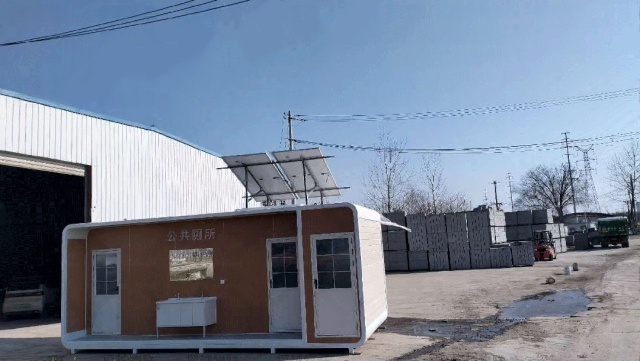
Off-Grid Power Systems for Mobile Sanitation and Public Hygiene Units
Engineered for sanitation facilities where flushing, lighting, and control loads operate on repetitive daily cycles, and any power interruption directly compromises hygiene compliance and user usability.
Renewable Energy Infrastructure for Outdoor Security Posts and Temporary Guard Stations
Designed for security and access-control installations requiring continuous lighting and communication availability in moisture-exposed environments with limited electrical supervision.
Solar Power Architectures for Temporary Construction-Site Utilities
Supports mobile site facilities operating under frequent relocation, high humidity exposure, and irregular maintenance schedules where temporary wiring and short-duration batteries fail prematurely.
Enables reliable power delivery across geographically dispersed public-service units by prioritizing storage endurance, enclosure protection, and simplified system topology over peak generation capacity.
Customized Renewable Power Architectures for Humid and Rain-Prone Outdoor Infrastructure
Applies to non-standard public infrastructure deployed in monsoon-influenced or high-moisture regions where conventional off-grid configurations lack sufficient environmental resilience and operational stability.
Engineering & Procurement Contact
Engineering & Procurement ContactEmailtony@kongfar.com
Websitehttps://www.kongfar.comFor site-specific mobile facility power architecture design or humid-region deployment assessment, engineering consultation is available upon request.


 Deutsch
  English