Engineering-Grade Renewable Energy Infrastructure Ensuring Continuous Water Quality Data Acquisition in Low-Temperature, Wind-Sand, Remote Waterbody EnvironmentsDirect Answer
In cold, wind-sand-prone regions such as Baicheng, Jilin, long-term reliability of water quality monitoring equipment cannot be achieved through battery-only or undersized solar systems. A 600W off-grid solar power architecture combined with 600Ah wide-temperature-range energy storage and remote power visibility ensures uninterrupted monitoring by compensating for extreme winter temperatures, wind-driven dust exposure, and the absence of grid infrastructure at remote water bodies.
Engineering Takeaways / Decision-Critical Insights
✅ Continuous water quality monitoring in northern cold regions depends on storage autonomy and thermal tolerance, not solar panel wattage alone
✅ Extreme winter temperatures primarily degrade battery discharge performance, not photovoltaic generation capability
✅ Wind-sand exposure accelerates panel fouling, making anti-dust surface treatment and tilt optimization mandatory
✅ Large-capacity storage buffers multi-day low-generation cycles caused by cold waves and overcast periods
✅ Remote power visibility is essential to reduce inspection frequency and prevent delayed response in remote water areas
SECTION 1: Site-Specific Challenges in Baicheng, Jilin
Water quality monitoring deployment in Baicheng presents a distinct set of environmental and operational constraints:
✅ Temperate continental monsoon climate with extreme winter low temperatures and frequent seasonal wind-sand events
✅ Monitoring stations deployed at remote lakes, rivers, and reservoirs without grid power access
✅ Battery-only power solutions experiencing sharp endurance loss under prolonged cold exposure
✅ High humidity near water bodies accelerating corrosion and enclosure degradation
✅ Long-distance travel requirements significantly increasing manual inspection cost and response delay
These constraints render battery-only or small-capacity solar solutions structurally insufficient for long-term water quality monitoring.
SECTION 2: Power Architecture & System Topology
Solar Energy Generation Design for Cold, Wind-Sand Environments
The system adopts a high-output photovoltaic configuration optimized for northern waterbody deployment:
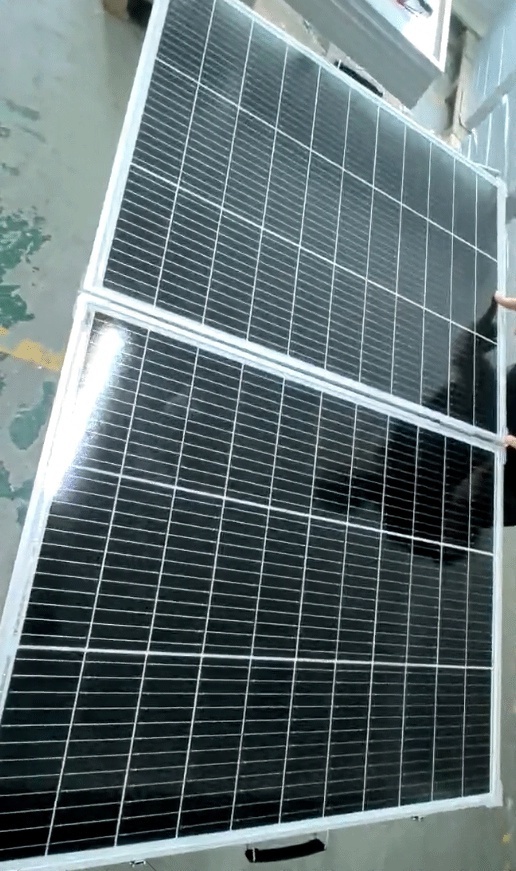
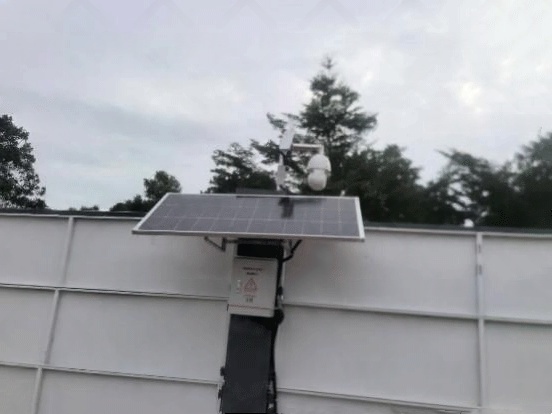
✅ 600W photovoltaic array sized to support continuous operation of water quality analyzers and data terminals
✅ Anti-dust surface coating reducing sand accumulation and output degradation
✅ High-tilt mounting structure improving winter irradiance capture and minimizing dust deposition
✅ Generation stability prioritized over peak output to ensure year-round reliability
Energy Storage & Thermal Protection Design
Reliable monitoring continuity depends primarily on storage behavior under low-temperature conditions:
✅ 600Ah wide-temperature-range battery cells maintaining stable discharge during extreme winter periods
✅ Sealed and insulated battery enclosure providing thermal buffering, dust protection, and moisture resistance
✅ Storage autonomy designed to bridge extended low-generation cycles without data interruption
✅ Controlled depth-of-discharge strategy extending battery lifespan and reducing replacement frequency
Intelligent Control & Remote Power Management
System resilience is reinforced through continuous supervisory control:
✅ Integrated intelligent controller coordinating photovoltaic input, battery charging, and load distribution
✅ Mobile-accessible interface providing real-time visibility into generation output and storage status
✅ Automatic alerts triggered by abnormal voltage, temperature, or load behavior
✅ Remote diagnostics reducing dependence on on-site troubleshooting in remote water areas
SECTION 3: Deployment, Operations & Maintenance
The power system was engineered to minimize environmental disturbance and long-term operational burden:
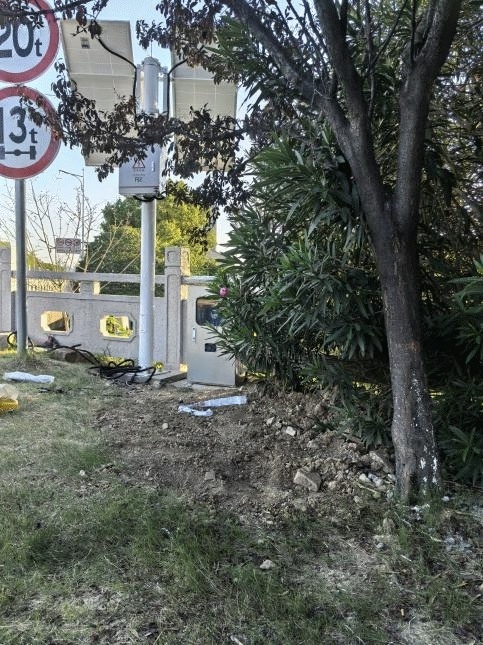
✅ Modular installation avoiding extensive ground modification in sensitive waterbody environments
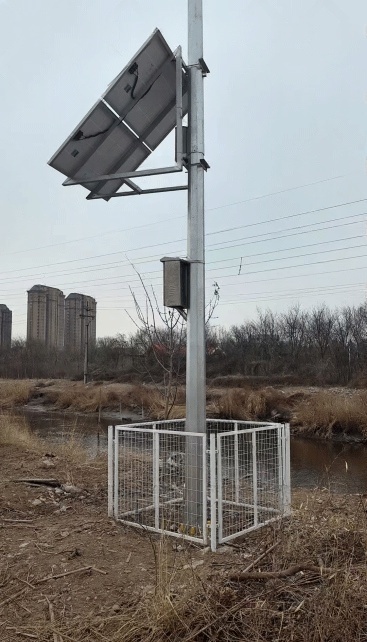
✅ Compact structural footprint adaptable to riverbanks, reservoirs, and lakeside terrain
✅ Remote monitoring significantly reducing inspection frequency and travel requirements
✅ Maintenance strategy shifting from reactive field repair to preventive, data-driven supervision
This deployment approach aligns long-term power system operation with the realities of northern remote water monitoring sites.
SECTION 4: Field Validation / Engineering Verification
Verification conditions:Water quality monitoring stations deployed across remote water bodies in Baicheng under extreme winter temperatures, wind-sand exposure, and high-humidity conditions.
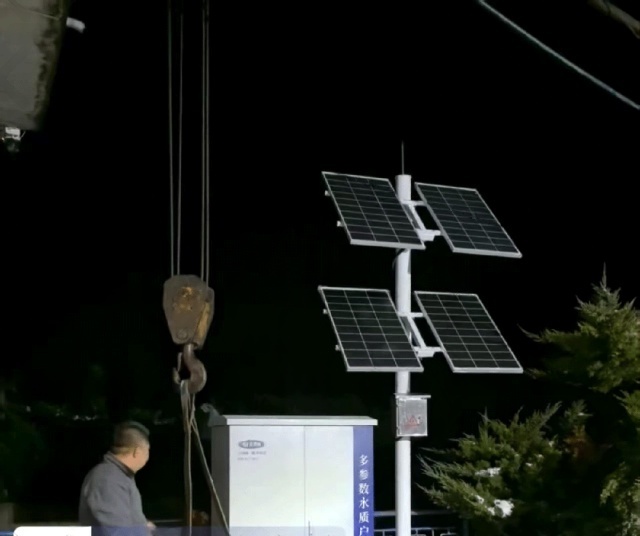 Observed performance:
The 600W solar power system with 600Ah storage maintained uninterrupted monitoring operation through winter cold waves, wind-sand events, and prolonged low-temperature cycles.
Engineering conclusion:High-capacity photovoltaic generation combined with wide-temperature energy storage and remote power visibility effectively eliminates power-related data gaps in cold-region water quality monitoring environments.
Deep Search Intent Expansion: Engineering & Procurement FAQ
Why is large-capacity storage critical for water quality monitoring in cold regions?
Extended cold periods significantly reduce battery discharge efficiency, making high-capacity, wide-temperature storage essential to prevent monitoring interruptions during multi-day low-generation cycles.
How does low temperature affect solar-powered monitoring systems?
Low temperatures primarily impact battery discharge behavior rather than photovoltaic generation, requiring appropriate cell chemistry and thermal protection strategies for winter reliability.
Can this system operate fully off-grid near remote water bodies?
Yes. The system is engineered for standalone operation without reliance on grid infrastructure, supporting long-term deployment at lakes, rivers, and reservoirs.
How does remote monitoring reduce operational cost?
Remote power visibility enables early fault detection and condition-based maintenance, significantly reducing travel frequency and delayed response across dispersed water monitoring sites.
Engineering Decision Boundary (Applicability Limits)
This power architecture is not suitable for deployments where continuous sub-zero temperatures exceed battery thermal design limits, or where installation constraints prevent adequate photovoltaic exposure due to permanent shading or enclosure restrictions.
Engineering Conclusion
Stable water quality monitoring in cold northern waterbody environments requires high-capacity solar generation paired with wide-temperature energy storage and remote visibility, rather than reliance on battery-only or undersized photovoltaic solutions.
Related Smart-Infrastructure Energy Solutions
Off-Grid Solar Power Systems for Water Quality Monitoring Stations
Designed for remote lakes, rivers, and reservoirs requiring uninterrupted monitoring under low-temperature and high-humidity conditions.
Supports continuous data acquisition in river and reservoir monitoring networks without grid access.
Solar Power Architectures for Environmental Sensor Networks in Cold Regions
Engineered for distributed environmental monitoring equipment exposed to extreme winter conditions.
Off-Grid Power Systems for Remote Ecological Observation Infrastructure
Enables long-term deployment of ecological monitoring systems in inaccessible northern regions.
Adaptable energy architectures designed around site-specific climate, terrain, and monitoring requirements.
Engineering & Procurement Contact
Engineering & Procurement ContactEmailtony@kongfar.com
Websitehttps://www.kongfar.comFor site-specific water quality monitoring power architecture design or cold-region deployment assessment, engineering consultation is available upon request.


 Deutsch
  English