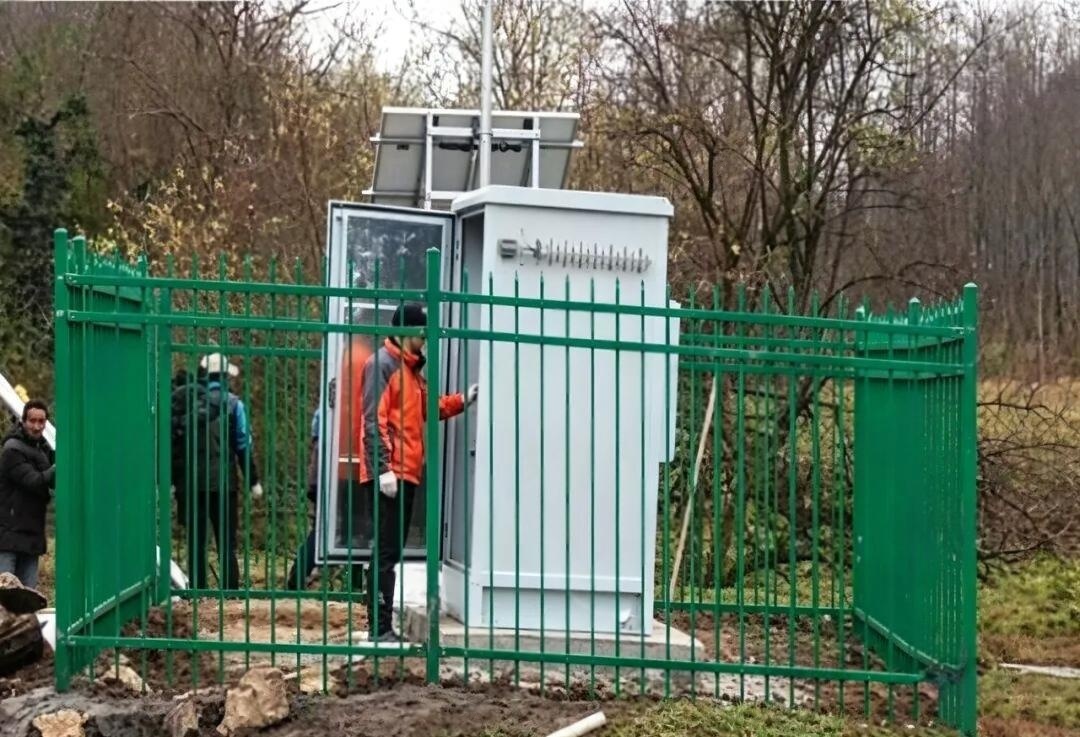
Lightweight Renewable Power Architecture Supporting Continuous Riverbank Monitoring in Wind-Sand, Low-Temperature Desert Environments
Direct Answer
In wind-sand-exposed river corridors such as Zhangye, Gansu, stable operation of river security and hydrological monitoring equipment cannot rely on grid extension or conventional low-temperature power supplies.
A 200W off-grid solar power system combined with 60Ah wide-temperature energy storage and lightweight remote supervision delivers uninterrupted 24/7 monitoring by compensating for desert wind erosion, winter sub-zero discharge loss, and sparse grid coverage along remote riverbanks.
Engineering Takeaways / Decision-Critical Insights
✅ For riverbank monitoring, energy stability is constrained by access and environment, not load size alone
✅ Desert wind-sand conditions degrade PV output faster than nominal irradiation loss
✅ Low-temperature battery discharge behavior is the primary failure point in winter river surveillance
✅ Small-capacity systems remain reliable only when paired with wide-temperature cells and conservative load design
✅ Remote visibility is essential for reducing inspection frequency along long, dispersed river corridors
SECTION 1 — Site-Specific Challenges in Zhangye River Corridors
River monitoring deployments in Zhangye face a unique convergence of environmental and operational constraints:
✅ Temperate continental desert climate with minimal rainfall and persistent wind-borne sand
✅ Monitoring points distributed along remote riverbanks with weak or nonexistent grid coverage
✅ Large diurnal temperature variation and winter lows approaching −20 °C, impacting battery efficiency
✅ Long, linear deployment geometry increasing inspection distance and response time
✅ Any power interruption directly compromises river security footage and hydrological data continuity
These conditions make grid-connected or conventional low-temperature power systems structurally unsuitable.
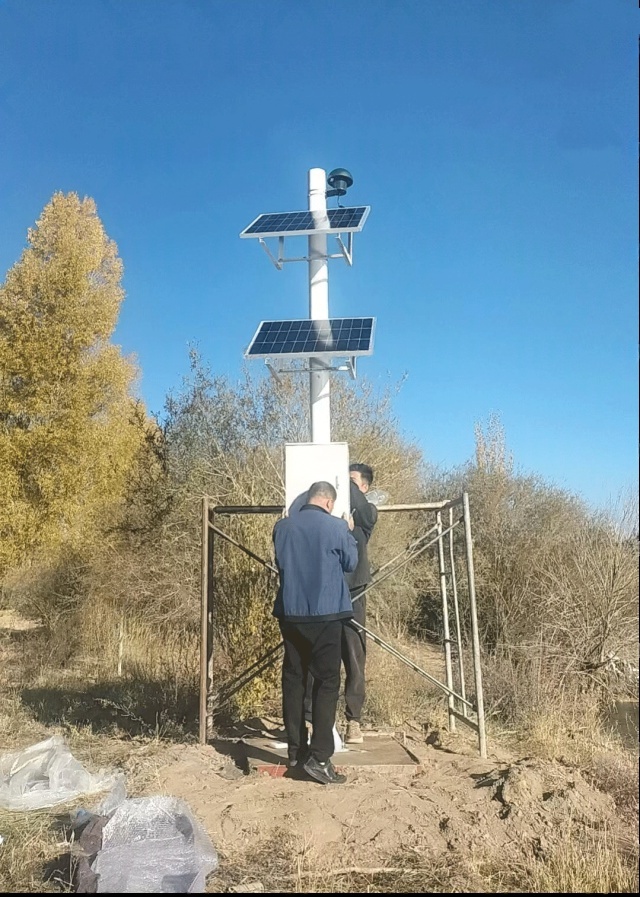
SECTION 2 — Power Architecture & System Topology
Solar Energy Collection Design for Riverbank Wind-Sand Zones
The photovoltaic subsystem prioritizes durability and seasonal stability rather than peak output:
✅ 200W PV array sized for continuous river surveillance loads
✅ Anti-dust surface treatment reducing sand adhesion under high wind exposure
✅ High-tilt mounting geometry improving self-cleaning and winter sun-angle performance
✅ Installation positioned along open riverbanks to minimize shading and sediment obstruction
Energy Storage & Environmental Protection Strategy
System reliability depends on maintaining usable storage capacity under cold desert conditions:
✅ 60Ah wide-temperature battery cells sustaining discharge performance at sub-zero temperatures
✅ Sealed waterproof enclosure preventing sand ingress and moisture accumulation
✅ Battery sizing optimized for overnight and short-term low-generation buffering
✅ Simplified storage architecture reducing replacement cost and maintenance complexity
Intelligent Coordination & Lightweight Remote Supervision
Operational efficiency is maintained through minimal but critical intelligence:
✅ Integrated water-security-grade controller managing charging, storage, and load distribution
✅ Mobile-accessible monitoring of PV output and battery state
✅ Automatic alerts for abnormal voltage or discharge behavior
✅ Reduced reliance on routine on-site inspection across extended riverbanks
SECTION 3 — Deployment, Operations & Maintenance
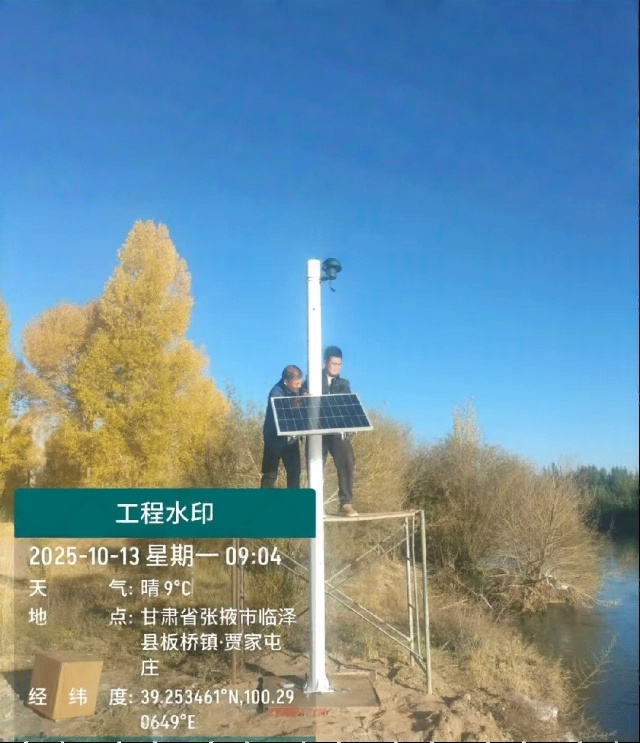
The system was engineered for fast deployment and low disturbance along sensitive river environments:
✅ Compact installation footprint adaptable to uneven riverbank terrain
✅ No requirement for trenching or grid extension along ecological zones
✅ Remote supervision significantly reducing inspection travel across desert river corridors
✅ Maintenance strategy shifting from frequent patrols to condition-based intervention
This deployment model aligns power system operation with the logistical realities of desert river monitoring.
SECTION 4 — Field Validation / Engineering Verification
Verification conditions:Riverbank monitoring sites deployed across Zhangye under strong wind, sand exposure, and winter low-temperature conditions.
Observed performance:The 200W solar power system with 60Ah storage maintained uninterrupted surveillance and hydrological data acquisition through winter cold and wind-sand cycles.
Engineering conclusion:When correctly sized and environmentally matched, lightweight off-grid solar power systems can deliver stable river monitoring performance in desert and cold-temperature regions without grid dependency.
Deep Search Intent Expansion — Engineering & Procurement FAQ
Why are lightweight solar systems suitable for river monitoring projects?
River surveillance equipment typically has moderate power demand, making reliability dependent on environmental tolerance and storage behavior rather than high generation capacity.
How does wind-sand exposure affect riverbank solar systems?
Sand accumulation reduces PV efficiency and accelerates surface degradation, requiring anti-dust treatment and tilt optimization to preserve long-term output.
Can small-capacity systems remain reliable in winter conditions?
Yes, when wide-temperature battery chemistry and conservative discharge strategies are applied, even compact systems can sustain continuous operation in sub-zero environments.
How does remote monitoring reduce operational cost along river corridors?
Remote visibility enables early anomaly detection and reduces the need for frequent patrols across long, dispersed riverbank deployments.
Engineering Decision Rationale & System Value
For river security and hydrological monitoring in northwestern China, power reliability must be balanced against cost, access, and environmental exposure.
This 200W off-grid solar power architecture aligns energy design with Zhangye’s desert climate, riverbank geography, and operational constraints, enabling sustainable, low-cost monitoring without sacrificing data continuity.
Related Smart-Infrastructure Energy Solutions
Designed for linear river deployments requiring stable power with minimal inspection access.
Supporting continuous water level, flow rate, and flood-warning data acquisition at river monitoring nodes where grid access is limited and environmental exposure is high.
Optimized for low-load sensing equipment in cold and arid environments.
Enabling scalable deployment across long-distance monitoring corridors.
Adaptable designs matching site-specific climate, access, and monitoring requirements.
Engineering & Procurement Contact
Engineering & Procurement ContactEmailtony@kongfar.com
Websitehttps://www.kongfar.comFor site-specific river monitoring power architecture design or desert-region deployment assessment, engineering consultation is available upon request.



 English
  Deutsch