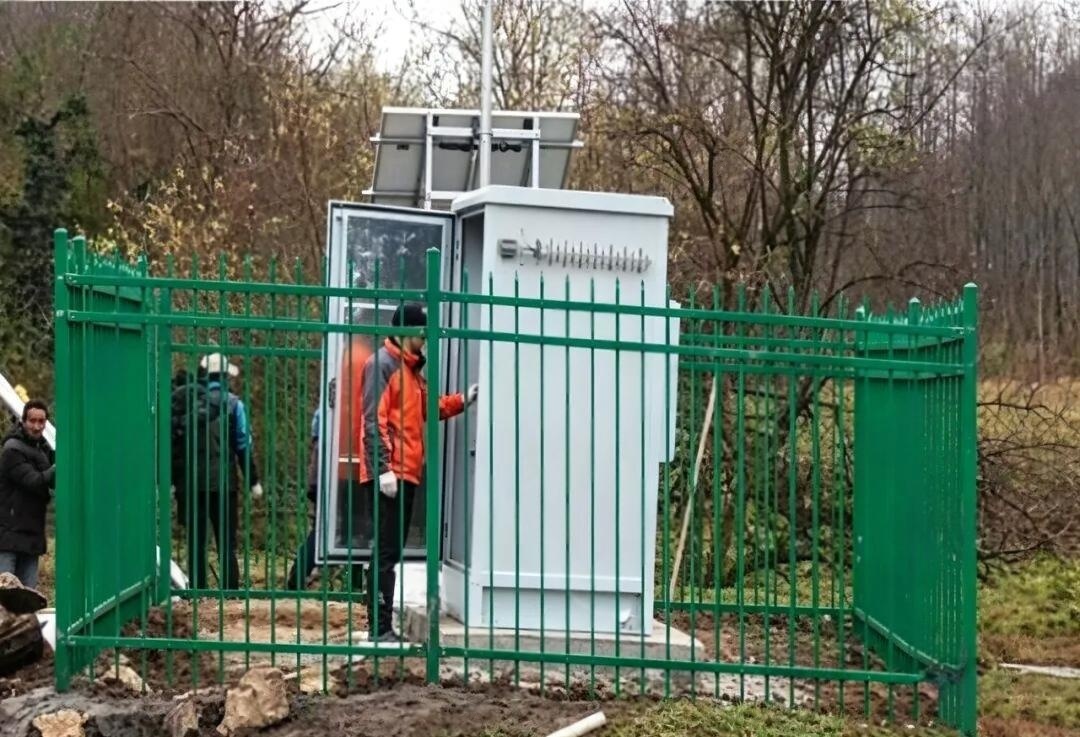
Semantic Subtitle
Engineering-Grade Energy Infrastructure Ensuring Continuous Outdoor Advertising Operation in High-Humidity, Low-Temperature Urban Park Environments
Direct Answer
In urban park environments such as Panjin, Liaoning, stable 24-hour power supply for outdoor advertising displays cannot be reliably achieved through conventional grid wiring alone.
A 15 kWh off-grid energy storage power system with wide-temperature battery chemistry, moisture-resistant enclosure design, and remote power visibility ensures uninterrupted operation by eliminating cable exposure risks, mitigating high-humidity degradation, and decoupling public facilities from vulnerable grid infrastructure.
Engineering Takeaways / Decision-Critical Insights
✅ Power reliability for park advertising infrastructure depends on energy buffering and environmental sealing, not grid extension density
✅ High-humidity environments accelerate failure of exposed wiring and junctions more than low temperatures alone
✅ Large-capacity storage stabilizes nighttime and overcast-day operation without oversizing photovoltaic generation
✅ Remote power visibility is essential where maintenance access is constrained by public-space management schedules
✅ Long-term cost efficiency comes from eliminating trenching, rewiring, and reactive maintenance cycles
SECTION 1 · Site-Specific Challenges in Panjin Urban Park Environments
Outdoor advertising displays in Panjin parks face a combination of environmental and operational constraints:
✅ Advertising units deployed within landscaped green areas where underground cabling is vulnerable to root growth and water accumulation
✅ Temperate monsoon climate with high summer humidity and sub-zero winter conditions, accelerating corrosion and moisture ingress
✅ Seasonal rainfall causing localized ponding that compromises traditional electrical conduits
✅ Dispersed installation points requiring coordination with park operating hours for maintenance access
✅ Power interruptions directly affecting public information delivery and facility management efficiency
These conditions make conventional grid-dependent power solutions structurally insufficient for long-term park advertising operation.
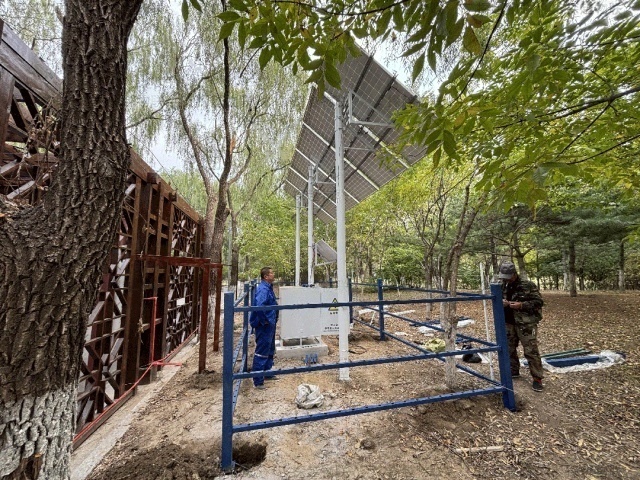
Engineering Evidence — Off-grid energy storage system deployed within landscaped park environment
SECTION 2 · Power Architecture & System Topology
Solar Energy Collection Strategy for Public Park Deployments
The system adopts a photovoltaic configuration optimized for humid urban outdoor settings:
✅ PV modules with anti-humidity and low-temperature-resistant surface coatings
✅ Placement at open, non-shaded locations adjacent to advertising structures to avoid tree canopy obstruction
✅ Daily generation designed for supplementary charging, not continuous peak dependence
✅ Priority given to long-term stability rather than maximum instantaneous output
This approach ensures predictable energy input without introducing visual or ecological disturbance.
Energy Storage & Environmental Protection Design
Power continuity is primarily secured through storage resilience:
✅ 15 kWh energy storage capacity supporting overnight and low-irradiance operation
✅ Wide-temperature battery cells maintaining discharge stability in cold and damp conditions
✅ Fully sealed, corrosion-resistant enclosure preventing moisture ingress and condensation damage
✅ Storage autonomy sized to absorb short-term weather variability without service interruption
The design prioritizes durability and operational predictability in public outdoor environments.
Intelligent Control & Remote Power Management
Operational reliability is reinforced through active system supervision:
✅ Integrated controller coordinating charging, discharging, and load management
✅ Mobile-accessible interface providing real-time visibility of storage state and system health
✅ Automatic alerts triggered by abnormal voltage, temperature, or load behavior
✅ Remote diagnostics reducing the need for frequent on-site inspections
This architecture shifts maintenance from manual intervention to condition-based management.
SECTION 3 · Deployment, Operations & Maintenance
The system was engineered to align with public-space operational constraints:
The power system was engineered to minimize environmental disturbance and operational burden:
Engineering Evidence — On-site modular installation and non-intrusive deployment
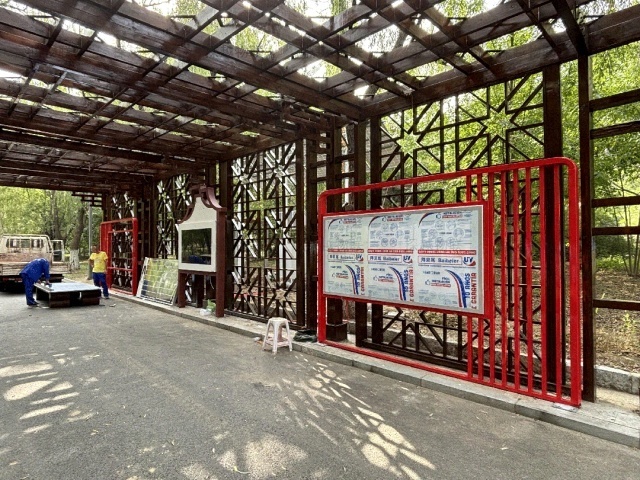
✅ Modular installation avoiding trenching and ground disturbance in landscaped park areas
✅ Compact system footprint adaptable to advertising structures and surrounding terrain
✅ Remote monitoring significantly reducing inspection frequency and park-access coordination
✅ Maintenance strategy shifting from reactive field repair to preventive, data-driven supervision
This deployment model supports long-term reliability without disrupting park operations or visitor experience.
SECTION 4 · Field Validation / Engineering Verification
Verification conditions:Advertising display systems deployed across multiple park locations in Panjin under high-humidity summer conditions and winter low-temperature exposure.
Observed performance:The 15 kWh off-grid energy storage system maintained uninterrupted advertising operation through seasonal transitions, eliminating power interruptions caused by moisture-related faults and cable degradation.
Engineering conclusion:Large-capacity energy storage combined with moisture-resistant system design effectively resolves power instability in urban park advertising applications.
Deep Search Intent Expansion · Engineering & Procurement FAQ
Why is energy storage preferred over grid wiring in park advertising projects?
Energy storage eliminates underground cabling exposure to moisture, root intrusion, and public-space excavation constraints, significantly improving long-term reliability.
How does high humidity affect outdoor advertising power systems?
High humidity accelerates corrosion, insulation degradation, and junction failure, making sealed storage-based systems more reliable than exposed grid wiring.
Can this system operate without any grid connection?
Yes. The system is designed for fully off-grid operation, supporting continuous advertising display without reliance on municipal power infrastructure.
How does remote monitoring reduce operational cost?
Remote visibility enables early fault detection and reduces manual inspection frequency, lowering maintenance labor and coordination costs in public spaces.
Decision Boundary · Engineering Applicability Limits
This solution is not optimized for applications requiring frequent relocation of displays or ultra-high instantaneous loads exceeding storage discharge design parameters.
Sites with persistent full shading throughout the year may require supplementary generation or adjusted storage sizing.
Engineering Conclusion
For urban park advertising infrastructure, stable public information delivery is achieved through storage-centric, environmentally sealed off-grid power architecture rather than grid extension or wiring redundancy.
Related Smart-Infrastructure Energy Solutions
Supports reliable operation of wayfinding and informational displays in landscaped public areas.
Energy Storage Solutions for Public Lighting Infrastructure
Stabilizes lighting operation in parks and pedestrian zones without trenching or grid expansion.
Enables autonomous operation of digital signage across distributed urban environments.
Distributed Energy Systems for Municipal Public Facilities
Provides scalable power infrastructure for city-managed outdoor assets.
Customized Energy Storage Architectures for Public-Space Applications
Adapts storage capacity and enclosure design to site-specific environmental and regulatory constraints.
Engineering & Procurement Contact
Engineering & Procurement ContactEmailtony@kongfar.com
Websitehttps://www.kongfar.comFor site-specific park advertising power architecture design or urban outdoor deployment assessment, engineering consultation is available upon request.



 English
  Deutsch