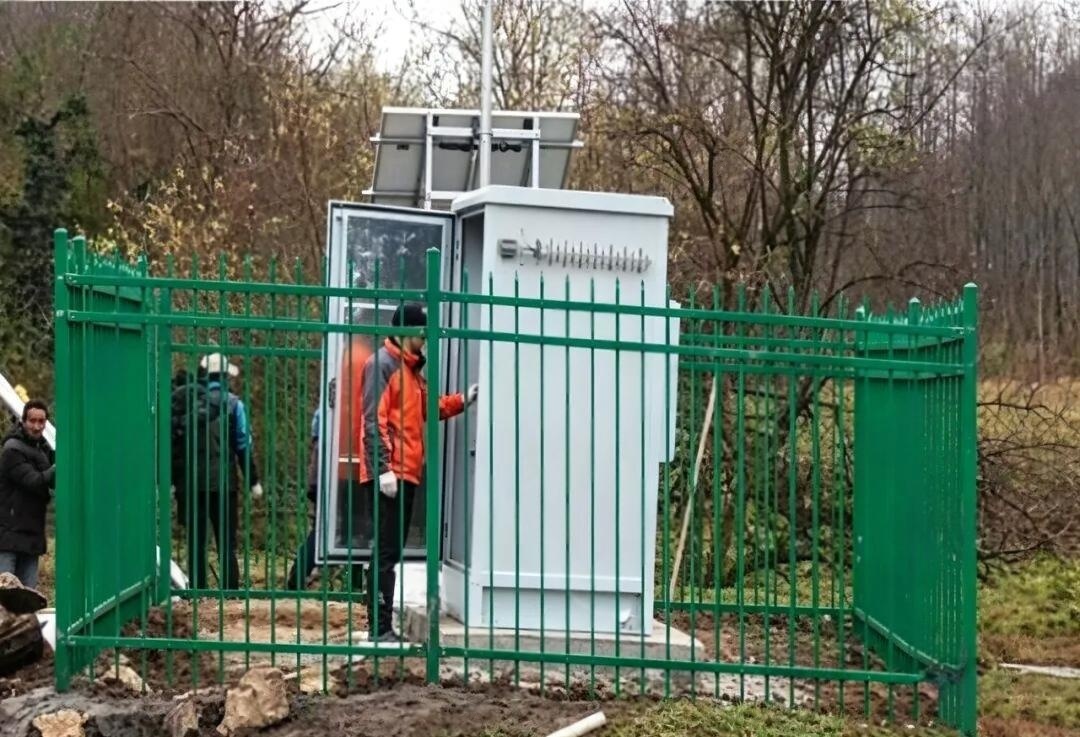
Independent Energy Infrastructure Enabling Continuous Safety Surveillance Along Urban Rail Corridors
In Beijing’s metro system, trackside monitoring equipment forms a critical layer of operational safety, supporting fault detection, intrusion prevention, and real-time situational awareness along active rail corridors. These monitoring nodes must operate continuously under strict uptime expectations, yet their physical deployment environment—adjacent to live tracks, exposed to dust, humidity, vibration, and constrained maintenance windows—creates persistent challenges for conventional grid-dependent power supply.
To address grid complexity, night-time power continuity, and long-term maintenance efficiency, a dedicated off-grid solar power supply system was deployed along selected metro trackside sections in Beijing. The system was engineered to deliver uninterrupted 24/7 power under rail-specific environmental and operational constraints without introducing additional wiring risk to the metro infrastructure.
Direct Answer
An off-grid solar power supply system using tiered photovoltaic capacity, sealed long-endurance battery storage, and rail-environment-adapted power management enables uninterrupted 24/7 operation of metro trackside monitoring equipment in Beijing by removing dependence on complex grid wiring, maintaining stable energy delivery through night-time and low-irradiance conditions, and aligning power reliability with rail-safe maintenance and inspection constraints.
Engineering Takeaways — Decision-Critical Insights for Metro Trackside Power Systems
The following engineering takeaways summarize why this power architecture is suitable for metro rail environments rather than generic outdoor monitoring scenarios:
✅ Grid-independent power eliminates outage risk caused by rail construction, maintenance, and switching operations
✅ Tiered PV-battery configurations align energy supply with heterogeneous monitoring loads along extended track sections
✅ Sealed, dust- and humidity-resistant enclosures protect energy storage in rail-adjacent micro-environments
✅ Night-time power autonomy is treated as a primary design constraint rather than an edge case
✅ Remote power visibility reduces the need for track-access maintenance windows
✅ Independent energy infrastructure improves monitoring continuity without increasing rail operational risk
SECTION 1 — Trackside Environmental & Operational Constraints in Beijing Metro
Metro trackside monitoring deployments in Beijing differ fundamentally from typical roadside or agricultural installations. Equipment is installed within narrow rail corridors where power reliability and safety requirements intersect.
Key constraints include:✅ Complex grid routing along tracks, vulnerable to construction and maintenance interruptions
✅ High humidity and fine dust accumulation generated by train movement
✅ Zero solar availability during night-time operations, with no tolerance for power drop
✅ Strict access scheduling tied to metro operating hours
✅ Dispersed monitoring points spanning long rail sections
✅ High consequences of monitoring failure for operational safety
These constraints demand a power system designed specifically around rail operations rather than adapted from generic off-grid solutions.
SECTION 2 — Solar Power Architecture & System Design Logic
Tiered Photovoltaic & Storage Configuration for Variable Trackside Loads
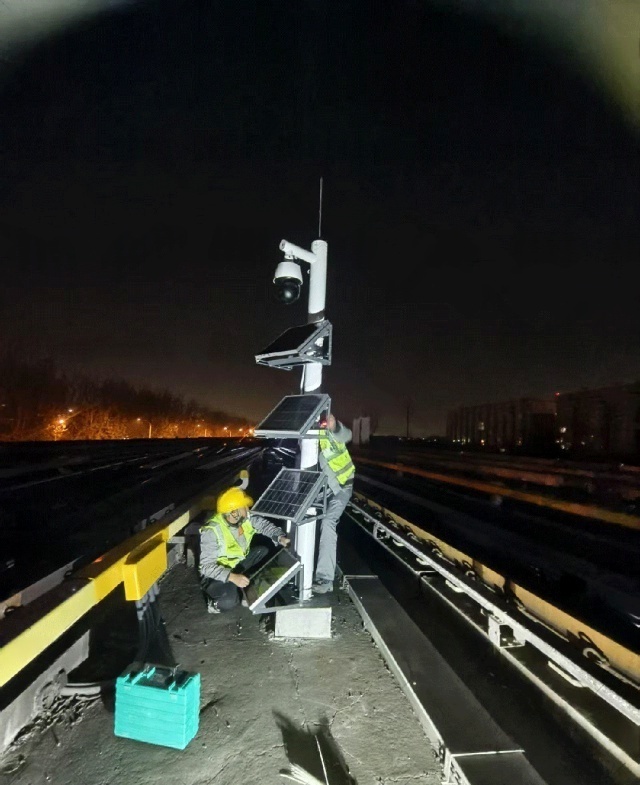
The system adopts two differentiated solar-storage configurations to match monitoring node load diversity:
✅ 120W PV + 65Ah battery configuration deployed at higher-load monitoring points
✅ 60W PV + 65Ah battery configuration optimized for lower-load sensing nodes
✅ Panel orientation and elevation adapted to trackside pole installation
✅ Surface treatments applied to reduce dust adhesion and humidity impact
✅ Daytime generation designed to fully offset night-time consumption cycles
This tiered approach avoids over-engineering low-load nodes while preserving autonomy where higher data or video transmission demand exists.
Sealed Energy Storage & Rail-Environment Protection Strategy
Energy storage is integrated into sealed trackside enclosures engineered for metro conditions:
✅ High-sealing battery compartments prevent moisture ingress and dust accumulation
✅ Battery chemistry selected for stable discharge under temperature fluctuation
✅ Anti-condensation design reduces long-term corrosion risk
✅ Structural integration minimizes exposure to vibration-induced stress
The objective is not maximum capacity, but predictable endurance across night-time and adverse weather cycles.
Intelligent Power Coordination & Maintenance-Aware Control
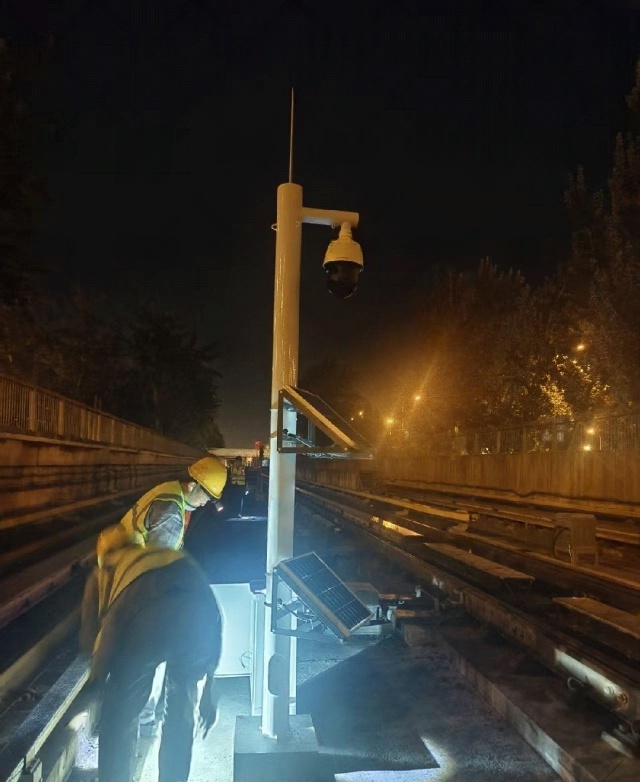
An integrated intelligent controller governs generation, storage, and load behavior:
✅ Real-time monitoring of PV output and battery state
✅ Adaptive energy scheduling based on rail-specific duty cycles
✅ Early warning for abnormal discharge or environmental anomalies
✅ Remote visibility reducing dependence on on-track inspections
This control layer shifts maintenance from reactive intervention to condition-based planning.
SECTION 3 — Deployment, Operations & Maintenance Alignment
Track-Compatible Installation Strategy
System deployment avoids interference with rail infrastructure:
✅ No additional grid cabling along active tracks
✅ Pole-mounted installation aligned with existing monitoring hardware
✅ Minimal civil work, reducing rail safety risk
✅ Installation compatible with limited maintenance windows
Maintenance Optimization Under Metro Operating Constraints
Rail-adjacent maintenance is inherently costly and time-restricted.
Operational optimization achieved through this system includes:
✅ Reduced frequency of on-track power inspections
✅ Elimination of night-time emergency power interventions
✅ Predictable maintenance scheduling aligned with metro access windows
✅ Lower long-term labor and coordination cost
SECTION 4 — Engineering Validation & Field-Proven Outcomes (Beijing, 2025)
Instead of KPI tables, system performance is validated through operational logic:
Validation conditions:✅ Continuous day-night operation across full weather cycles
✅ Exposure to dust, vibration, and humidity typical of metro corridors
✅ No dependency on grid power during scheduled rail maintenance
Observed results:✅ Monitoring devices remained continuously powered through night-time and low-irradiance periods
✅ No power interruptions recorded during rail maintenance or construction events
✅ Stable data transmission maintained across distributed trackside nodes
✅ Maintenance interventions shifted from frequent inspection to exception-based response
This confirms the system’s suitability for long-term metro safety monitoring rather than short-term deployments.
Deep Search Intent Expansion — Engineering & Procurement FAQ
Metro Trackside Power Reliability
How can solar power systems maintain night-time operation for metro monitoring?
A: Night-time continuity is achieved by designing battery autonomy as a primary constraint, not a backup scenario. Storage capacity, discharge stability, and controller logic are sized around full night operation under worst-case weather conditions.
Why is grid independence important in metro environments?
A: Metro grids are subject to construction, switching, and maintenance activities. Independent power ensures monitoring continuity without introducing additional electrical risk along active rail corridors.
Lifecycle & Safety Considerations
How does this system reduce long-term operational risk?
A: By minimizing on-track maintenance frequency, eliminating emergency power intervention, and stabilizing monitoring availability, the system lowers both safety exposure and lifecycle cost for metro operators.
Engineering Decision Rationale & System Value
This project demonstrates how rail-adapted off-grid solar power systems support metro monitoring objectives:
✅ Continuous power availability aligns with 24/7 rail safety requirements
✅ Environmental protection extends service life in dust- and humidity-prone corridors
✅ Reduced maintenance improves operational efficiency and safety
✅ Modular configurations support future monitoring expansion
Related Smart-Infrastructure Energy Solutions
Forest Wildfire Monitoring & Early Warning Power Systems
Off-grid solar power architectures designed to sustain continuous operation of wildfire detection cameras, thermal sensors, and early-warning terminals deployed across forested and mountainous regions.
These systems prioritize long autonomy windows, high humidity tolerance, and minimal maintenance access to support real-time fire risk monitoring and rapid response programs in forest protection zones.
👉
Explore off-grid power systems for forest wildfire monitoring and early-warning deployments.Wind-Solar Hybrid Power Systems for Complex Energy Environments
Hybrid wind-solar power solutions engineered for locations where seasonal sunlight variability, terrain exposure, or extended autonomy requirements exceed the capability of single-source solar systems.
By combining wind generation with solar and intelligent storage management, these systems deliver more stable energy availability across year-round environmental monitoring and infrastructure projects.
👉
Discover wind-solar hybrid power solutions for long-endurance off-grid applications.Construction Site Dust & Environmental Monitoring Power Solutions
Independent power systems supporting continuous operation of dust monitoring sensors, cameras, and environmental data terminals deployed at construction sites and urban infrastructure projects.
Designed to withstand dust exposure, vibration, and temporary deployment conditions, these solutions enable uninterrupted environmental compliance monitoring without reliance on temporary grid access.
👉
View off-grid power systems for construction site dust and environmental monitoring.AI Security Patrol Vehicle Off-Grid Power Systems
Mobile off-grid energy architectures enabling long-duration operation of AI-enabled security patrol vehicles, onboard surveillance systems, communication equipment, and LED display modules.
These systems are optimized for frequent start-stop cycles, vibration tolerance, and high-load electrical demand, ensuring continuous mobile security coverage without mid-shift power interruption.
👉
Learn more about off-grid power systems for AI security patrol vehicle deployments.Custom-Built Off-Grid Power Systems for Specialized Scenarios
Project-specific off-grid energy architectures developed for non-standard environments, mixed load profiles, and unique operational constraints.
System design is driven by site conditions, duty cycles, environmental exposure, and lifecycle efficiency rather than fixed product templates, supporting diverse infrastructure, security, and monitoring applications.
👉
See custom-built off-grid power solutions for specialized monitoring and security projects.Engineering & Procurement Contact — Metro Monitoring Power Projects
This section serves as the engineering and procurement entry point for rail-related monitoring power deployments.
Who This Is For✅ Metro and rail infrastructure operators
✅ Urban rail system integrators
✅ Safety and monitoring engineering contractors
What Support Is Provided✅ Site feasibility and load profiling
✅ Solar-storage architecture design
✅ Rail-environment reliability optimization
✅ Deployment guidance and lifecycle planning
Engineering & Procurement Contact
Email:tony@kongfar.com
Website:https://www.kongfar.com
All inquiries undergo technical review to align system design with operational objectives, infrastructure constraints, and long-term maintenance considerations before procurement proceeds.



 English
  Deutsch