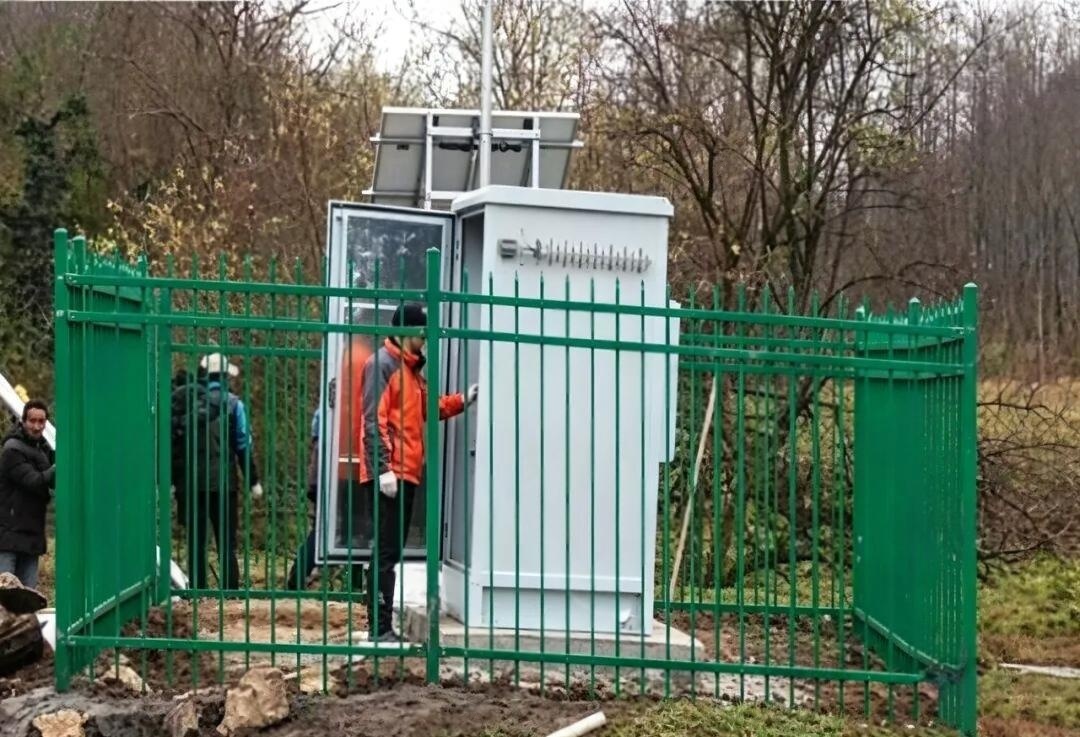
High-Reliability Off-Grid Energy Infrastructure Supporting Continuous GNSS Deformation Monitoring on Steep, High-Humidity Hydropower SlopesDirect Answer
In steep hydropower slope GNSS monitoring environments such as Zhonglu Township near Tuoba Hydropower Station in Weixi, Yunnan, reliable 24-hour operation cannot be achieved through grid-dependent, battery-only, or unprotected solar configurations.
A 180W off-grid solar power architecture combined with 100Ah sealed, impact-protected energy storage and remote power visibility ensures uninterrupted GNSS displacement monitoring by addressing persistent high humidity, frequent fog, rockfall impact risk, prolonged low-irradiance sequences, and the absence of utility infrastructure, without relying on hazardous manual battery replacement on steep slopes.
Engineering Takeaways / Decision-Critical Insights
✅ Power continuity on steep slopes is constrained more by weather persistence and access risk than by nominal solar wattage
✅ High-humidity and fog conditions increase electrical failure probability more than energy shortage if enclosure design is inadequate
✅ Rockfall exposure transforms energy storage from a capacity problem into a mechanical survivability problem
✅ Autonomy must be sized for multi-day low-irradiance sequences, not single-day solar averages
✅ Remote power visibility is mandatory when manual inspection introduces safety risk, not merely cost
SECTION 1 — Site-Specific Constraints in Weixi, Yunnan
GNSS slope monitoring at Tuoba Hydropower Station operates under compounded environmental and operational constraints:
✅ Subtropical monsoon climate with persistent high humidity and frequent fog, reducing effective solar irradiance
✅ Monitoring points deployed on steep hydropower slopes with no utility grid coverage
✅ Continuous GNSS displacement sensors and data transmission units requiring 24-hour uninterrupted power
✅ Loose rock and gravel creating direct mechanical impact risk to exposed equipment
✅ Manual inspection requiring climbing steep slopes, significantly increasing maintenance risk and response time
These conditions render grid-dependent, battery-only, or unprotected solar configurations structurally insufficient.
SECTION 2 — Power Architecture & System Topology
Solar Energy Generation Design for High-Humidity Slope Environments
The photovoltaic subsystem was engineered to prioritize reliability under foggy, moisture-heavy conditions rather than peak output:
✅ 180W photovoltaic array sized for continuous GNSS sensor and communication load
✅ Anti-fog and high-humidity-resistant surface treatment reducing condensation-related output loss
✅ Installation at open slope positions to minimize shading and moisture accumulation
✅ Generation sizing based on worst-case irradiance sequences, not annual averages
This design stabilizes energy input during prolonged cloudy and foggy periods common in Weixi.
Energy Storage, Impact Protection & Load Autonomy Design
Energy storage was designed as both an electrical and mechanical protection system:
✅ 100Ah sealed battery system using moisture-resistant cell chemistry
✅ Enclosed within a high-sealing, anti-condensation compartment
✅ External protective shielding mitigating damage from rolling stones and gravel
✅ Storage autonomy sized to bridge consecutive low-generation days without data interruption
✅ Reduced reliance on on-site battery replacement in high-risk slope environments
Intelligent Control & Remote Power Management
System stability is reinforced through continuous supervisory control:
✅ Integrated controller coordinating solar input, storage behavior, and GNSS load demand
✅ Mobile-accessible interface providing real-time visibility into PV output and battery status
✅ Automatic alerts triggered by abnormal voltage, charge, or discharge behavior
✅ Remote diagnostics enabling preventive intervention before field failure occurs
Decision-Relevant Load & Autonomy Assumptions
✅ Continuous load profile: GNSS displacement receiver and telemetry modem operating 24/7
✅ Autonomy assumption: sized for consecutive low-irradiance days typical of fog and monsoon sequences, based on site-defined risk tolerance
✅ Field constraint: steep-slope access risk limits emergency battery replacement, requiring remote alerting and protected enclosure placement
SECTION 3 — Deployment, Operations & Maintenance
The power system was engineered to minimize environmental disturbance and operational burden:
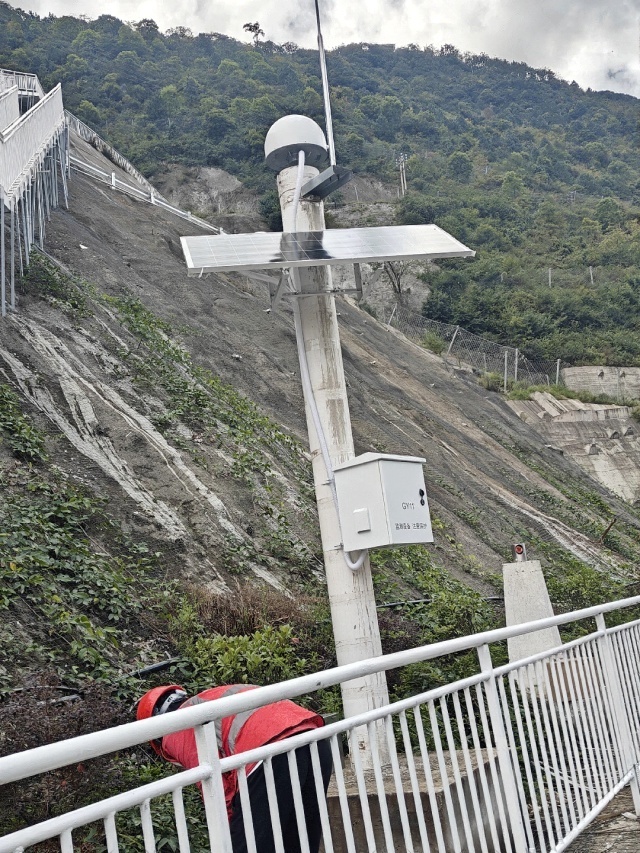
✅ Modular installation avoiding extensive ground modification in sensitive hydropower slope zones
✅ Compact structural footprint adaptable to steep and uneven terrain
✅ Remote monitoring significantly reducing manual inspection frequency and exposure risk
✅ Maintenance strategy shifting from reactive field repair to preventive, data-driven supervision
This deployment approach aligns long-term power system operation with the realities of steep-slope hydropower monitoring environments.
SECTION 4 — Field Validation / Engineering Verification
Verification conditions:
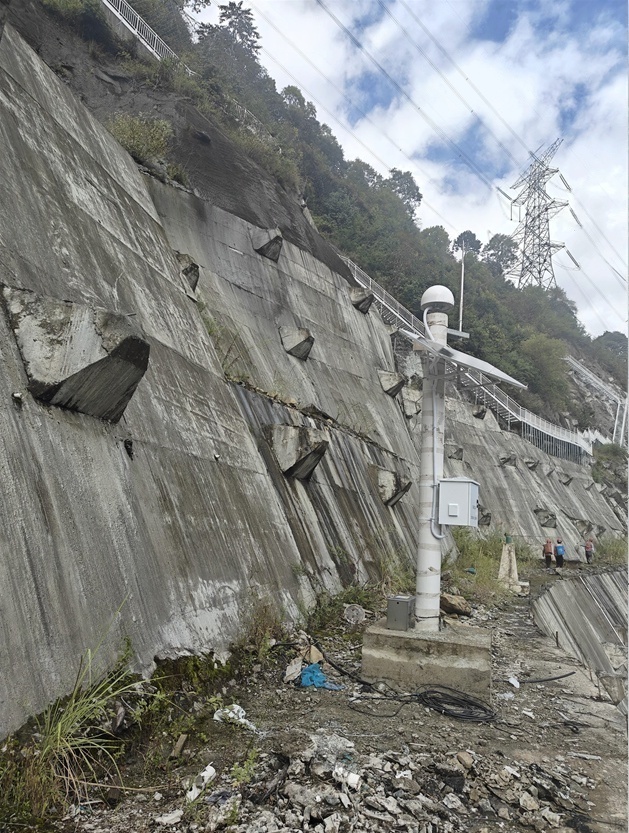
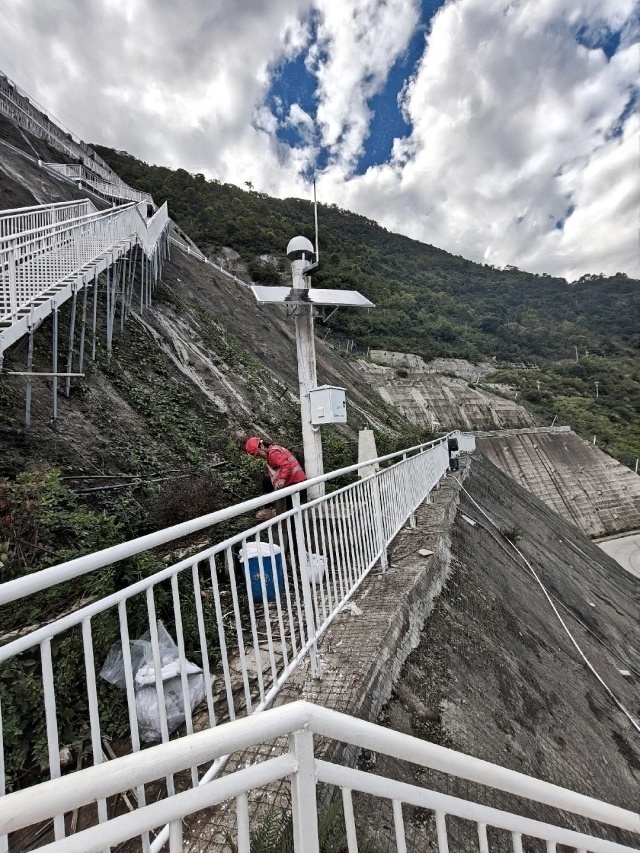
GNSS slope monitoring stations deployed on high-gradient hydropower slopes under high humidity, frequent fog, rockfall exposure, and prolonged low-irradiance periods.
Observed performance:
The 180W solar power system with sealed, impact-protected 100Ah storage maintained uninterrupted GNSS operation throughout extended cloudy, fog-heavy conditions without requiring hazardous on-site battery intervention.
Engineering conclusion:
Solar generation combined with mechanically protected, moisture-tolerant storage and remote visibility effectively eliminates power-related data gaps in steep, high-humidity slope monitoring environments.
Deep Search Intent Expansion — Engineering & Procurement FAQ
Why is a protected solar power system necessary for GNSS slope monitoring?
Because slope environments combine humidity-driven electrical risk with mechanical impact hazards, requiring power systems designed for survivability rather than capacity alone.
How does high humidity affect GNSS power system reliability?
High humidity primarily increases condensation and corrosion risk inside enclosures, making sealing, ventilation control, and surface treatment critical to long-term reliability.
Can this system operate without any grid or backup generator?
Yes. The system is engineered for fully off-grid deployment, supporting continuous GNSS monitoring without reliance on external power infrastructure.
How does remote monitoring reduce safety risk on steep slopes?
Remote visibility enables early fault detection and preventive intervention, avoiding frequent manual inspection that exposes personnel to fall and rockfall hazards.
Engineering Decision Rationale & System Value
For hydropower slope safety and GNSS deformation monitoring, power continuity is a structural prerequisite rather than an operational convenience.
This solar-powered architecture aligns energy design with slope geometry, climate persistence, access risk, and data integrity requirements, enabling monitoring systems to operate reliably where standard configurations fail.
Related Smart-Infrastructure Energy Solutions
Designed for dam and hydropower cut-slope deployments where rockfall impact risk, persistent humidity, and restricted access require protected storage and predictable autonomy.
Built for multi-point GNSS arrays where fog attenuation, condensation risk, and seasonal low irradiance challenge conventional solar power assumptions.
Engineered for landslide monitoring nodes exposed to debris strike, unstable ground, and limited maintenance windows.
Supports distributed hydropower infrastructure where no grid access and long travel distance demand remote power visibility and minimal intervention.
Adaptable designs addressing terrain geometry, shading patterns, rockfall probability, enclosure placement limits, and autonomy targets beyond standard kits.
Engineering Decision Boundary
This architecture is not suitable for sites with persistent shading that prevents minimum daily energy recovery during monsoon sequences, or for locations where rockfall probability exceeds the enclosure impact rating defined for this project.
Engineering Conclusion
Reliable GNSS slope monitoring on high-humidity hydropower terrain requires power architectures designed around access risk, mechanical survivability, and weather persistence rather than nominal solar capacity.
Engineering & Procurement Contact
Engineering & Procurement ContactEmailtony@kongfar.com
Websitehttps://www.kongfar.comFor site-specific GNSS slope power architecture design or high-risk terrain deployment assessment, engineering consultation is available upon request.



 English
  Deutsch