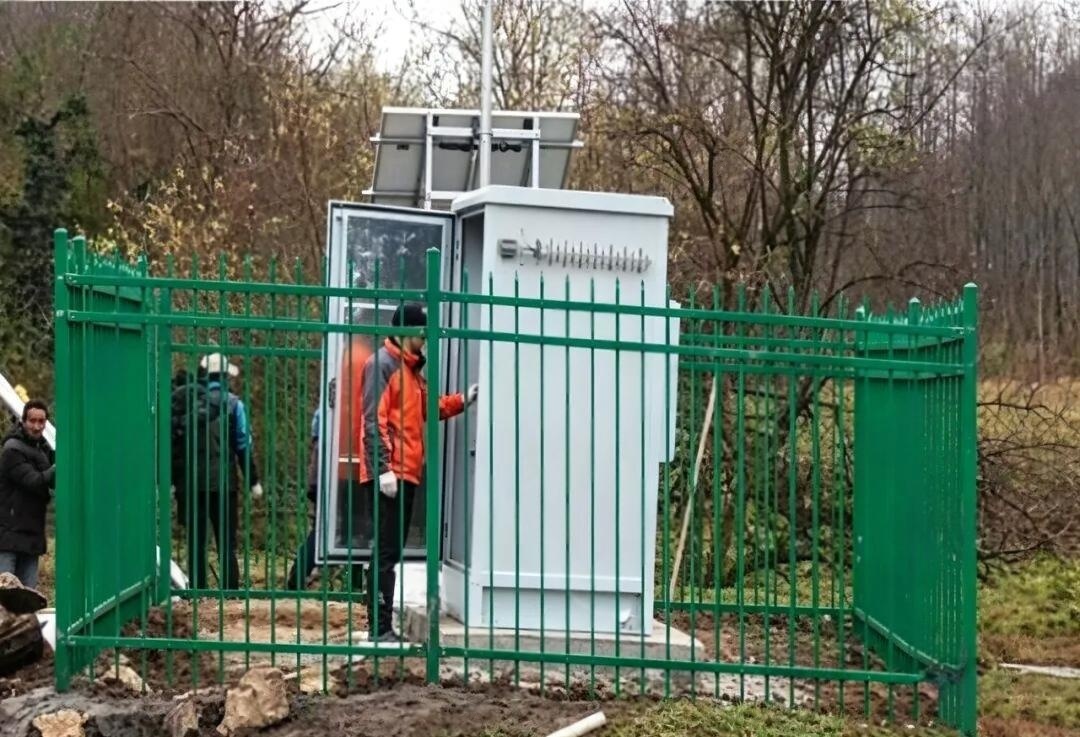
High-Capacity Renewable Energy Infrastructure Ensuring Continuous Monitoring Operation in Arid, Wind-Exposed, High-Temperature-Difference Terrain
Direct Answer
In arid and wind-exposed mountainous regions such as Baiyin, Gansu, long-term reliability of geological monitoring equipment cannot be achieved through grid-dependent or undersized power solutions. A 600W off-grid solar power architecture combined with 400Ah wide-temperature-range energy storage and remote power visibility provides continuous, interruption-free operation by compensating for sand-dust attenuation, extreme day–night temperature variation, and the absence of stable grid infrastructure in remote terrain.
Engineering Takeaways / Decision-Critical Insights
✅ Power continuity in arid northwestern regions depends on storage autonomy and environmental tolerance, not solar wattage alone
✅ Extreme day–night temperature variation places greater stress on battery discharge behavior than on photovoltaic generation
✅ Anti-dust PV surface treatment and tilt optimization are essential in wind-sand environments to preserve long-term output
✅ Large-capacity storage buffers multi-day low-generation cycles caused by dust storms and winter low sun angles
✅ Remote power visibility is critical to maintaining data continuity across geographically dispersed desert and mountain sites
SECTION 1 — Site-Specific Challenges in Baiyin, Gansu
Geological and environmental monitoring in Baiyin faces a distinct combination of regional constraints:
✅ Temperate continental climate characterized by arid conditions, minimal rainfall, and frequent strong winds carrying sand and dust
✅ Monitoring stations deployed across remote mountains and Gobi terrain with extremely limited grid coverage
✅ Large diurnal temperature swings and winter lows reaching approximately −20 °C, reducing conventional battery discharge efficiency
✅ Dispersed site distribution requiring long-distance travel for manual inspection and fault recovery
✅ Power interruptions directly compromise long-term ecological and safety data continuity
These conditions render grid-connected or small-capacity solar solutions structurally insufficient.
SECTION 2 — Power Architecture & System Topology
Solar Energy Generation Design for Wind-Sand Environments
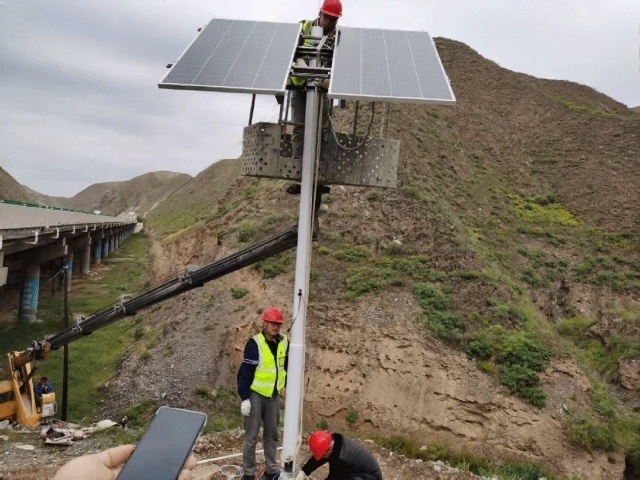
The system adopts a high-capacity photovoltaic architecture optimized for arid and dusty terrain:
✅ 600W photovoltaic array sized to support multi-module monitoring equipment loads
✅ Anti-dust and low-temperature-resistant surface coating to reduce sand accumulation and efficiency loss
✅ High-angle mounting structure to minimize dust deposition and improve winter irradiance capture
✅ Output stability prioritized over peak generation to ensure year-round reliability
Energy Storage & Environmental Protection Design
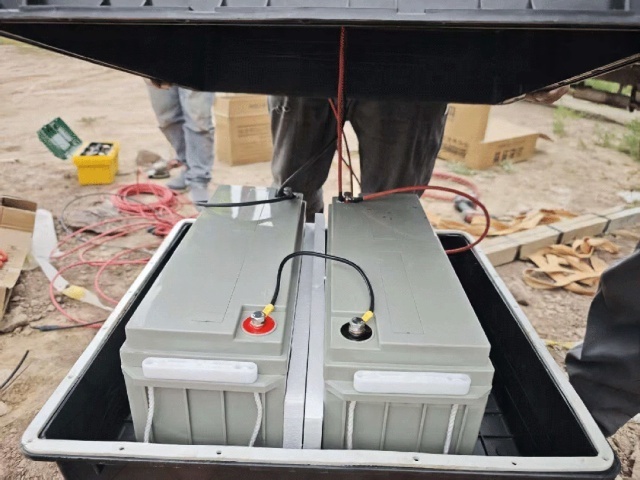
Reliable monitoring operation depends on storage performance under extreme thermal conditions:
✅ 400Ah wide-temperature-range battery cells maintaining stable discharge in sub-zero environments
✅ Sealed, sand-resistant enclosure providing protection against dust ingress and moisture
✅ Storage autonomy designed to bridge extended low-generation periods without data interruption
✅ Reduced depth-of-discharge strategy extending battery lifespan and lowering replacement frequency
Intelligent Control & Remote Power Management
System resilience is reinforced through continuous supervisory control:
✅ Integrated intelligent controller coordinating PV generation, battery charging, and load distribution
✅ Mobile-accessible interface providing real-time visibility into power generation and storage status
✅ Automatic alerts triggered by abnormal voltage, load, or charging behavior
✅ Remote diagnostics reducing dependence on on-site troubleshooting in inaccessible terrain
SECTION 3 — Deployment, Operations & Maintenance
The power system was engineered to minimize environmental disturbance and operational burden:
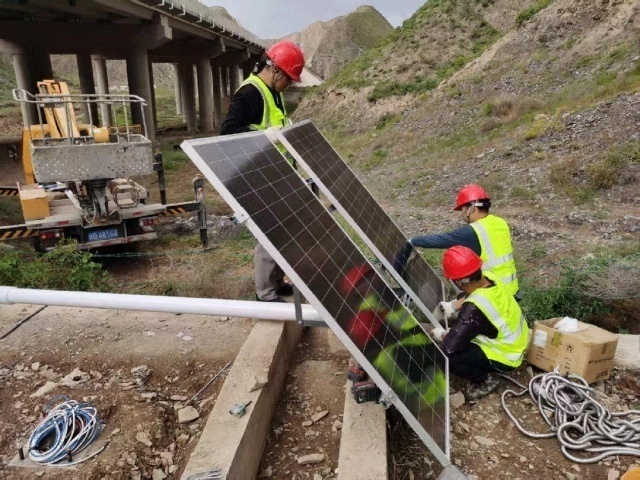
✅ Modular installation avoiding extensive ground modification in sensitive desert and mountain zones
✅ Compact structural footprint adaptable to uneven Gobi and hillside terrain
✅ Remote monitoring significantly reducing manual inspection frequency and travel requirements
✅ Maintenance strategy shifting from reactive field repair to preventive, data-driven supervision
This deployment approach aligns long-term power system operation with the realities of northwestern monitoring environments.
SECTION 4 — Field Validation / Engineering Verification
Verification conditions:Monitoring stations deployed across remote mountainous and Gobi environments in Baiyin under strong wind, sand-dust exposure, and extreme seasonal temperature variation.
Observed performance:The 600W solar power system with 400Ah storage maintained uninterrupted monitoring equipment operation through winter low temperatures, dust-heavy periods, and extended clear–dusty transition cycles.
Engineering conclusion:High-capacity photovoltaic generation combined with wide-temperature energy storage and remote visibility effectively eliminates power-related data gaps in arid, high-temperature-difference monitoring regions.
Deep Search Intent Expansion — Engineering & Procurement FAQ
Why is large-capacity storage critical for monitoring systems in arid regions?
Arid regions experience dust storms and seasonal irradiance variability that can suppress solar output for multiple consecutive days, making storage autonomy essential to prevent monitoring interruptions.
How does extreme temperature variation affect solar power systems?
Large day–night temperature swings primarily impact battery discharge efficiency and longevity, requiring wide-temperature-range cell chemistry and controlled depth-of-discharge strategies.
Can this system operate fully off-grid in desert and mountain terrain?
Yes. The system is engineered for standalone operation without any reliance on utility infrastructure, supporting long-term deployment in remote Gobi and mountainous environments.
How does remote monitoring reduce operational cost in dispersed sites?
Remote power visibility enables early fault detection and condition-based maintenance, reducing travel frequency and preventing delayed response across widely distributed monitoring stations.
Engineering Decision Rationale & System Value
For ecological and geological monitoring projects in northwestern China, power continuity is a structural requirement rather than an auxiliary feature. This high-capacity off-grid solar power architecture aligns energy design with Baiyin’s environmental constraints, operational realities, and data integrity requirements, enabling long-term monitoring systems to function reliably across climatic extremes.
Related Smart-Infrastructure Energy Solutions
Designed for arid monitoring sites requiring high storage autonomy, dust resistance, and minimal on-site maintenance access.
Supports continuous ecological data collection across wide, grid-inaccessible desert and mountainous regions.
Engineered for long-term displacement monitoring where temperature extremes and access limitations challenge conventional power solutions.
Enables scalable off-grid power deployment across geographically dispersed monitoring assets while maintaining data continuity.
Adaptable system designs addressing site-specific climate, terrain, and monitoring requirements beyond standard configurations.
Engineering & Procurement Contact
Engineering & Procurement ContactEmailtony@kongfar.com
Websitehttps://www.kongfar.comFor site-specific monitoring power architecture design or arid-region deployment assessment, engineering consultation is available upon request.



 English
  Deutsch