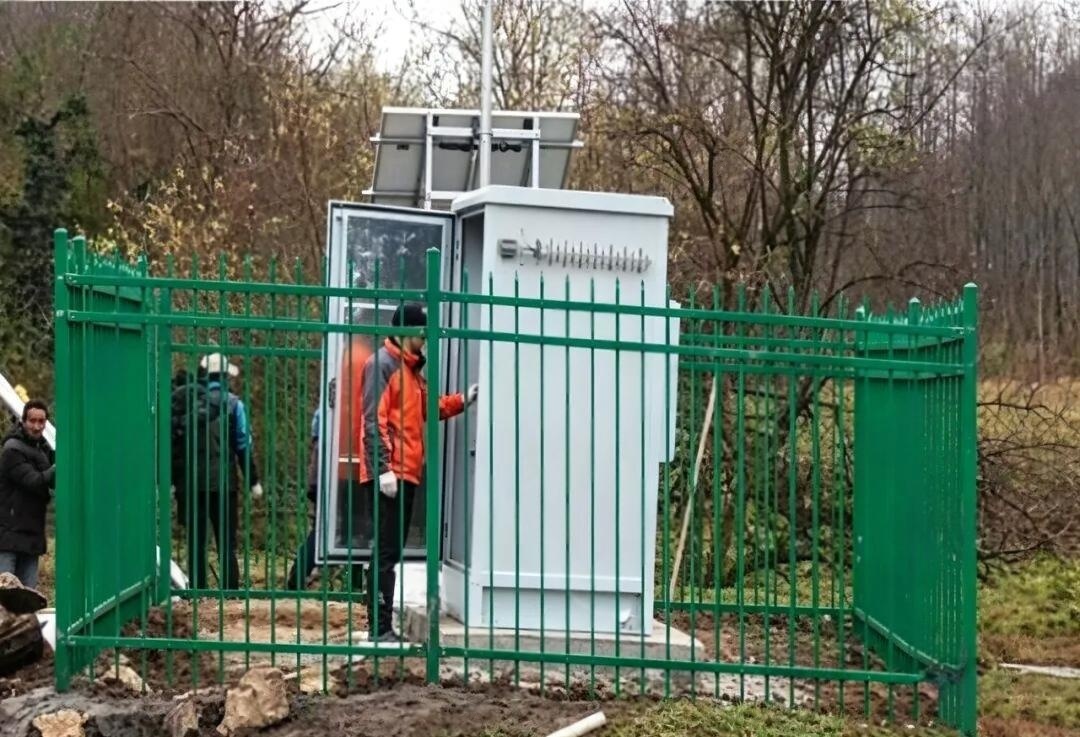
Reliable Energy Infrastructure Supporting Continuous Smart Agriculture Monitoring in Mountainous Tea-Growing Regions
In the mountainous tea plantation regions of Lu'an, Anhui Province, integrated monitoring systems are increasingly deployed to support precision cultivation, pest and disease early warning, and ecological management. However, the distributed nature of tea gardens, high humidity, dense vegetation, and prolonged rainy seasons pose significant challenges to conventional grid-dependent power supply. To ensure stable data acquisition and long-term operational reliability, a customized off-grid solar power solution was deployed to support continuous monitoring under site-specific agricultural conditions.
An off-grid solar power system combining tiered photovoltaic capacity, moisture-resistant energy storage, and intelligent remote power management supports sustained round-the-clock operation of tea plantation monitoring equipment in Lu'an by mitigating grid unavailability, high humidity exposure, vegetation shading, and maintenance access constraints under site-specific operating conditions.
Engineering Takeaways — Decision-Critical Insights for Tea Plantation Power Systems
The following engineering takeaways summarize how this off-grid energy architecture addresses environmental constraints, agricultural monitoring requirements, and lifecycle efficiency in mountainous tea plantation deployments:
✅ Grid-independent energy architecture reduces reliance on unstable or unavailable rural power infrastructure
✅ Tiered photovoltaic sizing aligns energy supply with heterogeneous monitoring loads across tea gardens
✅ Moisture-resistant energy storage improves operational stability in high-humidity and fog-prone environments
✅ Lightweight structural design balances pole load limits with generation efficiency in plantation terrain
✅ Intelligent remote visibility reduces manual inspections across dispersed mountainous sites
✅ Autonomous power continuity supports consistent data acquisition for precision agriculture workflows
SECTION 1 — Site-Specific Challenges for Tea Plantation Monitoring in Lu'an
Tea plantation monitoring points in Lu'an are typically distributed across hilly and mountainous terrain characterized by dense vegetation, frequent fog, and prolonged rainy seasons.
Key site-specific challenges include:✅ Limited or absent grid access across mountainous tea garden locations
✅ Concentrated rainfall during plum rain season increasing outage risk
✅ High humidity and fog affecting electrical components and generation efficiency
✅ Vegetation shading impacting photovoltaic output consistency
✅ Long walking distances for inspection and corrective maintenance
✅ Elevated operational cost associated with manual Inspection across tea hills
SECTION 2 — Power Architecture & System Topology for Smart Agriculture Applications
Tiered Photovoltaic Configuration for Variable Monitoring Loads
The system adopts a dual photovoltaic configuration to accommodate heterogeneous monitoring demands across tea plantations.
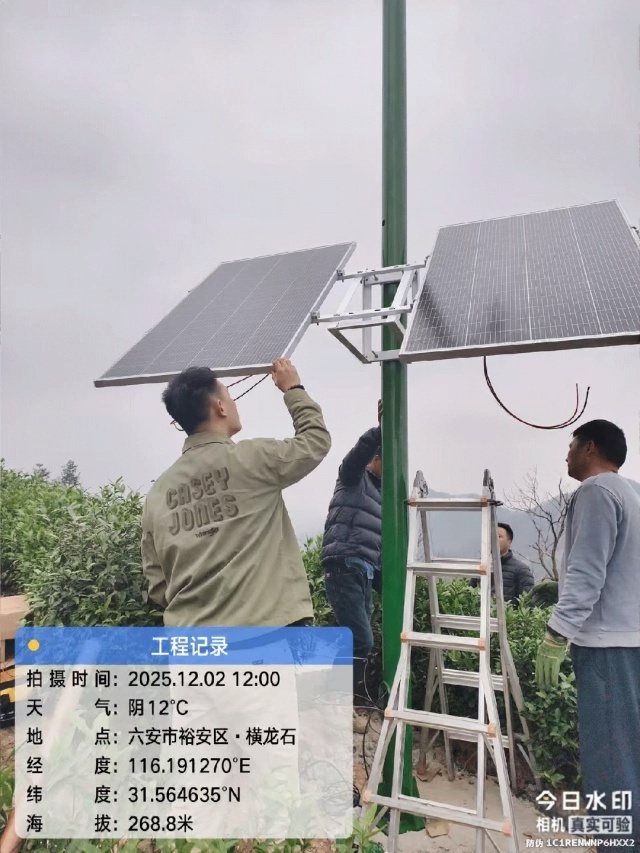
Engineering design considerations include:
✅ 500 W dual-panel configuration supporting higher-load monitoring nodes
✅ 400 W dual-panel configuration optimized for lower-load sensing points
✅ Lightweight mounting structures adapted to tea garden pole load constraints
✅ Panel placement optimized to minimize vegetation shading impact
✅ Balanced array spacing to maintain generation stability under diffuse light conditions
Moisture-Adapted Energy Storage & Environmental Protection
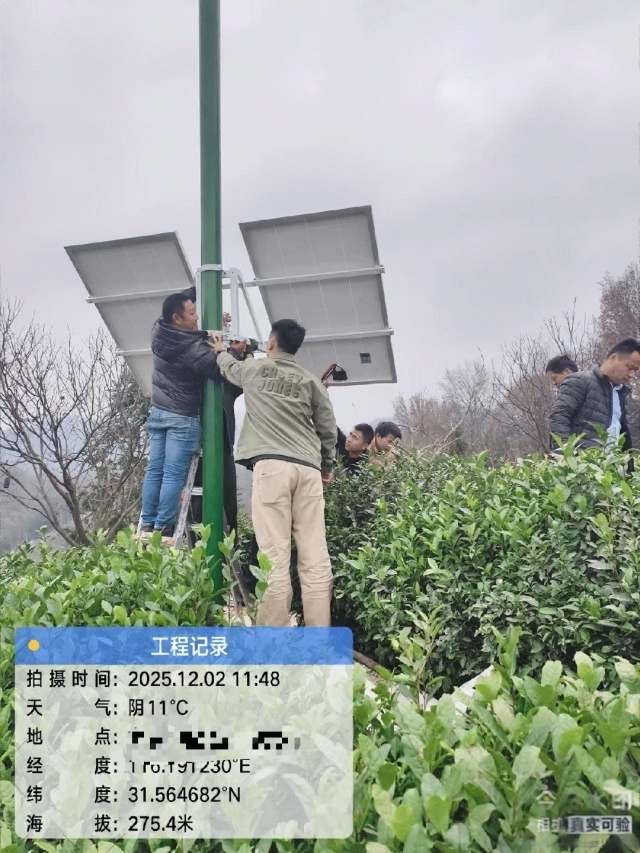
A 200 Ah lithium battery subsystem provides operational continuity during low-irradiance periods.
Key protective features include:
✅ High-sealing battery enclosures designed for humid agricultural environments
✅ Moisture-resistant cell selection reducing degradation risk under fog exposure
✅ Corrosion-resistant housing materials suitable for long-term outdoor deployment
✅ Integrated protection logic preventing over-discharge and load stress
Intelligent Power Management & Remote Visibility
An integrated intelligent controller coordinates generation, storage, and load behavior.
Functional capabilities include:✅ Real-time monitoring of photovoltaic output and battery state
✅ Event-driven alerts for abnormal power or environmental conditions
✅ Remote visibility supporting condition-based maintenance decisions
✅ Reduced dependence on frequent on-site inspection routes
SECTION 3 — Deployment, Operations & Maintenance Efficiency
Tea-Garden-Compatible Installation Strategy
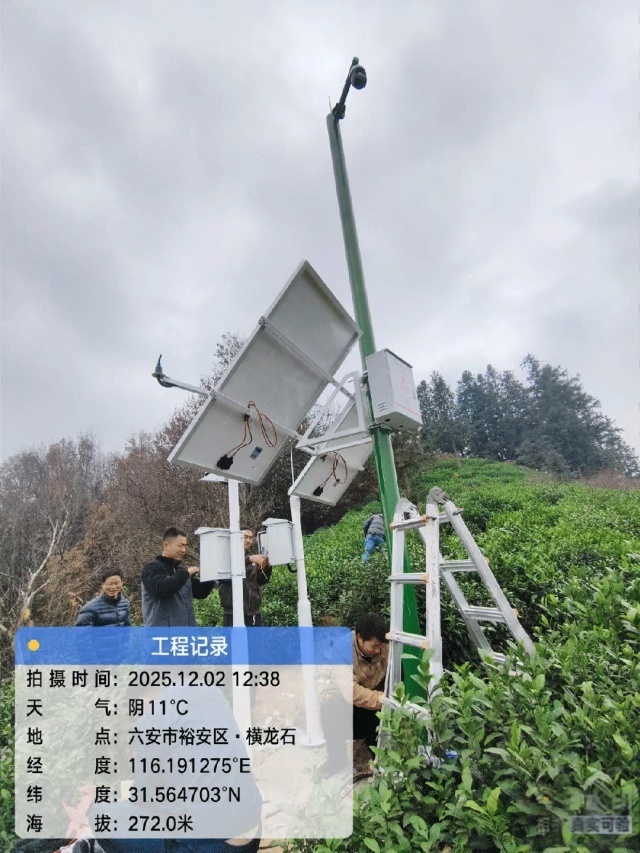
The system is deployed without grid extension or heavy civil works, minimizing disturbance to tea garden ecology.
Deployment advantages include:
✅ No trenching or overhead grid construction in plantation areas
✅ Installation compatible with narrow tea garden pathways
✅ Reduced risk of landslide- or flood-related power disruption
Remote Operations & Maintenance Optimization
Remote monitoring significantly reshapes the maintenance model for tea plantation monitoring systems.
Operational benefits include:✅ Lower inspection frequency across mountainous tea gardens
✅ Faster response to abnormal power or storage conditions
✅ Reduced labor intensity and travel time for field teams
SECTION 4 — Measured Outcomes & Field Validation (Lu'an, 2025)
KPI
| Observed Performance
|
System availability
| Sustained operation under normal agricultural monitoring conditions
|
Data acquisition stability
| Consistent sensor data collection across monitored tea zones
|
Environmental resilience
| Stable performance during high-humidity and rainy periods
|
Maintenance frequency
| Substantially reduced compared with manual battery-based solutions
|
(Results reflect field operation under site-specific environmental and seasonal conditions.)
Deep Search Intent Expansion — Engineering & Procurement FAQ
Smart Agriculture Power Continuity
How can off-grid solar systems maintain stable operation in humid tea plantation environments?
A: Stability depends on combining moisture-resistant energy storage, sealed enclosures, and photovoltaic layouts tolerant of diffuse light. In tea plantations like those in Lu'an, fog and humidity are addressed through enclosure sealing, corrosion-resistant materials, and controller logic that stabilizes discharge behavior during low-irradiance periods.
How is photovoltaic shading from tea vegetation mitigated in system design?
A: Shading mitigation is addressed through panel elevation, selective site placement, and tiered capacity sizing. Instead of relying on a single large array, distributed dual-panel configurations reduce sensitivity to partial shading and help maintain more predictable daily generation profiles.
Operations, Monitoring & Lifecycle Planning
What parameters should remote monitoring cover for tea garden deployments?
A: Remote monitoring should include PV output trends, battery state of charge, charge–discharge behavior, and event-based alerts. This allows maintenance actions to be triggered by operating conditions rather than fixed inspection schedules, which is critical for mountainous tea plantations with limited access.
When should higher-capacity configurations be selected for agricultural monitoring sites?
A: Higher-capacity configurations are typically selected for nodes supporting cameras, multi-sensor arrays, or communication gateways. Final sizing should be based on actual load profiles, seasonal sunlight conditions, and acceptable autonomy windows rather than average consumption assumptions.
Engineering Decision Rationale & System Value
This deployment illustrates how agriculture-adapted off-grid energy systems enhance monitoring reliability in mountainous tea plantations:
✅ Independent energy supply supports precision agriculture operations
✅ Moisture-adapted design extends equipment service life
✅ Reduced manual maintenance improves operational efficiency
✅ Flexible scalability supports future sensor expansion
Related Smart-Infrastructure Energy Solutions
Forest Fire Prevention & Early Warning Power Systems
Off-grid solar power architectures engineered for continuous operation of fire detection cameras, infrared sensors, and early-warning terminals deployed across forested and mountainous regions.
These systems are designed to tolerate high humidity, complex terrain, and limited maintenance access, ensuring stable energy support for wildfire prevention programs in southern and eastern China.
👉 Explore solar power systems for forest fire prevention and early-warning monitoring.
Sand Mining & Resource Extraction Monitoring Power Solutions
Independent energy systems supporting real-time surveillance, equipment status monitoring, and environmental compliance monitoring at sand mining and resource extraction sites.
Designed to handle open environments, dust exposure, and irregular site layouts, these power architectures reduce dependence on temporary grid access and frequent manual intervention.
👉
View off-grid power solutions for sand mining and resource monitoring projects.River & Watershed Monitoring Power Infrastructure
Autonomous solar power solutions enabling continuous operation of water level sensors, flow meters, cameras, and environmental monitoring devices along rivers and watershed zones.
These systems emphasize moisture resistance, long autonomy windows, and unattended operation to support flood control, water resource management, and ecological monitoring across agricultural regions.
👉
Learn more about solar power systems for river and watershed monitoring.Highway & Transportation Infrastructure Monitoring Power Systems
Off-grid energy platforms supporting roadside cameras, traffic flow sensors, slope monitoring devices, and emergency monitoring equipment along highways and expressways.
Engineered for vibration tolerance, wind exposure, and dispersed deployment, these systems help infrastructure operators maintain monitoring coverage in sections without reliable grid access.
👉
Discover solar power solutions for highway and transportation monitoring infrastructure.Custom-Built Off-Grid Power Systems for Agricultural & Special Environments
Project-specific energy architectures developed for non-standard agricultural, ecological, and infrastructure environments, including tea plantations, orchards, mountainous farms, and hybrid monitoring scenarios.
System configurations are defined by site conditions, load characteristics, autonomy requirements, and lifecycle optimization rather than fixed product templates.
👉
See custom-built off-grid power solutions for specialized monitoring environments.Engineering & Procurement Contact — Smart Agriculture Power Projects
This section serves as the technical and procurement entry point for agricultural monitoring power deployments.
Who This Is For✅ Smart agriculture operators managing distributed monitoring networks
✅ System integrators delivering agricultural IoT solutions
✅ Plantation owners deploying precision cultivation infrastructure
What Support Is Provided✅ Site feasibility assessment and load profiling
✅ System architecture and capacity planning
✅ Humidity-adapted reliability optimization
✅ Deployment guidance and lifecycle planning
Engineering & Procurement ContactEmail:tony@kongfar.com
Website:https://www.kongfar.comAll inquiries are reviewed by engineering specialists to ensure technical feasibility, environmental compatibility, and long-term operational reliability before procurement decisions are finalized.



 English
  Deutsch