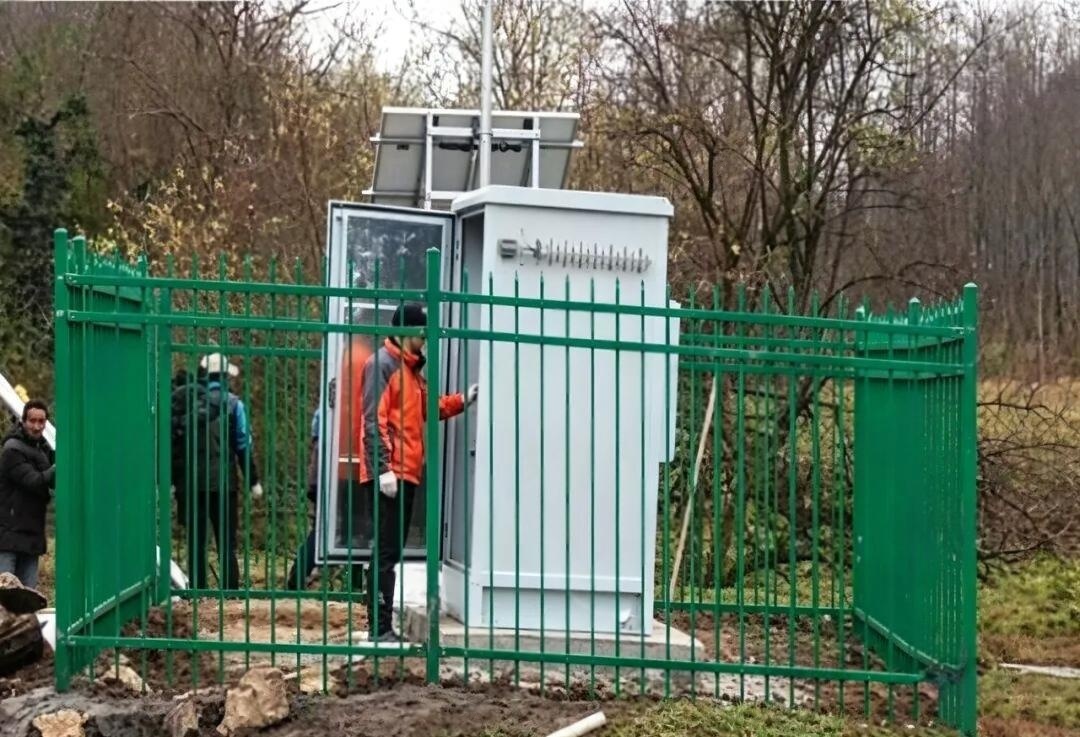
Reliable Energy Infrastructure for Continuous Riverway Monitoring in Cold and Windy Environments
In the Aksu region of Xinjiang, intelligent sand mining surveillance requires uninterrupted power to support 24/7 monitoring across remote river channels. Grid limitations, extreme winter temperatures, and high operational costs make conventional power supply unsuitable for long-term deployment. To address these constraints, a customized off-grid solar power system was implemented to ensure continuous operation, environmental resilience, and regulatory effectiveness in sand mining supervision.
An off-grid solar power system with low-temperature energy storage and intelligent power management enables continuous sand mining surveillance in Aksu by overcoming grid absence, harsh climate conditions, and dispersed riverbank deployment, ensuring reliable monitoring and long-term regulatory enforcement.
The following decision-critical takeaways outline how the off-grid solar power architecture mitigates site-specific environmental risks, operational constraints, and regulatory reliability challenges in sand mining surveillance projects:
1️⃣ Grid-independent power architecture ensures uninterrupted monitoring — Decentralized solar energy eliminates reliance on unstable municipal grids along remote riverbanks
2️⃣ Low-temperature battery heating preserves winter performance — Integrated thermal management maintains stable discharge under prolonged sub-zero conditions
3️⃣ Wind and sand protection enhances system durability — Sealed enclosures and surface treatments reduce degradation in exposed desert–river environments
4️⃣ Remote energy visibility minimizes operational downtime — Real-time monitoring and alerts reduce manual inspections and accelerate fault response
5️⃣ Stable power supply strengthens regulatory enforcement — Continuous surveillance supports timely detection and prevention of illegal sand extraction
6️⃣ Lifecycle costs are reduced through decentralized deployment — Grid extension and recurring field maintenance requirements are significantly lowered
Sand mining monitoring points in Aksu are typically distributed along remote river corridors, far from urban infrastructure and exposed to harsh climatic conditions.
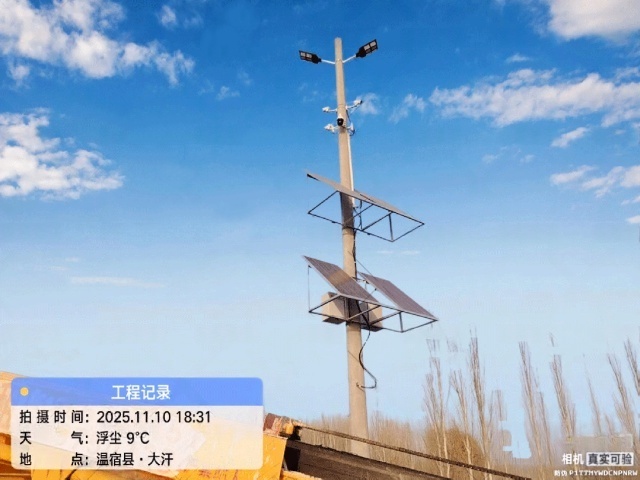
✅ Extreme winter temperatures reduce battery efficiency and increase power instability
✅ Strong seasonal winds and persistent sand exposure accelerate equipment wear
✅ Dispersed deployment along riverbanks increases inspection time and response delays
Risk Impact
Low temperatures + grid absence → power interruptions → surveillance blind spots → delayed enforcement actions
👉 Continuous, self-sustaining energy supply is required to maintain regulatory visibility and operational continuity
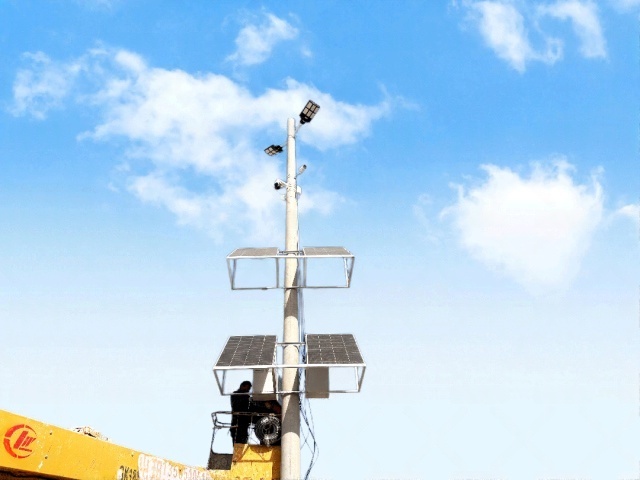
| Component | Specification | Engineering Purpose |
| Photovoltaic Array | 4 × 300W solar panels | High daily energy yield under extended daylight conditions |
| Energy Storage | 200Ah heated LiFePO₄ battery | Stable discharge performance in low-temperature environments |
| Power Management | MPPT 60A controller | Intelligent energy regulation and system protection |
The photovoltaic array is optimized for Aksu’s long sunshine duration, while the heated battery module maintains operational capacity during winter. All components are housed in sealed, sand-resistant enclosures suitable for long-term riverbank deployment.
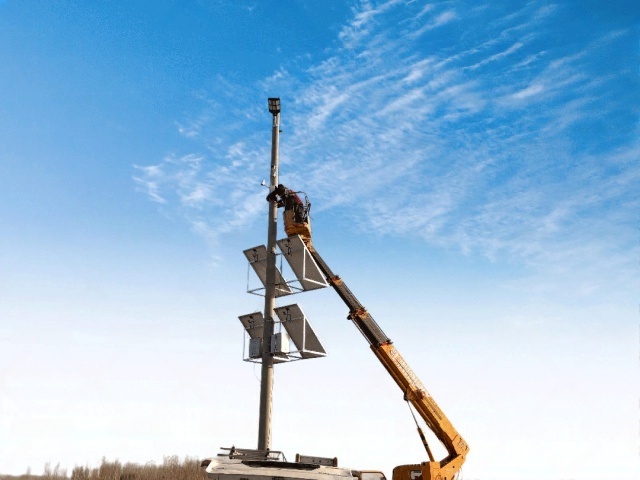
✅ No trenching or grid extension required
✅ Stable mounting adapted to uneven riverbank terrain
✅ Sealed enclosures protect against sand ingress and moisture exposure
✅ Real-time monitoring of power status and battery temperature
✅ Automated alerts for abnormal operating conditions
✅ Reduced dependence on frequent on-site inspections
| Factor | Conventional Grid Supply | This Project |
| Power stability | Weather-dependent | Independent and continuous |
| Winter performance | High failure risk | Stable low-temperature operation |
| Maintenance effort | High | Significantly reduced |
| KPI | Result |
| Surveillance uptime | 24/7 uninterrupted operation |
| Data completeness | 100% continuous capture |
| Winter system failures | 0 recorded incidents |
Validated during winter and high-wind operational periods along monitored river sections in Aksu.
A: Yes. Reliability in cold regions depends on battery chemistry, thermal management, and energy buffer design. Heated LiFePO₄ battery systems maintain stable discharge performance, while intelligent controllers prioritize critical loads to ensure uninterrupted surveillance during extended low-temperature periods.
A: Grid-independent operation is achieved through decentralized solar architecture combined with sufficient energy storage. System sizing considers seasonal sunlight availability, load demand, and environmental exposure, enabling continuous monitoring without municipal grid reliance.
A: Yes. By eliminating grid extension and enabling remote energy monitoring, off-grid systems significantly reduce site visits and maintenance costs, particularly for geographically dispersed river surveillance installations.
Extending grid infrastructure to remote riverbanks introduces high capital costs, environmental disturbance, and long-term reliability risks. Decentralized solar power avoids these issues while enabling scalable deployment along extended monitoring corridors.
System longevity is driven by low-temperature battery management, enclosure protection against sand and moisture, and intelligent power regulation aligned with site-specific load profiles.
In regions with prolonged low irradiance or exceptionally high loads, hybrid configurations incorporating additional storage or backup power sources may be required to maintain operational continuity.
Off-grid solar power systems supporting automated waste sorting, monitoring, and uninterrupted operation in residential sanitation infrastructure.
👉 Explore solar energy solutions for smart community waste management systems.
Solar-based auxiliary power architectures designed for offshore vessels, floating platforms, and marine monitoring equipment.
👉 Learn how solar power supports stable energy supply for offshore and marine deployments.
Independent solar systems enabling continuous operation of GNSS sensors and slope safety monitoring devices in mountainous terrain.
👉 Discover solar-powered solutions for long-term geotechnical monitoring projects.
Distributed solar power solutions designed for LED billboards and digital signage in grid-limited locations.
👉 See how solar-powered advertising systems maintain visibility while reducing operating costs.
Integrated solar energy platforms providing rapid-deployment power for mobile surveillance trailers used in temporary security and emergency response.
👉 View portable solar power solutions engineered for mobile surveillance deployments.
This section serves as the technical and procurement entry point for stakeholders planning off-grid surveillance, monitoring, or infrastructure power deployments in complex environments.
Our engineering team supports project evaluation, system architecture design, and deployment planning based on site-specific factors including climate conditions, terrain constraints, load profiles, and regulatory requirements.
Who This Is For
✅ Government agencies responsible for environmental protection and resource regulation
✅ System integrators delivering surveillance and monitoring solutions
✅ Infrastructure operators managing remote or grid-limited sites
What Support Is Provided
✅ Pre-project feasibility assessment and system sizing
✅ Low-temperature and harsh-environment adaptation strategies
✅ Power architecture optimization for long-term operational reliability
✅ Deployment guidance and lifecycle risk analysis
Engineering & Procurement Contact
Email:
tony@kongfar.com
Website:
https://www.kongfar.com
All inquiries are reviewed by engineering specialists to ensure technical feasibility, regulatory alignment, and long-term system performance before procurement decisions are made.


Copyright © 2025 shenzhen kongfar technology co.,ltd All Rights Reserved. All rights reserved

 English
  Deutsch