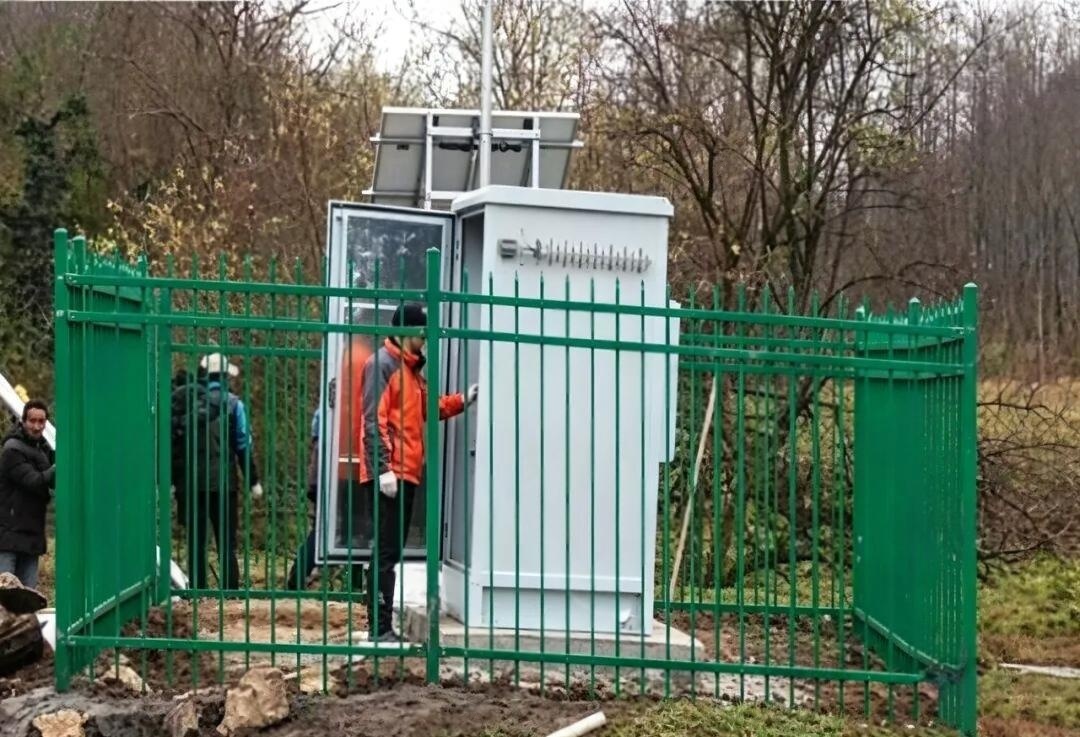
High-Reliability Renewable Power Architecture Ensuring Night-Time Visibility for Outdoor Signage in High-Humidity, Wind-Exposed Suburban EnvironmentsDirect Answer
For outdoor illuminated signage deployed in suburban areas around Cangzhou, Hebei, stable night-time operation cannot be reliably achieved through grid-dependent wiring or battery-only solutions.
A 300W off-grid solar power system combined with 150Ah moisture-resistant energy storage and reinforced modular pole structures provides uninterrupted night illumination by addressing grid instability, seasonal humidity exposure, wind-induced structural risk, and dispersed maintenance conditions.
Engineering Takeaways / Decision-Critical Insights
✅ Night-time signage reliability depends on storage discharge stability rather than daytime peak solar output
✅ High-humidity exposure accelerates failure of conventional outdoor power enclosures without sealed battery protection
✅ Structural pole stability is an electrical reliability factor in wind-exposed suburban installations
✅ Storage autonomy must bridge multi-night operation independent of daily grid availability
✅ Remote power visibility is essential to reduce fault localization time across dispersed signage assets
SECTION 1 · Site-Specific Engineering Constraints in Cangzhou, Hebei
Outdoor illuminated signage in Cangzhou operates under a combination of environmental and operational constraints unique to the region:
✅ Temperate monsoon climate with high summer humidity and low winter temperatures, stressing electrical insulation and battery chemistry
✅ Signage commonly deployed in suburban parks, industrial zones, and roadside areas with unstable or costly grid access
✅ Seasonal strong winds increase the risk of pole tilt and mechanical misalignment, affecting panel orientation and wiring integrity
✅ Dispersed installation locations significantly increase manual inspection time and fault isolation cost
✅ Power interruption directly results in loss of night-time visibility and advertising effectiveness
These constraints render grid extension and conventional outdoor wiring structurally unreliable for long-term signage operation.
SECTION 2 · Power Architecture & System Topology
Solar Energy Generation Design Logic
The system adopts a moderate-capacity photovoltaic configuration optimized for signage load characteristics rather than peak generation:
✅ 300W photovoltaic array sized to support daily charging for night-only illumination loads
✅ Anti-humidity surface treatment reduces performance degradation under prolonged moisture exposure
✅ Elevated mounting position on combined poles maximizes solar exposure and minimizes shading risk
✅ Energy design prioritizes daily charge consistency over peak daytime output
Energy Storage & Environmental Protection Design
Night-time illumination reliability is governed by storage behavior under humid and cold conditions:
✅ 150Ah high-seal battery cells designed for moisture resistance and stable low-temperature discharge
✅ Battery enclosure integrated within a waterproof and condensation-resistant housing
✅ Storage capacity engineered for 2–3 consecutive nights of autonomy without solar input
✅ Controlled depth-of-discharge strategy extends battery lifespan and reduces replacement frequency
Structural Integration & Combined Pole Design
Mechanical stability is treated as a power system variable:
✅ Modular reinforced pole design integrates solar panels, signage, and power enclosure into a single structure
✅ Anti-settlement base foundation adapted for soft suburban soil conditions
✅ Wind-load reinforcement reduces tilt risk and preserves long-term panel orientation accuracy
✅ Structural modularity simplifies installation and reduces on-site construction time
Intelligent Control & Remote Power Management
Operational reliability is maintained through active system supervision:
✅ Integrated controller manages charging, storage, and night-time discharge scheduling
✅ Remote interface provides real-time visibility into battery voltage and charge status
✅ Abnormal power behavior triggers automatic alerts for early intervention
✅ Remote diagnostics significantly reduce unnecessary field inspections
SECTION 3 · Deployment, Operations & Maintenance
The system was engineered to minimize operational burden across dispersed suburban locations:
The power system was engineered to minimize environmental disturbance and operational burden:
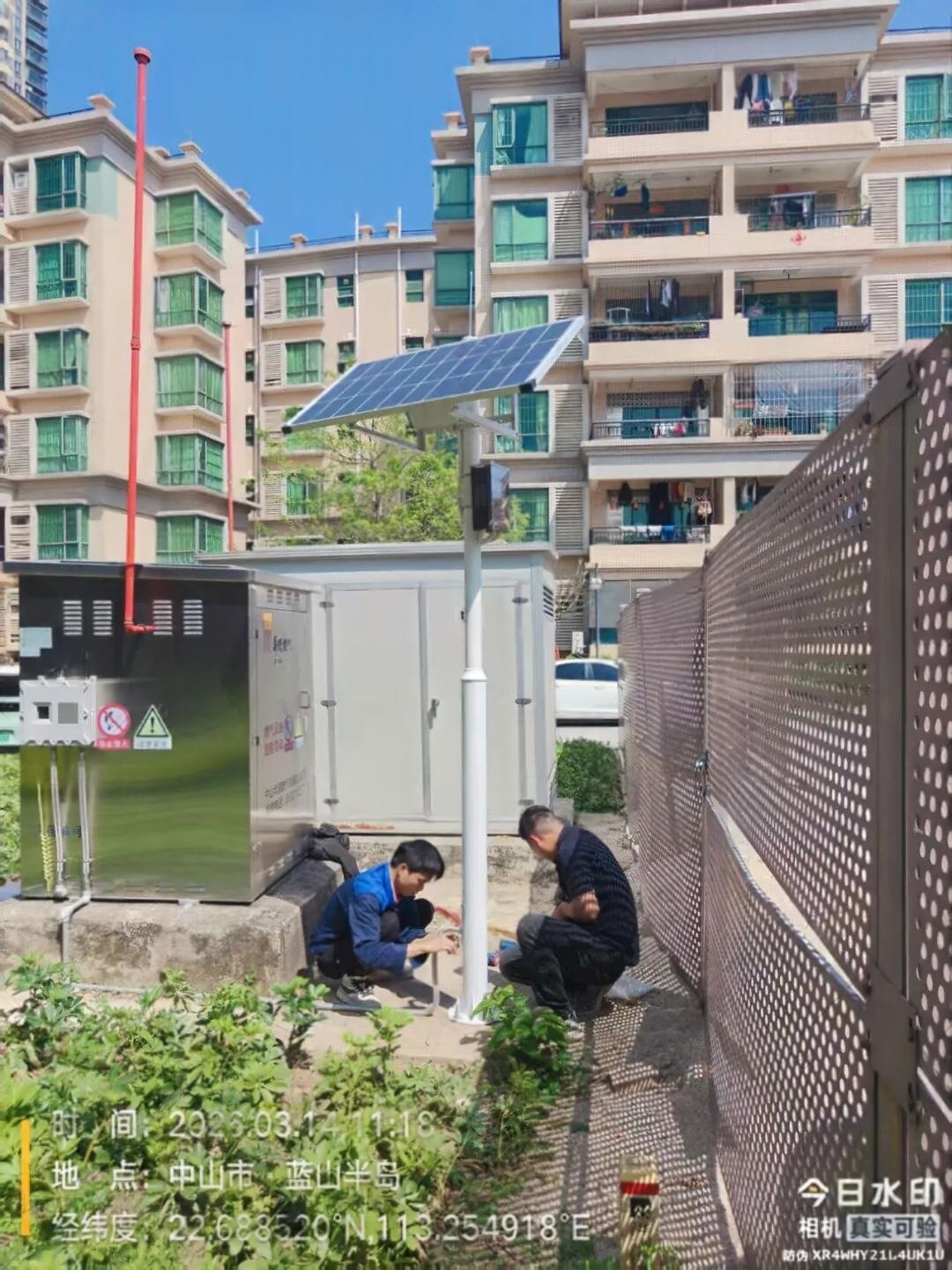
✅ Modular installation avoids extensive trenching and outdoor cable routing
✅ Compact combined-pole footprint adapts to suburban open-field and roadside environments
✅ Remote monitoring reduces routine inspection frequency and fault response time
✅ Maintenance shifts from reactive wiring repair to preventive power condition monitoring
This deployment approach aligns power system operation with the realities of large-scale outdoor signage management.
SECTION 4 · Field Validation / Engineering Verification
Verification Conditions
Outdoor illuminated signage systems deployed across suburban areas in Cangzhou under:
✅ High summer humidity and condensation exposure
✅ Winter low-temperature night operation
✅ Seasonal strong wind conditions affecting pole stability
✅ Extended periods without immediate on-site maintenance access
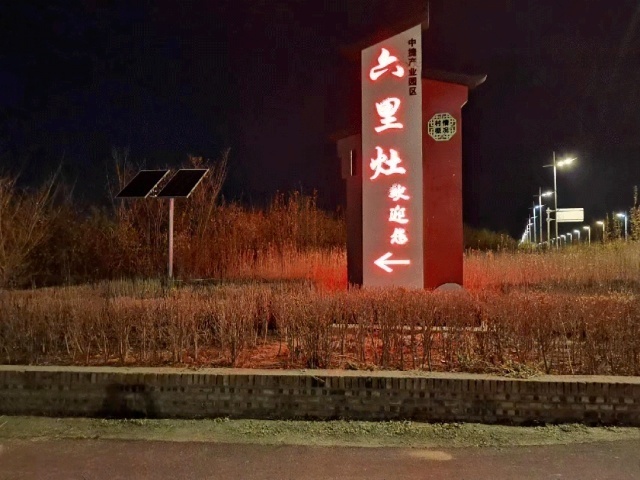
Engineering Conclusion (Verification-Level)
A storage-centric off-grid solar architecture combined with moisture-protected energy storage and reinforced pole integration eliminates power-induced illumination interruptions in suburban outdoor signage deployments.
Decision Boundary (Engineering Applicability Limits)
This architecture is not suitable for applications requiring continuous daytime-and-night-time high-power lighting, dense urban locations with severe shading, or signage systems demanding grid-level power capacity beyond low-to-moderate illumination loads.
Engineering Conclusion (Single-Sentence Judgment)
For suburban outdoor illuminated signage in Cangzhou-type environments, only moisture-resilient, storage-driven, structurally integrated off-grid solar power systems can deliver stable and economically viable night-time illumination.
Related Smart-Infrastructure Energy Solutions
The following scenarios belong to the same engineering problem class:
night-dominant electrical loads, distributed outdoor deployment, exposure to moisture and wind, structural stability requirements, and cost-sensitive maintenance models.
In these applications, system reliability is determined by storage behavior, enclosure protection, and mechanical integration rather than photovoltaic capacity alone.
Applies to illuminated advertising lightboxes operating primarily at night, where daily load profiles are predictable but failure tolerance is low.
These systems require moisture-resistant energy storage and discharge-stable architectures to ensure consistent illumination independent of grid wiring integrity.
Designed for signage distributed across parks and industrial campuses, where underground cabling is costly, humidity exposure is persistent, and maintenance access is intermittent.
Engineering focus centers on enclosure sealing, autonomous night operation, and simplified installation logistics.
Solar Power Systems for Roadside Information and Directional Signs
Supports roadside information and directional signage deployed along secondary roads and suburban corridors.
Here, power systems must tolerate wind-induced structural movement, temperature variation, and extended intervals between maintenance visits without compromising night-time visibility.
Smart Energy Systems for Distributed Outdoor Lighting Assets
Covers networks of low-to-moderate power outdoor lighting assets managed across multiple locations.
Engineering requirements emphasize remote power visibility, condition-based maintenance, and centralized fault detection to reduce operational overhead.
Customized Renewable Power Architectures for Suburban Infrastructure Displays
Addresses non-standard signage and display installations where load behavior, mounting conditions, soil stability, or environmental exposure fall outside standardized design assumptions.
These scenarios require site-specific power sizing, structural integration, and enclosure selection rather than catalog-based solutions.
Engineering & Procurement Contact
Engineering & Procurement ContactEmailtony@kongfar.com
Websitehttps://www.kongfar.comFor site-specific illuminated signage power architecture design or suburban deployment assessment, engineering consultation is available upon request.



 English
  Deutsch