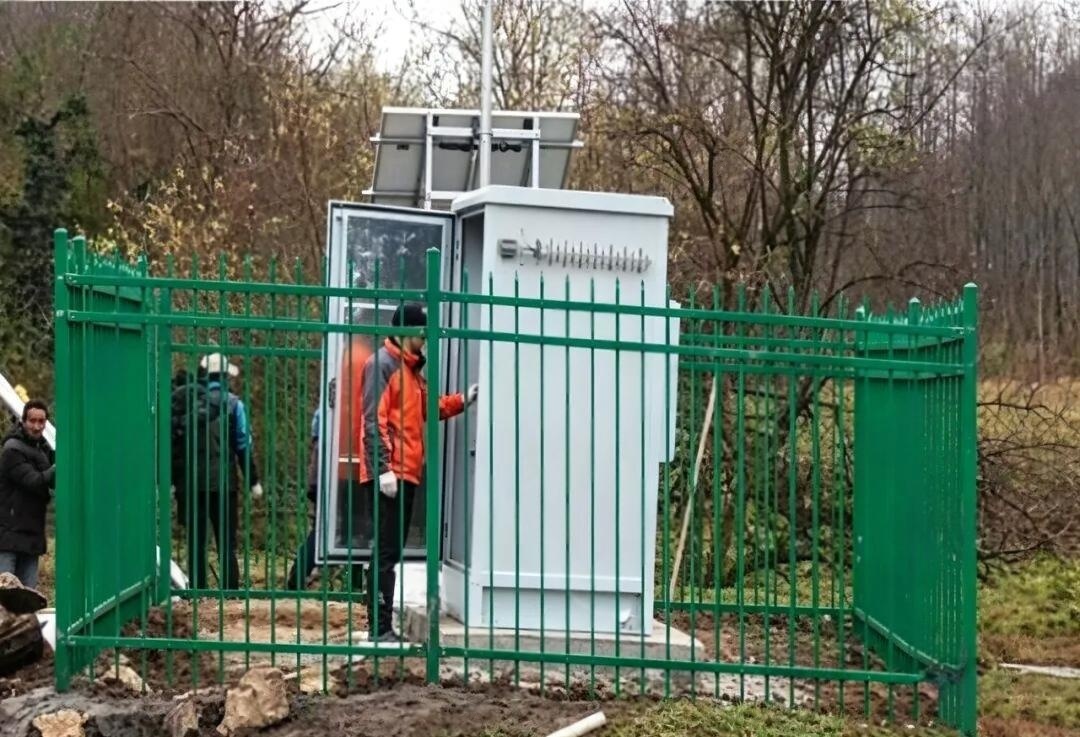
Storage-first solar power design helps GNSS monitoring equipment operate continuously across humid, rainy, typhoon-exposed, and maintenance-limited slope monitoring sites in ZhejiangDirect Answer:In March 2025, a Kongfar solar off-grid power system was applied to a GNSS slope monitoring project in Zhejiang. The system provides independent power for GNSS monitoring equipment, supporting continuous data collection under humid subtropical climate conditions, rainy seasons, typhoon weather, mountain access limitations, and long-term unattended monitoring requirements.
Project Background: GNSS Slope Monitoring Power Challenges In Zhejiang Mountain Areas
Zhejiang has many mountainous areas, slope zones, and geological-risk monitoring points where GNSS monitoring equipment is used for slope deformation observation, geological disaster warning, and early-risk identification. These monitoring devices must collect data continuously because power interruption may cause data gaps and reduce the timeliness of disaster-warning response.
Many GNSS monitoring points are located in remote mountains or slope areas far from municipal power. Extending grid cables to these sites can be difficult, costly, or unsafe due to terrain conditions and construction limitations. In traditional deployments, disposable or replaceable batteries may be used, but this method creates long-term reliability and maintenance problems.
Zhejiang's subtropical humid climate further increases the difficulty. The region can experience plum rain seasons, continuous cloudy and rainy periods, high humidity, typhoon rainstorms, fog, and temperature variation between day and night. These conditions can reduce battery reliability, increase moisture-related failure risk, and make field maintenance more difficult.
To improve long-term power reliability for distributed GNSS monitoring sites, the project introduced a Kongfar solar off-grid power system in March 2025. The system was designed to provide stable, weather-resistant, and remotely manageable energy support for GNSS slope monitoring equipment in Zhejiang's mountain and slope environments.
Site Constraints Affecting GNSS Monitoring Reliability In Humid Mountain Slope Sites
GNSS slope monitoring is not only a measurement task. The power system must support continuous operation while facing remote deployment, high humidity, rain exposure, slope access difficulty, and maintenance safety risks.
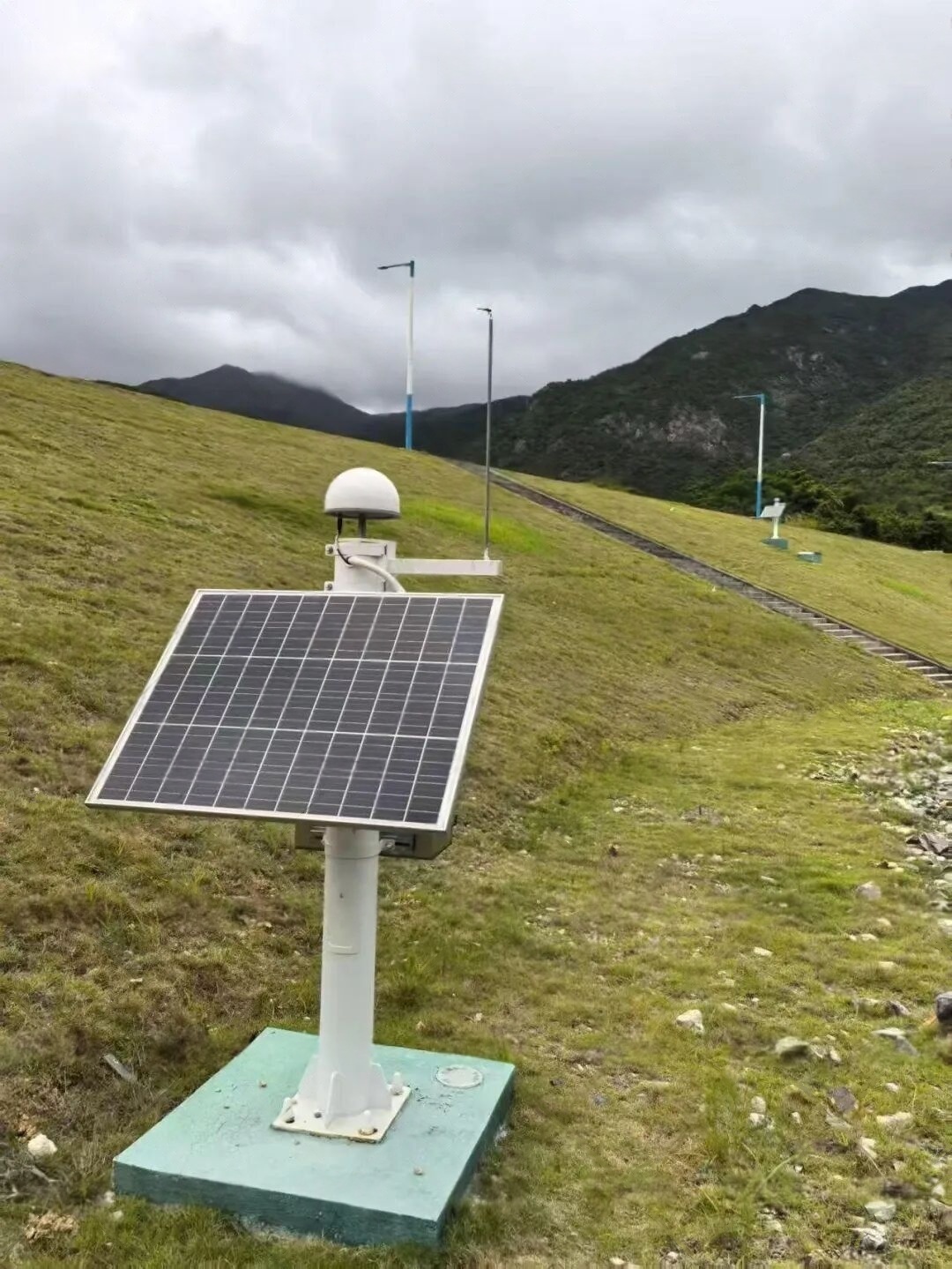
Solar-powered GNSS slope monitoring node showing how off-grid power continuity supports geological disaster monitoring in remote mountain environments.
Grid Access Limitations At Remote Mountain And Slope Monitoring Points
GNSS monitoring equipment is often installed on slopes, mountain roads, geological-risk points, or remote terrain where grid power is unavailable or difficult to deploy. Cable construction in these areas may require long routing, civil work, safety evaluation, and repeated maintenance access.
For geological disaster monitoring, power interruption can directly affect data continuity. A GNSS monitoring node may not consume high power compared with large industrial equipment, but it must remain online for continuous deformation observation. If power is interrupted during rainy weather, slope movement, or disaster-risk periods, monitoring data may become incomplete.
This is why a solar off-grid power system is valuable for mountain GNSS monitoring. It reduces dependence on municipal power, avoids frequent battery replacement, and supports continuous monitoring at locations where grid access is difficult.
High Humidity, Plum Rain, Typhoon Rainstorms, Fog, And Corrosion Risk
Zhejiang's subtropical humid climate creates multiple reliability risks for outdoor monitoring power systems. The plum rain season can bring continuous cloudy and rainy weather. Summer typhoons may introduce heavy rainfall and strong moisture exposure. Winter and early spring fog can increase long-term humidity around equipment cabinets and connectors.
If a power system lacks proper enclosure protection, moisture may enter the battery, controller, wiring, or connector area. This can lead to corrosion, short-circuit risk, unstable output, or faster component aging.
For GNSS slope monitoring, environmental protection is not only a protective box requirement. It is part of system reliability. The power architecture must combine LiFePO4 battery storage, waterproof and dustproof enclosure design, controller protection, lightning protection, wiring protection, and remote status visibility to support long-term unattended operation in humid mountain environments.
Maintenance Pressure And Safety Risk Across Distributed Slope Monitoring Sites
GNSS monitoring points are often scattered across mountain slopes and geological-risk zones. Manual inspection and battery replacement may require personnel to travel through steep roads, wet paths, and unstable terrain.
During rainy seasons, typhoon periods, or foggy weather, field access becomes more difficult and may create safety risks. Some sites may be located near dangerous slopes where frequent maintenance is not suitable.
The Zhejiang project therefore required a power solution that could reduce field visits, extend unattended operation, and allow maintenance teams to check photovoltaic power, battery status, and system abnormalities remotely. This approach helps reduce manual inspection pressure while improving the visibility of power system health.
Kongfar Solar Off-Grid Power System Solution For Zhejiang GNSS Monitoring
The Zhejiang project adopted a Kongfar solar off-grid power system to support GNSS monitoring equipment in remote mountain and slope environments.
The solution combines monocrystalline photovoltaic generation, LiFePO4 battery storage, intelligent controller protection, waterproof and dustproof enclosure design, lightning protection, and mobile-side remote monitoring. This architecture helps GNSS monitoring equipment operate independently from municipal power while reducing the need for frequent manual battery replacement.
Monocrystalline Solar Power Generation For Weak-Light Energy Recovery
The system uses high-efficiency monocrystalline photovoltaic modules to collect solar energy and charge the battery system during available sunlight windows. For Zhejiang's humid and rainy climate, weak-light performance is important because continuous cloudy weather, fog, and plum rain conditions may reduce direct solar input.
The photovoltaic generation unit supports:
✅ Energy recovery during daytime
✅ Supplemental charging during cloudy or weak-light conditions
✅ Independent operation at sites without grid power
✅ Reduced dependence on disposable battery replacement
✅ Outdoor use in humid, rainy, and mountain slope environments
The solar module is not only a daytime energy source. Its main engineering role is to restore battery reserves after night operation, rainy periods, and low-generation weather.
LiFePO4 Battery Storage For Rainy Seasons And Night Operation
The project uses a LiFePO4 battery storage system integrated into a protected outdoor enclosure. For GNSS monitoring, battery storage is critical because the equipment must continue collecting data when solar input is temporarily reduced.
The battery system supports:
✅ Nighttime power supply
✅ Backup energy during continuous cloudy or rainy periods
✅ More stable operation during humid seasonal weather
✅ Reduced risk of monitoring data interruption
✅ Long-term unattended operation for distributed slope monitoring points
Compared with disposable battery methods, a rechargeable storage-based system reduces repeated battery replacement and supports a more stable energy architecture for remote GNSS monitoring.
Intelligent Controller Protection For GNSS Monitoring Loads
The system includes an intelligent controller that manages photovoltaic charging, battery storage, and load output. In humid mountain environments, controller protection is important because electrical risks may occur under moisture exposure, variable charging conditions, and long-term outdoor operation.
The controller supports:
✅ Overcharge protection
✅ Over-discharge protection
✅ Short-circuit protection
✅ Lightning protection support
✅ Load output control
✅ Photovoltaic power monitoring
✅ Battery status monitoring
✅ Abnormal condition alerts through mobile-side monitoring
This control logic helps protect the battery and connected GNSS equipment while supporting stable power output for continuous monitoring.
Waterproof And Dustproof Enclosure For Humid Mountain Deployment
The battery and controller are integrated into a waterproof and dustproof enclosure. This enclosure helps protect key electrical components from rainwater, fog, humidity, dust, and outdoor exposure.
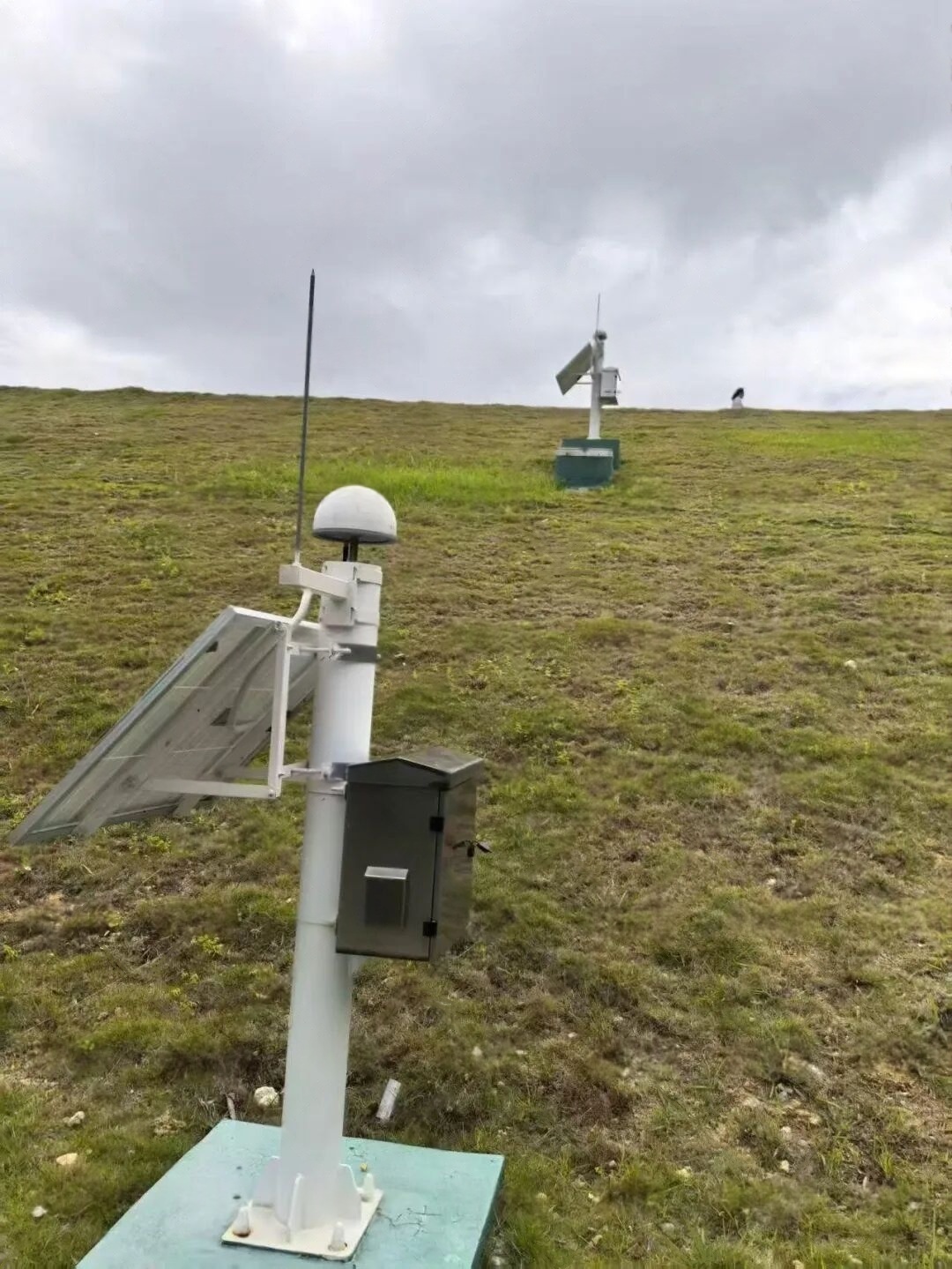
Installation detail of a GNSS monitoring power node showing protected enclosure placement, pole-mounted structure, and distributed slope monitoring deployment.
For Zhejiang GNSS monitoring sites, enclosure protection is directly related to reliability. Even if the photovoltaic module and battery capacity are suitable, poor enclosure sealing may still cause failure through moisture intrusion, corrosion, wiring damage, or short-circuit risk.
The enclosure design supports:
✅ Moisture resistance
✅ Rainwater protection
✅ Dust and outdoor exposure protection
✅ Battery and controller protection
✅ Safer cable and component integration
✅ Longer unattended operation in mountain slope environments
Remote Energy Monitoring For Unattended GNSS Monitoring Stations
The system supports mobile-side viewing of photovoltaic power, battery status, and equipment operating conditions. When abnormal conditions occur, alerts can be pushed automatically.
For distributed GNSS slope monitoring points, remote energy monitoring is valuable because it allows maintenance teams to identify charging or battery issues before field shutdown occurs. It also reduces unnecessary site visits, especially when monitoring points are located on difficult or risky terrain.
Remote visibility turns the power system from a passive energy component into a manageable monitoring infrastructure node. Maintenance teams can make earlier decisions based on battery condition, photovoltaic input, and abnormal warning information.
Storage-First Reliability Design For GNSS Slope Monitoring Power Systems
For GNSS slope monitoring, off-grid power reliability should not be evaluated by photovoltaic wattage alone. A larger solar panel can improve charging speed, but it cannot prevent monitoring interruption if battery storage, environmental protection, and remote maintenance visibility are insufficient.
Kongfar applies a storage-first engineering logic:
Energy Reliability = Storage Autonomy × Environmental Protection × Solar Recovery Margin
This model is used as an engineering decision framework, not as a strict electrical calculation formula. It helps evaluate whether a solar off-grid power system can support GNSS monitoring equipment through night operation, continuous rainy periods, high-humidity exposure, and delayed maintenance access.
In the Zhejiang GNSS monitoring project, reliability depends on three connected factors:
✅ Storage Autonomy: whether the battery can support GNSS equipment during night operation, plum rain seasons, typhoon rain, and low-generation periods
✅ Environmental Protection: whether the enclosure, wiring, controller, and battery system can resist humidity, rainwater, fog, corrosion, and outdoor exposure
✅ Solar Recovery Margin: whether the photovoltaic module can restore battery energy during limited sunlight and weak-light conditions
This design logic is important because GNSS monitoring data must remain continuous during periods when field access may be unsafe or delayed. If storage capacity is too small, if the enclosure is not protected against humidity, or if power status cannot be monitored remotely, a monitoring point may still fail even when a solar panel is installed.
How The Solar Off-Grid Power System Supports 24-Hour GNSS Monitoring Operation
The solar off-grid power system supports GNSS monitoring through a coordinated energy process.
During daytime, the monocrystalline photovoltaic module collects solar energy and sends charging input to the controller. The controller manages charging, protects the battery, and regulates load output. At night or during low-generation periods, the LiFePO4 battery supplies power to the GNSS monitoring equipment.
When photovoltaic input, battery status, or load output becomes abnormal, the remote monitoring function allows maintenance teams to check system data through the mobile side and respond earlier.
The basic operation logic includes:
✅ Solar module collects energy during daytime and weak-light periods
✅ Controller manages charging, discharging, and electrical protection
✅ LiFePO4 battery stores energy for night and rainy conditions
✅ GNSS monitoring equipment receives stable power
✅ Mobile-side monitoring checks photovoltaic power and battery status
✅ Abnormal alerts help maintenance teams respond before field shutdown
The system works because energy generation, storage autonomy, load control, and maintenance visibility are managed as one power architecture instead of separate components. This is important for slope monitoring points where stable operation and lower maintenance frequency are required.
Engineering Decision Matrix For GNSS Monitoring Solar Power Reliability
The reliability of a GNSS monitoring solar power system depends on the interaction between load demand, storage capacity, humidity protection, solar recovery, controller safety, remote monitoring, and maintenance access.
Engineering Variable
| Field Risk In Zhejiang GNSS Monitoring
| Design Response
| Reliability Role
|
Load Profile
| GNSS monitoring equipment requires continuous power, but total system demand may be underestimated if communication or control devices are included
| Calculate daily energy demand for GNSS devices, communication modules, controllers, and related equipment
| Prevents hidden overload and undersizing
|
Storage Autonomy
| Night operation, plum rain seasons, typhoon rain, fog, and cloudy weather reduce available charging input
| Match battery capacity with continuous operation and backup requirements
| Maintains data collection during low-generation periods
|
Environmental Protection
| High humidity, rainwater, fog, and corrosion risk may damage batteries, controllers, and wiring
| Use waterproof and dustproof enclosure design with protected cable routing
| Reduces moisture-related failure risk
|
Solar Recovery Margin
| Weak-light conditions and continuous rainy weather may slow battery recovery
| Match photovoltaic input with site sunlight, load demand, and expected recovery requirement
| Restores battery energy after deficit periods
|
Controller Protection
| Overcharge, over-discharge, short circuit, or lightning exposure may affect system safety
| Apply intelligent controller logic with electrical and lightning protection support
| Improves system safety and stable output
|
Remote Energy Monitoring
| Field teams may not detect battery or charging problems until GNSS data collection is affected
| Use mobile-side monitoring and abnormal alerts
| Supports earlier response and fewer unnecessary site visits
|
Maintenance Access
| Mountain slope sites are difficult and sometimes risky to inspect frequently
| Design for unattended operation and remote status visibility
| Reduces field service pressure and safety risk
|
This matrix shows why GNSS monitoring power should be designed as a complete off-grid energy architecture rather than a simple battery replacement method. Each reliability variable affects whether geological monitoring data can remain continuous.
Boundary Conditions For Reliable GNSS Monitoring Solar Power Operation
The solar off-grid power system can support GNSS monitoring when the connected load, environmental conditions, installation method, and maintenance interval remain within the intended design range.
System performance depends on:
✅ Adequate solar exposure at the installation site
✅ Connected load remaining within system design rating
✅ Battery discharge limits being respected
✅ Enclosure sealing and cable protection being maintained
✅ Solar module surface not being continuously blocked by shade, dirt, vegetation, or site obstruction
✅ Secure mounting and stable photovoltaic orientation
✅ Maintenance teams responding to abnormal alerts when required
Configuration should be recalculated if:
✅ Additional communication devices are added
✅ GNSS equipment power demand increases
✅ Backup-day requirements become longer
✅ Shading becomes more severe
✅ Typhoon, humidity, or corrosion exposure exceeds design assumptions
✅ Enclosure sealing is damaged
✅ Maintenance interval changes significantly
This boundary condition logic is important because one solar off-grid power configuration should not be applied to every GNSS monitoring project without load and site review. Reliable sizing should begin with device power, voltage, runtime, local climate, backup days, and maintenance access conditions.
Project Results: Stable GNSS Power, Stronger Humidity Resistance, And Lower Maintenance Pressure
The Zhejiang GNSS monitoring project improved field power support by replacing high-maintenance disposable battery supply with an integrated solar off-grid power system.
Improved Power Reliability For Continuous GNSS Monitoring Data Collection
After deployment, the system supported 24-hour operation of GNSS monitoring equipment.
According to the project application record, monitoring data collection remained continuous during the observed implementation period. This helped reduce the previous risk of power instability and data interruption at remote mountain slope monitoring points.
For geological disaster warning, continuous power supply is critical because GNSS monitoring data must remain available for slope deformation observation, risk identification, and early-warning response.
Stronger Environmental Adaptability In Humid, Rainy, And Typhoon-Prone Conditions
The system was designed for Zhejiang's humid mountain environment, including plum rain periods, high temperature and high humidity, typhoon rainstorms, fog, and day-night temperature variation.
The LiFePO4 battery storage, waterproof and dustproof enclosure, intelligent controller, and protection logic helped reduce failure risks caused by moisture intrusion, corrosion, over-discharge, short circuit, and outdoor exposure.
According to the project application record, the system operated stably during the observed implementation period, supporting longer unattended operation in mountain and slope monitoring environments.
Lower Maintenance Pressure Through Remote Energy Monitoring
Traditional battery-powered GNSS monitoring systems often require periodic field inspection and battery replacement. For scattered mountain slope locations, each inspection may involve long travel time, difficult terrain, and safety risks near hazardous slopes.
The solar off-grid power system reduces dependence on disposable batteries. Remote energy monitoring also allows maintenance teams to check photovoltaic power and battery status before sending personnel to the site.
This helps improve maintenance efficiency, reduce unnecessary field visits, and lower operational safety risks for distributed geological monitoring points.
Engineering Value For Geological Disaster Monitoring And Slope Deformation Warning
The Zhejiang project shows how a solar off-grid power system can support GNSS monitoring where grid power is unavailable, outdoor conditions are humid, and maintenance access is difficult.
For geological disaster monitoring, stable off-grid power is not only an energy supply issue; it is part of the data continuity foundation for slope deformation warning and disaster-risk response.
The solution addresses three practical engineering problems:
✅ Power Continuity: supports 24-hour operation of GNSS monitoring equipment and data transmission functions
✅ Outdoor Reliability: improves protection against high humidity, rainwater, fog, corrosion, and typhoon-season exposure
✅ Maintenance Efficiency: supports remote energy monitoring and reduces frequent manual battery replacement
This type of off-grid solar power solution can also be adapted to other disaster-prevention and remote monitoring applications, including geological disaster monitoring, slope deformation monitoring, river water level monitoring, mountain flood warning, rainfall monitoring, and remote infrastructure observation.
By using solar power, disaster-prevention projects can improve energy independence and reduce the operation burden of distributed monitoring infrastructure. For mountain slope regions, stable power supply supports public safety by improving data continuity and warning readiness.
Buyer FAQ About Solar Off-Grid Power Systems For GNSS Monitoring Projects
Can A Solar Off-Grid Power System Run GNSS Monitoring Equipment 24 Hours A Day?
Yes, a properly configured solar off-grid power system can support 24-hour GNSS monitoring when load power, battery capacity, solar charging input, and backup-day requirements are calculated together. GNSS monitoring equipment may have a moderate power demand, but the complete system may also include communication modules, controllers, telemetry equipment, or data transmission devices. For continuous operation, engineers should calculate the total daily energy consumption rather than only checking the GNSS device rating. Buyers should provide device voltage, total load power, runtime target, backup-day requirement, site climate, and maintenance interval before system sizing.
Why Is Battery Storage More Important Than Panel Wattage In Remote GNSS Monitoring?
Battery storage is critical because GNSS monitoring equipment must operate at night and during low-generation weather when solar panels cannot provide enough direct energy. A larger photovoltaic module can improve daytime charging, but it cannot prevent data interruption if the battery cannot support the load through night operation, plum rain seasons, typhoon rain, fog, or continuous cloudy periods. In mountain slope environments, field maintenance may also be delayed by terrain and safety conditions. Reliable design starts from required backup duration, then matches photovoltaic recovery, outdoor protection, and remote monitoring visibility.
Is One Solar Off-Grid Power Configuration Suitable For Every GNSS Monitoring Site?
No, one solar off-grid power configuration should not be treated as suitable for every GNSS monitoring site. The required configuration depends on device load, operating voltage, daily runtime, backup-day target, local solar exposure, humidity level, rainfall pattern, typhoon risk, shading, and maintenance interval. A GNSS point with only one device may require a different configuration from a site with extra routers, telemetry terminals, or cameras. Before final selection, project teams should confirm all connected equipment and field conditions to avoid undersizing or unnecessary oversizing.
What Causes Power Failure In Remote GNSS Slope Monitoring Systems?
Common causes include undersized battery capacity, prolonged cloudy or rainy weather, high-humidity corrosion, water ingress, poor solar recovery, load expansion, lightning exposure, and delayed maintenance access. In Zhejiang mountain slope environments, moisture and rain exposure can affect batteries, controllers, connectors, and wiring if enclosure protection is weak. Another common risk is adding communication devices after installation without recalculating total energy demand. A reliable GNSS monitoring power system should combine load analysis, storage autonomy, waterproof protection, lightning protection, controller safety, and remote energy monitoring.
What Information Should Buyers Provide Before GNSS Monitoring Power System Sizing?
Buyers should provide the connected device list, total load power, device input voltage, daily runtime, required backup days, site location, seasonal climate conditions, shading level, installation method, and maintenance interval. For GNSS monitoring projects, it is also useful to confirm whether the site includes only GNSS equipment or additional telemetry terminals, routers, data loggers, or cameras. This information helps engineers calculate daily energy demand, battery capacity, photovoltaic recovery margin, and enclosure protection requirements. Without these details, a system may appear suitable on paper but fail under real field conditions.
How Does Remote Energy Monitoring Reduce Maintenance Pressure For Slope Monitoring Sites?
Remote energy monitoring reduces maintenance pressure by allowing teams to check photovoltaic power, battery condition, and abnormal system status before field failure occurs. GNSS monitoring sites are often distributed across mountain slopes where manual inspection can be time-consuming and risky, especially during rainy or typhoon seasons. With mobile-side monitoring and alerts, maintenance teams can identify charging or battery problems earlier and decide whether a site visit is necessary. This improves response efficiency and reduces unnecessary inspections for geological disaster monitoring and slope deformation warning projects.
Related Geological Disaster Monitoring And Remote Infrastructure Solar Power Solutions And Engineering References
The Zhejiang GNSS monitoring project belongs to a broader group of geological disaster prevention and remote monitoring applications where grid power is difficult to access, field equipment must operate continuously, and maintenance access may be limited by terrain, weather, or safety risks. These related engineering references help project buyers compare solar power supply systems across GNSS monitoring, slope deformation monitoring, landslide warning, hydrology monitoring, and remote infrastructure applications.
Core Related Engineering References
Why This Reference Is Related:GNSS slope monitoring requires continuous data collection, stable communication, backup power during rainy periods, and strong outdoor protection in remote mountain areas. It is closely related to the Zhejiang project because both applications depend on uninterrupted monitoring for geological disaster warning.
Engineering Connection:Both applications rely on storage autonomy, humidity-resistant enclosure protection, solar recovery margin, lightning protection, and remote maintenance visibility under distributed slope monitoring conditions.
Useful For:Geological disaster monitoring teams, slope safety contractors, natural resource departments, system integrators, and government disaster-prevention project buyers.
Why This Reference Is Related:Mountain slope deformation monitoring points are often located in areas where grid access is difficult and field maintenance requires travel through steep or unstable terrain. These sites require long-term unattended power support.
Engineering Connection:Both slope deformation and GNSS monitoring projects require stable DC output, battery backup, weather-resistant protection, remote energy monitoring, and site-specific solar recovery planning.
Useful For:Slope monitoring contractors, geotechnical engineering teams, infrastructure safety operators, mountain road safety projects, and geological risk management agencies.
Why This Reference Is Related:Landslide early-warning stations may combine GNSS devices, rainfall sensors, telemetry terminals, and sometimes camera systems across remote mountain sites. These systems must remain powered during rainy seasons and emergency response periods.
Engineering Connection:The shared reliability requirement is data continuity during high-risk weather. Storage autonomy, solar recovery margin, enclosure protection, and remote monitoring visibility all affect warning-system reliability.
Useful For:Emergency management departments, landslide monitoring contractors, hydrology and geology system integrators, infrastructure safety buyers, and disaster-prevention project teams.
Extended Remote Infrastructure Applications
Why This Reference Is Related:Mountain flood warning projects often rely on water level sensors, rainfall monitoring devices, telemetry terminals, and distributed field stations. These systems face similar terrain access, rainfall exposure, and maintenance challenges.
Engineering Connection:Both GNSS monitoring and mountain flood warning systems require continuous off-grid operation, battery autonomy, weather-resistant protection, and remote maintenance visibility.
Useful For:Water conservancy departments, flood-warning project teams, hydrology monitoring contractors, local emergency agencies, and smart water infrastructure buyers.
Why This Reference Is Related:Rainfall monitoring and remote hydrology stations are often deployed in mountain or watershed areas where grid power is unavailable and maintenance access may be limited during storm seasons.
Engineering Connection:These applications share the same design priority: stable low-power monitoring, backup energy during cloudy or rainy periods, protected outdoor installation, and remote status monitoring.
Useful For:Meteorological monitoring teams, hydrology bureaus, environmental monitoring companies, IoT system integrators, and regional disaster-warning infrastructure projects.
Engineering Summary: Why Storage-First Solar Power Design Matters For GNSS Monitoring
Reliable off-grid power for GNSS monitoring should begin with storage autonomy, then match solar recovery, environmental protection, controller safety, lightning protection, and maintenance access according to actual field conditions. For Zhejiang mountain slope environments, the Kongfar solar off-grid power system demonstrates how storage-first power design can support continuous GNSS data collection under humidity, plum rain, typhoon weather, fog, and distributed maintenance constraints.
This project also shows that geological monitoring power should not be evaluated only by photovoltaic panel wattage. Long-term reliability depends on load calculation, battery backup duration, outdoor enclosure protection, solar recovery capacity, and remote energy visibility working together as one system.
Engineering & Procurement Contact For GNSS Monitoring Solar Power Systems
GNSS monitoring power systems should not be selected only by photovoltaic panel wattage. A reliable configuration needs load calculation, battery autonomy review, humidity protection assessment, solar recovery evaluation, lightning protection planning, and maintenance access analysis.
For geological disaster monitoring and slope deformation warning projects, Kongfar can support engineering consultation for:
✅ GNSS monitoring device and communication terminal load calculation
✅ Backup-day modeling for slope deformation warning continuity
✅ Solar recovery assessment for plum rain, cloudy, or typhoon-season conditions
✅ High-humidity, corrosion, and enclosure protection strategy
✅ Lightning protection and controller safety planning
✅ Remote energy monitoring design for distributed slope monitoring points
Project buyers can prepare the following information before consultation:
✅ Connected device list
✅ Total load power
✅ Device input voltage
✅ Daily runtime requirement
✅ Required backup days
✅ Site location
✅ Seasonal climate conditions
✅ Shading and installation conditions
✅ Maintenance interval
✅ Remote monitoring requirement
Email:tony@kongfar.com
Website:https://www.kongfar.comKongfar provides engineering-focused solar power supply systems for GNSS monitoring, slope deformation warning, geological disaster monitoring, water conservancy monitoring, remote CCTV, outdoor IoT, telecom, agriculture, and unattended field monitoring applications.



 English
  Deutsch